Shandong Horizon Building Energy Efficiency Technology Co., Ltd — Supplier
About Shandong Horizon Building Energy Efficiency Technology Co., Ltd - Construction Materials Supplier in China
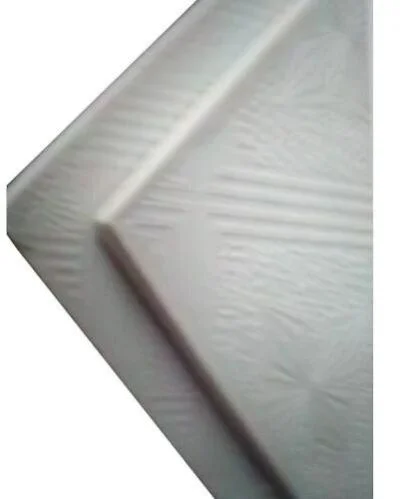
China hosts Shandong Horizon Building Energy Efficiency Technology Co., Ltd, which currently lists five active products in its catalogue. The company focuses on construction materials and panel solutions for building insulation and fire protection. Its product list includes an Insulation Board (HS code 3921.90) made from polyisocyanurate rigid foam with composite facing, an Expanded Polystyrene Sandwich Panel, a Sound Insulation MGO Style Sheet (HS code 6811.89) using magnesium oxide board, a Heat Preservation and Decorative Composite Board (HS code 6806.10) with PIR/PUR/stone wool core and aluminum or PVC facings, and a Compound Melamine Insulation Board. The catalogue spans polymer foam, magnesium oxide, and composite core technologies, each classified under HS chapters 39 and 68.
The five items cover rigid thermal insulation, structural sandwich panels, and acoustic fire‑resistant boards commonly specified in commercial and residential construction. Materials such as polyisocyanurate (PIR) and expanded polystyrene (EPS) provide thermal conductivity values typically between 0.020 and 0.030 W/m·K, while magnesium‑oxide (MgO) boards offer fire‑rating of up to 4 hours under standard fire tests. Composite boards with stone wool or PUR cores are used for combined heat preservation and decorative applications, often supplied in panel dimensions up to 2 m × 1 m. The product range therefore addresses thermal, acoustic, and fire performance requirements across a variety of building projects.
Product Range and Specialties of Shandong Horizon Building Energy Efficiency Technology Co., Ltd
The catalogue comprises an Insulation Board (polyisocyanurate core, HS 3921.90), an Expanded Polystyrene Sandwich Panel, a Sound Insulation MGO Style Sheet (magnesium oxide core, HS 6811.89), a Heat Preservation and Decorative Composite Board (PIR/PUR/stone wool core with aluminum or PVC facings, HS 6806.10), and a Compound Melamine Insulation Board. Materials range from rigid polymer foams to magnesium‑oxide composites, each supplied as flat panels or boards suitable for wall, roof, or floor assemblies.
In the building‑insulation market, PIR boards are typically graded by thermal resistance (R‑value) of 4 - 7 m²·K/W for thicknesses of 30 - 80 mm, and must meet EN 13162 or ASTM C578 fire‑performance criteria. Expanded Polystyrene sandwich panels are often produced with EPS cores of 20 - 100 mm thickness and facings of steel or aluminum, complying with EN 15243 for structural performance. MgO boards are classified under fire‑resistance standards such as ASTM E84 and Chinese GB 8624, delivering Class A fire ratings and acoustic absorption coefficients of 0.30 - 0.45 dB. Composite boards that combine PIR, PUR, or stone wool cores with metal or PVC facings are evaluated for both thermal conductivity (0.021 - 0.025 W/m·K) and surface finish durability, meeting EN 13501‑1 fire classification.
Trade and Export Information - Shandong Horizon Building Energy Efficiency Technology Co., Ltd
China is a major exporter of building insulation panels, with shipments frequently destined for Southeast Asia, the Middle East, and African markets where rapid construction and energy‑efficiency standards drive demand. Products classified under HS 39.21 (plastic boards) and HS 68.11/68.06 (mineral and composite boards) are subject to customs inspections that verify material composition, fire‑test certificates, and compliance with regional building codes such as the EU’s Construction Products Regulation (CPR) or GCC technical regulations.
Buyers usually request CE marking, ISO 9001 quality‑management certification, and fire‑performance test reports (e.g., ISO 834, ASTM E119) before accepting shipments. Insulation boards are commonly packed in wooden crates or bulk pallets, with container loads ranging from 20‑ft (≈ 1,200 kg) to 40‑ft (≈ 2,400 kg) depending on panel thickness and density. Incoterms such as FOB Shanghai or CIF Jebel Ali are typical for these commodities, and freight forwarders often arrange moisture‑proof packaging to preserve thermal performance during sea transit.
Sourcing from Shandong Horizon Building Energy Efficiency Technology Co., Ltd - Buyer Guidance
Prospective buyers should obtain a technical data sheet detailing thermal conductivity, density, compressive strength, and fire‑rating for each board type. For PIR and EPS panels, request a European CE Declaration of Conformity and test results against EN 13162 or ASTM C578. For MgO and composite boards, ask for fire‑test certificates (ASTM E84, EN 13501‑1) and acoustic absorption data where relevant.
Before placing an order, verify the supplier’s ISO 9001 certificate and confirm the HS codes match the intended product description to avoid customs delays. Typical minimum order quantities range from one 20‑ft container for bulk insulation boards to individual pallets for sample evaluation, with lead times of 30 - 45 days after receipt of approved drawings and test reports. Packaging specifications, such as pallet dimensions (1 m × 1.2 m) and moisture‑barrier wrapping, should be clarified to ensure safe delivery.
Frequently Asked Questions About Shandong Horizon Building Energy Efficiency Technology Co., Ltd
What are the thermal performance specifications of the Insulation Board (PIR) offered?
The PIR Insulation Board listed under HS 3921.90 typically exhibits a thermal conductivity of 0.020 - 0.025 W/m·K, giving an R‑value of about 4 m²·K/W for a 30 mm thickness, and meets EN 13162 fire‑performance requirements.
Which fire‑rating standards apply to the Sound Insulation MGO Style Sheet?
The MgO Style Sheet (HS 6811.89) is tested to ASTM E84 and EN 13501‑1, commonly achieving a Class A fire rating and a fire‑resistance duration of up to 4 hours under standard fire‑test procedures.
Are CE marking or other certifications available for the Heat Preservation and Decorative Composite Board?
The composite board (HS 6806.10) can be supplied with a CE Declaration of Conformity and, if requested, ISO 9001 quality‑management certification, together with fire‑test reports complying with EN 13501‑1.
What are the typical dimensions and packaging for the Expanded Polystyrene Sandwich Panel?
EPS sandwich panels are usually delivered in panel sizes up to 2 m × 1 m, thicknesses between 20 mm and 100 mm, and are packed on wooden pallets or in bulk crates suitable for 20‑ft or 40‑ft container loading.
Which documents should a buyer request before confirming an order for the Compound Melamine Insulation Board?
Buyers should ask for a material safety data sheet (MSDS), thermal conductivity data, fire‑performance test results (e.g., ASTM C878), and any applicable CE or ISO certifications to verify compliance with building‑code requirements.
What is the standard lead time and minimum order quantity for bulk shipments of these panels?
Bulk orders generally require a 30‑ to 45‑day production lead time after receipt of approved specifications, with a minimum order of one 20‑ft container (approximately 1,200 kg) for most board types.
Which shipping terms are commonly used for exporting these construction‑material panels from China?
Export transactions frequently use FOB Shanghai or CIF destination ports such as Jebel Ali, with containers loaded on standard 20‑ft or 40‑ft vessels and palletized to facilitate handling at the port of entry.




 , China