Ppap Automotive Limited — Supplier
About Ppap Automotive Limited - Home Water Buckets Supplier in India
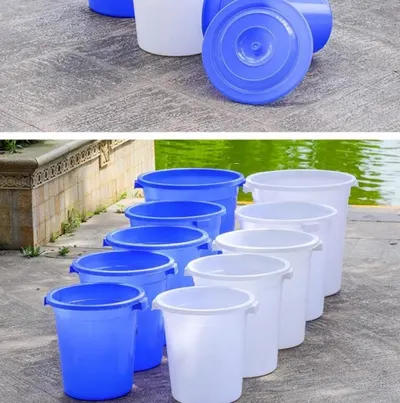
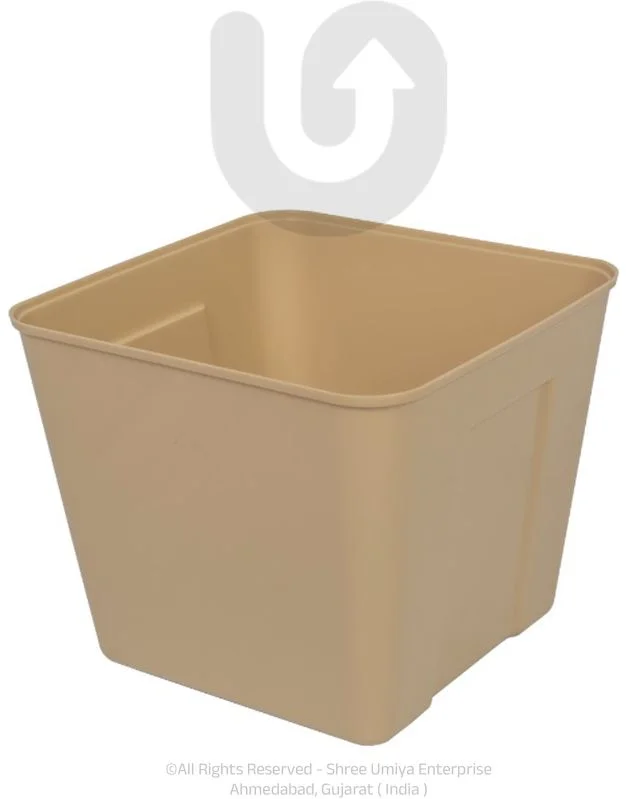
India hosts Ppap Automotive Limited, a supplier that currently lists five active products. The catalogue focuses exclusively on home water buckets, covering capacities from 5 L to 50 L. Each size is offered in both plain and printed variations, allowing buyers to choose between unbranded containers or those with custom graphics. The product titles follow a simple naming convention that identifies capacity and finish, for example “05L Plain/Printed Bucket”. The supplier’s catalogue does not reference additional categories, so the entire offering is confined to these five bucket models.
The five bucket models are presented without any stated certifications or HS‑code identifiers, meaning buyers must verify compliance independently. All items are described as “plain/printed”, indicating that the same base container can be supplied without decoration or with printed artwork as required. No further technical data such as material type or wall thickness is supplied in the catalogue, so prospective buyers should request detailed specifications before placing orders.
Product Range and Specialties of Ppap Automotive Limited
Ppap Automotive Limited lists five plastic water buckets with capacities of 5 L, 10 L, 20 L, 25 L and 50 L. In the broader industry, such buckets are typically manufactured from high‑density polyethylene (HDPE) or low‑density polyethylene (LDPE) that meet food‑grade requirements when intended for potable water. Standard wall thickness for HDPE buckets in this volume range is usually between 0.8 mm and 1.2 mm, providing sufficient rigidity while keeping weight low; a 20 L bucket often weighs around 0.5 kg. Buyers commonly encounter grades such as FDA‑compliant HDPE (for food contact) and REACH‑registered polymers for the European market. Printed versions normally use UV‑stable inks that comply with ISO 105‑C06 for colour fastness.
Industry practice also defines performance criteria such as a minimum impact resistance of 2 kJ and a water‑tight seal that passes a 0.5 % leakage test over 24 hours. Buyers may request data sheets that list melt flow index (MFI) values, typically between 0.5 and 2 g/10 min for HDPE used in buckets, and the material’s density, usually around 0.94 g/cm³. These parameters help verify that the buckets will withstand handling, stacking and exposure to sunlight during distribution.
Trade and Export Information - Ppap Automotive Limited
India is a major exporter of plastic containers, and its domestic polymer industry supplies a steady flow of HDPE resin at competitive unit costs. Export shipments of plastic buckets from India frequently target regions such as the Middle East, Africa, Southeast Asia and Latin America, where demand for durable, low‑cost water storage solutions remains strong. Buyers usually arrange freight in 20‑ft or 40‑ft containers; a fully packed 20‑ft container can hold roughly 2,000 units of a 10 L bucket, depending on stacking configuration and palletisation.
Typical regulatory requirements for plastic water buckets include compliance with FDA food‑contact regulations for the United States, EU REACH registration for the European Union, and ISO 9001 quality‑management certification for the manufacturing process. While the catalogue does not list any certifications, importers commonly request a Certificate of Origin, a Material Safety Data Sheet (MSDS), and test reports confirming compliance with the relevant standards. Incoterms such as FOB (Port of Mumbai) or CIF (e.g., Dubai) are regularly used for these shipments, and buyers should confirm the preferred term during negotiation.
Sourcing from Ppap Automotive Limited - Buyer Guidance
When sourcing buckets from Ppap Automotive Limited, buyers should request a detailed product data sheet that specifies the polymer grade, wall thickness, melt flow index and any food‑grade certifications. Samples of both plain and printed finishes allow verification of material quality, print durability and colour accuracy before larger orders are placed.
Buyers are advised to obtain an MSDS and, if the buckets are intended for potable water, a declaration of compliance with FDA or equivalent food‑contact standards. Requesting third‑party test reports for impact resistance, UV stability and leakage performance helps confirm that the products meet typical industry tolerances. Verifying the supplier’s ability to provide ISO‑9001 or similar quality‑management documentation can further reduce risk.
Frequently Asked Questions About Ppap Automotive Limited
What bucket capacities does Ppap Automotive Limited offer?
The catalogue lists five capacities: 5 L, 10 L, 20 L, 25 L and 50 L. Each size is available in both plain and printed versions.
Are the buckets supplied with or without printed graphics?
Both options are listed. Buyers can order a plain bucket or specify printed artwork on the same base container.
What material are the buckets typically made from?
Plastic water buckets of this type are usually manufactured from high‑density polyethylene (HDPE) that meets food‑grade specifications when intended for drinking‑water storage.
Which certifications should I request for Indian‑made plastic buckets?
Importers normally ask for a Certificate of Origin, an MSDS, and compliance statements for FDA food‑contact (US) or REACH (EU). If the supplier holds ISO 9001, that can be requested as well.
How are the buckets packaged for export?
Buckets are commonly stacked on pallets, wrapped in stretch film, and loaded into 20‑ft or 40‑ft containers. A full 20‑ft container typically carries around 2,000 units of a 10 L bucket.
What is the usual minimum order quantity and lead time?
While the catalogue does not state an MOQ, suppliers of similar plastic buckets often require a minimum order of 1,000 units per size. Lead times are generally 30‑45 days from order confirmation, depending on printing requirements.
How can I request a sample before placing a larger order?
Buyers should contact the supplier directly to specify the desired size and whether a plain or printed sample is needed. Samples are usually shipped under a small‑value courier term such as FOB with the cost of freight borne by the buyer.




 , India