Nanjing Banarta New Materials Co., Ltd. — Supplier
About Nanjing Banarta New Materials Co., Ltd. - Panels Supplier in China
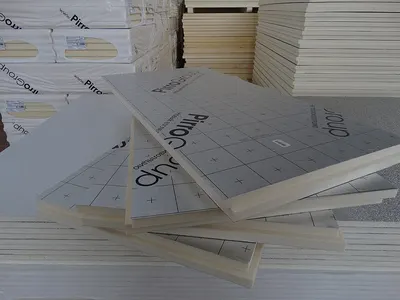
Nanjing Banarta New Materials Co., Ltd. operates from Nanjing in Jiangsu province, China. The supplier lists five active products in its catalogue. Its product focus is split between the panel and foam categories, specifically extruded polystyrene (XPS) and expanded polystyrene (EPS) building insulation solutions. The catalogue includes Extruded Polystyrene Foam Board, XPS Core Sandwich Panels, XPS Tile Backer Board, XPS Radiant Floor‑heating Panels and EPS Radiant Floor‑heating Panels. All items belong to the polymer foam segment that is typically recorded under HS chapter 39 for plastic products.
The five products cover a range of insulation applications such as wall sheathing, structural sandwich panels, tile underlayment and radiant floor heating systems. Each product is offered in standard sheet dimensions and thicknesses that match common construction specifications, allowing buyers to select the appropriate thermal and mechanical performance for residential or commercial projects.
Product Range and Specialties of Nanjing Banarta New Materials Co., Ltd.
The catalogue’s XPS Foam Board is supplied in thicknesses from 10 mm to 100 mm, with typical thermal conductivity values of 0.029 - 0.034 W/m·K and compressive strength between 0.2 and 0.6 MPa. XPS Core Sandwich Panels combine a lightweight XPS core with steel or aluminum facings, delivering panel thicknesses of 30 mm to 120 mm and overall panel densities around 30 - 45 kg/m³. The XPS Tile Backer Board is produced in 12 mm to 25 mm sheets, designed to resist moisture absorption below 0.5 % and to provide a flat substrate for ceramic tiling. XPS Radiant Floor‑heating Panels are cut to 600 mm × 600 mm or 1200 mm × 1200 mm modules, featuring embedded water‑circulation channels and a compressive strength of at least 0.15 MPa. EPS Radiant Floor‑heating Panels follow a similar module size but use EPS core material with lower density (15 - 20 kg/m³) and compressive strength around 0.1 MPa. Industry standards such as ASTM C578, EN 13163 and ISO 11561 define the performance criteria that buyers typically compare when selecting XPS or EPS insulation products.
Trade and Export Information - Nanjing Banarta New Materials Co., Ltd.
China is a major exporter of polymer foam insulation, and Nanjing‑based manufacturers ship primarily to construction markets in Southeast Asia, the Middle East, Europe and North America. Buyers usually import these products under HS code 3915 (polyethylene, polypropylene and other plastic foams) and arrange freight on 20‑ft or 40‑ft containers, with a typical load of 1,200 - 1,500 m² of board material per 20‑ft container. Common Incoterms for Chinese insulation exporters are FOB Nanjing or CIF destination port, depending on the buyer’s logistics preferences. While the supplier’s catalogue does not list specific certifications, importers often require ISO 9001 quality management, CE marking for the European market, and compliance with fire‑performance standards such as EN 13501‑1 (Euroclass B‑s2, d0) for wall and floor applications. Export documentation generally includes a commercial invoice, packing list, certificate of origin, and material test reports that verify thermal conductivity, compressive strength and moisture resistance.
Sourcing from Nanjing Banarta New Materials Co., Ltd. - Buyer Guidance
When sourcing XPS or EPS panels from this supplier, buyers should request the latest material data sheet, a third‑party test report confirming thermal conductivity (≤0.034 W/m·K for XPS) and compressive strength, and fire‑rating certificates relevant to the target market. Verifying ISO 9001 certification or equivalent quality‑system documentation helps assess the supplier’s production controls. Typical minimum order quantities are expressed in square metres; for board products, 5,000 m² per order is common, while sandwich panels may be ordered in metric tonnes (approximately 15 t for a 1,000 m² shipment). Lead times reported by Chinese foam manufacturers range from 30 to 45 days after order confirmation, with production scheduled on a make‑to‑stock basis. Packaging usually involves stacking sheets on wooden pallets wrapped in stretch film, allowing safe transport in standard 20‑ft or 40‑ft containers.
Frequently Asked Questions About Nanjing Banarta New Materials Co., Ltd.
What are the standard thicknesses and thermal performance of the XPS Foam Board offered?
The XPS Foam Board is available in 10 mm to 100 mm thicknesses, with thermal conductivity typically between 0.029 and 0.034 W/m·K and compressive strength from 0.2 to 0.6 MPa, matching ASTM C578 specifications.
Are fire‑rating certificates provided for the XPS sandwich panels?
Buyers should request the fire‑performance test report, which usually complies with EN 13501‑1 (Euroclass B‑s2, d0) for European markets. The supplier can supply the report upon request.
What dimensions are the XPS Tile Backer Boards supplied in?
Tile Backer Boards are commonly supplied in 12 mm, 18 mm and 25 mm thicknesses, with sheet dimensions of 1220 mm × 2440 mm, and moisture absorption below 0.5 %.
How are the radiant floor‑heating panels packaged for export?
Panels are stacked on wooden pallets, wrapped in stretch film, and loaded into 20‑ft or 40‑ft containers. A typical 20‑ft container holds roughly 1,200 m² of 600 mm × 600 mm modules.
What documentation should I request before placing an order?
Request the latest material data sheet, third‑party test reports for thermal conductivity and compressive strength, fire‑rating certificates, and proof of ISO 9001 or equivalent quality‑system certification.
What are the typical lead times and minimum order quantities?
Lead times are generally 30 - 45 days after order confirmation. Minimum order quantities are about 5,000 m² for sheet products and around 15 tonnes for sandwich panels.
Which markets commonly import XPS and EPS insulation from China?
Key import markets include Southeast Asian countries, the United Arab Emirates and Saudi Arabia, European Union members, and the United States, where the products are used in residential and commercial building insulation.
What Incoterms are most frequently used for shipments from Nanjing?
Exporters from Nanjing typically use FOB Nanjing for buyers handling freight, or CIF destination port when the supplier arranges shipping and insurance.




 , China