Medieval Edge — Verified Supplier
About Medieval Edge - Handicrafts & Decorative Supplier in India
Medieval Edge is based in India and lists 285 active products across its catalogue. The supplier’s portfolio includes decorative metal and glass items such as a Brass & Glass Chandelier with 10 arms (HS 9405.10), various powder‑coated metal easel stands (HS 9403.20), a Vintage Brass Easel (HS 7419.99), crystal candle holders (HS 7013.99, 9405.50, 7020.00) and metal wall mirrors (HS 9405.10).
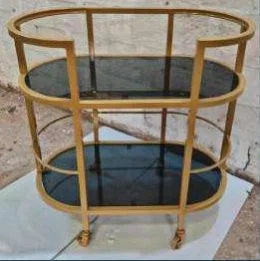
The catalogue also contains a variety of tables finished in stainless steel, brass, copper and gold, as well as wall mirrors and decorative frames. Materials are specified as powder‑coated iron or steel, lead‑crystal glass, brass alloy (approximately Cu 70‑80 % and Zn 20‑30 %), and solid wood tops, but no specific certifications are recorded for the company.
Product Range and Specialties of Medieval Edge
The listed products cover several HS‑code families: lighting fixtures (9405), metal furniture and easels (9403), brass articles (7419), glassware and crystal items (7013, 7020). In the metal‑handicraft segment, brass items typically conform to a Cu 70‑80 % / Zn 20‑30 % alloy composition, while powder‑coat finishes are commonly applied at 60‑80 µm thickness for durability. Lead‑crystal candle holders usually contain 24 % lead oxide, although lead‑free crystal variants are also produced for markets with strict lead restrictions. Mirrors are generally supplied with glass thickness of 3‑5 mm and a reflective coating that meets ISO 12312‑2 for safety. Table tops may feature marble, stone or wood veneers, with dimensions that fit standard 120 cm × 60 cm surfaces and are packaged for 1‑2 unit cartons.
Trade and Export Information - Medieval Edge
India is a major exporter of decorative metalware and glass artefacts, with the EU, United States and Gulf Cooperation Council states being the primary import regions for such goods. HS chapters 94 (Furniture; lamps and lighting) and 70 (Glass and glassware) are routinely inspected for compliance with REACH and RoHS, especially regarding lead content in crystal items. Buyers typically request SGS or Bureau Veritas inspection reports, as well as material‑composition certificates for brass alloys and powder‑coat thickness verification. Standard export logistics involve FOB Mumbai or FOB Chennai, with cargo packed in wooden crates, double‑wall cardboard, and protective foam to prevent breakage of glass and crystal components.
Sourcing from Medieval Edge - Buyer Guidance
When sourcing from Medieval Edge, purchasers should ask for a material‑composition certificate for brass items and a lead‑content test report for any crystal or lead‑crystal glass product. Requesting a powder‑coat thickness report and a visual finish inspection photo set helps verify the finish quality of metal easels and tables. Samples of mirrors and chandelier components are advisable before placing a full order, and buyers should confirm the HS‑code declared on the commercial invoice matches the product description (e.g., 9405.10 for chandelier, 7419.99 for vintage brass easel).
Frequently Asked Questions About Medieval Edge
What HS codes are used for the chandelier and candle holder products?
The Brass & Glass Chandelier 10 Arms is listed under HS 9405.10, while crystal candle holders fall under HS 7013.99, HS 9405.50 or HS 7020.00 depending on the specific glass type and design.
Does Medieval Edge provide material composition certificates for brass items?
The supplier’s catalogue does not list certifications, so buyers should explicitly request a brass alloy composition certificate confirming the typical Cu 70‑80 % / Zn 20‑30 % ratio before ordering.
Are lead‑free crystal options available for candle holders?
The catalogue mentions both lead‑crystal (24 % lead oxide) and lead‑free crystal glass. Buyers should ask for a lead‑content test report to ensure compliance with REACH limits.
What packaging is used for glass and crystal products?
Standard practice for Indian exporters includes double‑wall cardboard boxes with foam inserts or wooden crates, designed to protect items against impact during sea freight.
Which certifications are commonly required for decorative metal and glass imports?
Importers usually request ISO 9001 quality management, CE marking for safety, and SGS or Bureau Veritas inspection reports, especially for lead content and powder‑coat durability.
What are typical minimum order quantities (MOQ) and lead times?
For handcrafted decorative items, MOQs often start at 100‑200 units, with lead times ranging from 30 to 45 days after receipt of a confirmed purchase order and required test reports.
How can a buyer obtain a sample of a wall mirror or easel?
Buyers should contact the supplier to request a pre‑shipment sample, specifying the HS code (e.g., 9405.10 for mirrors, 9403.20 for easel stands) and allowing up to two weeks for sample preparation and dispatch.
What Incoterms are typically offered by Medieval Edge?
The supplier generally works on FOB terms from Indian ports such as Mumbai or Chennai, allowing buyers to arrange freight, insurance and onward transport under CIF or DDP as needed.




 , India