Agriculture›
 Apparel and fashion accessories›
 Construction & real estate›💡Electronic & Electrical›🍎Food & Beverages›🛋️Home furnishing & supplies›⚗️Industrial goods & chemical›🪨Minerals & metals›📦Miscellaneous›Agriculture›Apparel and fashion accessories›Construction & real estate›💡Electronic & Electrical›🍎Food & Beverages›🛋️Home furnishing & supplies›⚗️Industrial goods & chemical›🪨Minerals & metals›📦Miscellaneous›
Kosun Oil Field Import & Export Co., Ltd.
⚓ Harbor , ChinaNew supplier / no reviews yet
Kosun Oil Field Import & Export Co., Ltd. Product Catalog


About Kosun Oil Field Import & Export Co., Ltd. - Heavy Machinery Supplier in China
Kosun Oil Field Import & Export Co., Ltd. is a China-based exporter operating from the Chinese oilfield equipment supply chain, which is centred on manufacturing hubs in Hebei, Shandong and Shanghai. The company lists 5 active products in its current catalogue, all of which fall under the heavy machinery and industrial pumps categories used in upstream oil and gas drilling operations. Its product lines cover the four primary stages of the drilling fluids (mud) solids-control circuit: desanders, desilters, vacuum degassers, and the screw pumps that feed them, plus the diesel storage tanks that supply rig power systems. The catalogue positions the company within the drilling fluids treatment segment of the oilfield services market, where solids-control equipment is used to remove formation cuttings and entrained gases from drilling mud before it is recirculated downhole. Because desanders, desilters and degassers are typically paired with shale shakers and mud cleaners on the same skid, suppliers in this segment usually offer integrated packages rather than single units. A buyer reviewing the 5 listed items should expect each unit to be sized for a specific flow-rate band and hydrocyclone cone size, and to be quoted against a defined rig or mud-pit capacity.
Product Range and Specialties of Kosun Oil Field Import & Export Co., Ltd.
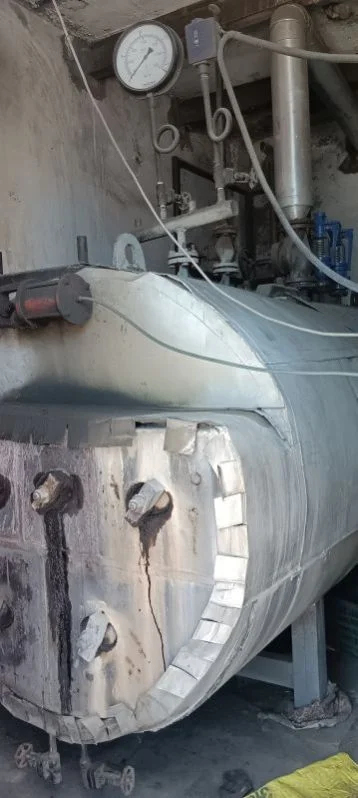
The catalogue covers five items that map directly onto the four functional blocks of a drilling rig's mud-handling system. The desander and desilter are hydrocyclone-based separators, with desanders typically fitted with 10-inch or 12-inch cones to cut coarse sand fractions and desilters fitted with 4-inch or 5-inch cones to cut finer silts; both rely on a centrifugal feed pump to generate the operating pressure. The screw pump listed is the positive-displacement pump normally used as the feed pump for these hydrocyclones, with a typical cast-iron or alloy steel rotor and stator rated for abrasive mud service. The vacuum degasser is used to remove entrained gases (methane, H2S, CO2) from the mud column before recirculation, and the diesel tank is the bulk storage vessel, often built to ASME or pressure-vessel standards depending on whether it is atmospheric or pressurized. Buyers sourcing this category should expect to see specifications such as cone diameter in inches, processing capacity in m3/h or gpm, working pressure in MPa, vacuum degree in kPa or mmHg for the degasser, rotor-stator material and speed for the screw pump, and tank volume in m3 or bbl for the diesel tank. Common material grades in this segment include wear-resistant polyurethane liners for hydrocyclone cones, high-chrome cast iron for screw-pump rotors, and carbon steel (Q235B or equivalent) or stainless steel for tank shells. API Spec 7K is the governing standard for most drilling and well-control equipment, and hydrocyclone-based separators are commonly referenced against API Spec 10A for shale shaker screens and against ISO 13535 for materials testing.
Frequently Asked Questions About Kosun Oil Field Import & Export Co., Ltd.
What product categories does Kosun Oil Field Import & Export Co., Ltd. supply?
The supplier lists 5 active products covering heavy machinery and industrial pumps, specifically desanders, desilters, vacuum degassers and screw pumps for drilling-fluids solids control, plus a diesel storage tank for rig power supply. All five items fall within the upstream oil and gas drilling equipment segment.
Which HS codes apply to the listed equipment?
Hydrocyclone desanders and desilters and vacuum degassers typically classify under HS 8421 (filtering or purifying machinery for liquids or gases), the screw pump under HS 8413 (pumps for liquids), and the diesel storage tank under HS 7311 (containers for compressed or liquefied gas, and similar vessels). Buyers should confirm the exact 6-digit code with their customs broker at the time of shipment.
What certifications should a buyer request?
Buyers in this segment typically request ISO 9001 quality management certification as a baseline, and API Spec 7K or API Spec 4F compliance for drilling equipment where the destination requires it. For shipments into the European Union, CE marking is commonly required; for the Eurasian Economic Union, EAC/GOST-R certification is the usual requirement.
What specifications should be confirmed for the desander and desilter?
Confirm the hydrocyclone cone diameter (typically 10 or 12 inch for desanders, 4 or 5 inch for desilters), the number of cones, the processing capacity in m3/h or gpm, the working pressure in MPa, the feed pump model, and the underflow discharge configuration. Polyurethane cone liners are standard for abrasive mud service.
What documents should accompany the shipment?
Standard export documentation in this segment includes the commercial invoice, packing list, bill of lading, certificate of origin, mill test certificates for pressure-bearing parts, hydrostatic test reports for the diesel tank, and factory acceptance test (FAT) records. A third-party inspection report from SGS, BV or TUV is commonly requested by buyers as a pre-shipment check.
ChinaRelated Suppliers & Products
Explore similar suppliers, related products and trending categories