Kolbang Services — Supplier
About Kolbang Services - Sandstones & Sands Supplier in Australia
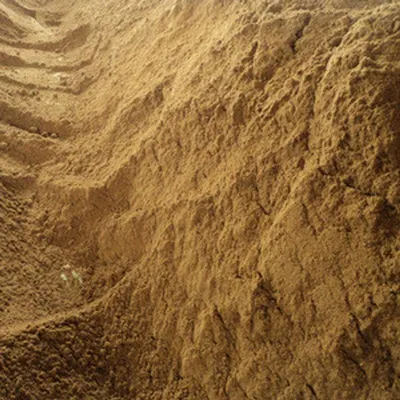
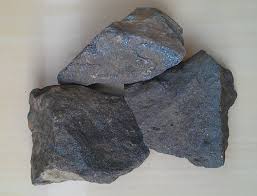
Kolbang Services operates out of Australia and currently lists seven active products across three material groups: Sandstones & Sands, Stones & Slates, and Other Ores & Minerals. The catalogue includes White Sand, Fill Sand, Beach Sand, Construction Sand, Graniite Crushed Stone Chips, Rail Ballast, and Sea Wall Rock. The Sea Wall Rock entry is recorded with HS code 2517.49 and is described as Blue Metal Basalt/Dolerite. The remaining sand and crushed‑stone items fall under the broader HS chapters for sand (2515) and crushed stone (2517) commonly used in trade data.
The product set reflects typical construction‑grade aggregates, with sand variants intended for concrete mixing, landscaping, and fill applications, while the crushed stone chips and rail ballast are sized for sub‑base and track support. All items are sourced within Australia, a country that maintains strict mining and environmental standards for mineral extraction.
Product Range and Specialties of Kolbang Services
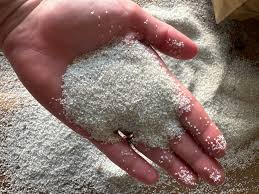
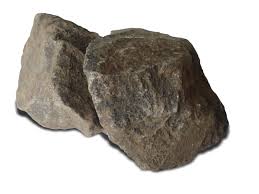
The catalogue offers four sand variants - White Sand, Fill Sand, Beach Sand and Construction Sand - each typically conforming to ASTM C33 specifications such as silica content above 95 %, moisture below 0.5 % and particle‑size ranges from 0‑2 mm (fine sand) to 0‑5 mm (fill sand). Graniite Crushed Stone Chips are angular fragments generally sized 4‑20 mm with compressive strength often exceeding 150 MPa, while Rail Ballast is supplied in 20‑63 mm angular aggregates designed for high durability and drainage in railway track beds. Sea Wall Rock, identified as Blue Metal Basalt/Dolerite, has a bulk density around 2.8 t/m³ and is valued for its weather‑resistance in coastal protection projects.
Typical packaging includes bulk shipments on cargo vessels - approximately 25 tonnes per 20‑ft container for loose aggregates - and bagged options of 25 kg polypropylene bags for sand or stone chips. Buyers may also request sealed bulk bins for rail ballast to preserve particle‑size grading during transport.
Trade and Export Information - Kolbang Services
Australian exporters of sand, crushed stone and basaltic rock primarily serve construction, civil‑engineering, road‑building and coastal‑protection sectors in the Asia‑Pacific, Middle East and African regions. The relevant HS code families are chapter 2515 for natural sand and chapter 2517 for crushed stone, gravel and related rock, with the specific Sea Wall Rock listed under HS 2517.49. Common certifications demanded by importers include ISO 9001 quality‑management systems, ASTM C33 for sand, ASTM D6910 for rail ballast and ASTM D448 for basaltic rock, while EN 13139 is often referenced for European aggregate standards.
Export logistics from Australia typically employ FOB or CIF incoterms, with bulk cargo loaded onto bulk carriers or contained in standard 20‑ft and 40‑ft containers. Australian mining regulations require environmental compliance certificates and, for certain aggregate types, a mineral‑resource report before shipment. Buyers should anticipate inspection regimes such as SGS or Bureau Veritas pre‑shipment audits for high‑volume orders.
Sourcing from Kolbang Services - Buyer Guidance
When sourcing from Kolbang Services, request laboratory reports that cover particle‑size distribution, moisture content, bulk density and any applicable ASTM or EN test results for the specific product. A physical sample - often a 25 kg bag for sand or a small bulk sample for crushed stone - should be examined to confirm consistency with the supplied specifications before finalizing a large purchase. Verify that the commercial invoice lists the correct HS code (2515 for sand, 2517 for crushed stone, 2517.49 for Sea Wall Rock) and that any claimed certifications are accompanied by current certificates of analysis.
Typical minimum order quantities range from a single container load for bulk aggregates to individual 25 kg bags for sample testing. Lead times in the Australian export market generally span four to six weeks, allowing for sampling, quality verification, export documentation and vessel scheduling. Ensure that payment terms and incoterms are clearly defined in the contract to align with the supplier’s logistics capabilities.
Frequently Asked Questions About Kolbang Services
What types of sand does Kolbang Services offer?
The supplier lists White Sand, Fill Sand, Beach Sand and Construction Sand. These are standard construction‑grade sands, typically meeting ASTM C33 specifications for cleanliness, particle‑size distribution and moisture content.
Is the Sea Wall Rock supplied with any specific material classification?
Yes, the Sea Wall Rock is identified as Blue Metal Basalt/Dolerite and is recorded under HS code 2517.49. Buyers usually request an ASTM D448 or EN 13561 report to confirm mineral composition and durability.
Which HS codes apply to the products in the catalogue?
The only HS code explicitly provided is 2517.49 for Sea Wall Rock. The sand products generally fall under HS chapter 2515 (natural sand) and the crushed stone and ballast items under chapter 2517 (crushed stone, sand and gravel).
What certifications are commonly required for these aggregate products?
Typical certifications include ISO 9001 quality‑management, ASTM C33 for sand, ASTM D6910 for rail ballast, and ASTM D448 for basalt/dolerite rock. Buyers should ask the supplier to provide the relevant test reports.
What are the usual minimum order quantities and packaging options?
Bulk aggregates are usually shipped in loose form on cargo vessels, with a 20‑ft container holding roughly 25 tonnes. Bagged sand or stone chips are often supplied in 25 kg polypropylene bags, with MOQ ranging from one container load to a single bag for sample purposes.
What lead times can a buyer expect for these products?
Lead times depend on product and shipping terms but typically range from four to six weeks from order confirmation to vessel loading, allowing time for sampling, testing and export documentation.
How should a buyer verify product quality before a large purchase?
Buyers should request a recent laboratory report covering particle‑size analysis, moisture content, bulk density and any relevant ASTM or EN test results. Obtaining a physical sample of the same batch and confirming the HS code and material description on the commercial invoice are standard verification steps.




 , Australia