Devini LLP — Verified Supplier
About Devini LLP - Coasters and Tableware Exporter in India
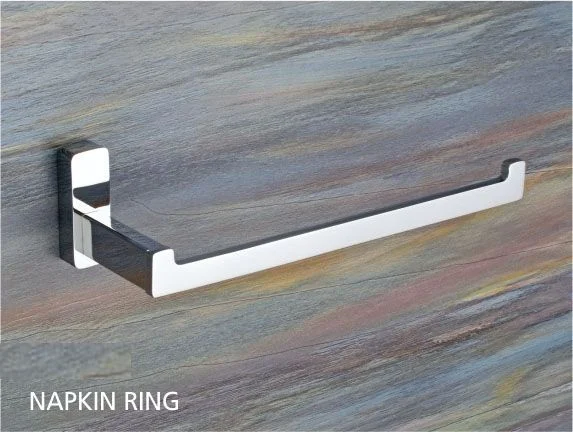
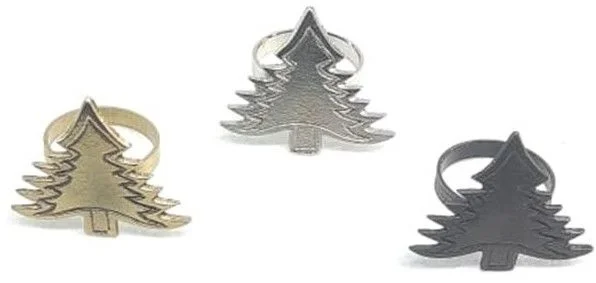
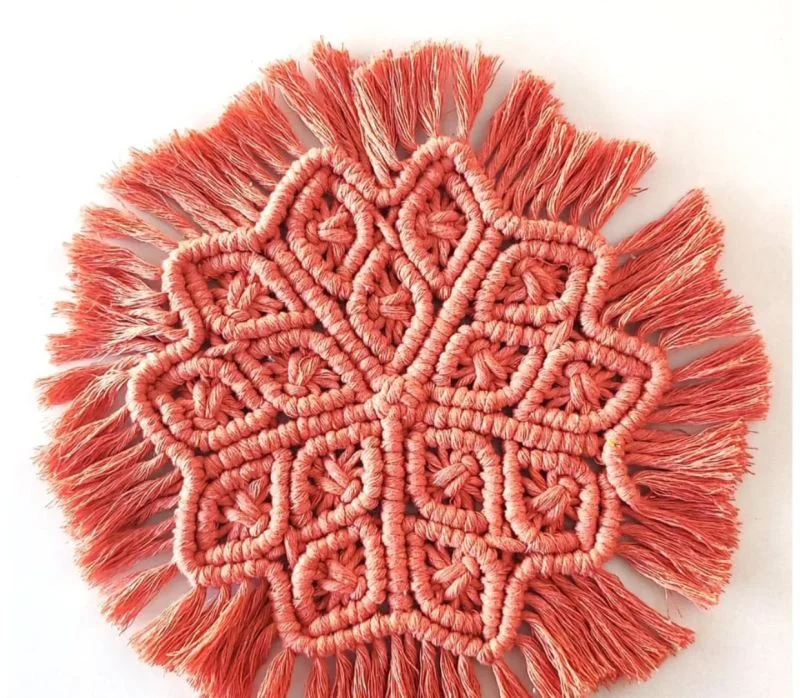
Devini LLP is an India-based exporter operating from the country with one of the world's largest handicraft and seafood export footprints, listed on the platform with 128 active products grouped across four top categories: Coasters, Napkin Rings, Blocks/Tiles & Slabs, and Fresh Crabs. The catalogue is dominated by decorative tableware, with 30 distinct coaster SKUs covering paper, MDF, resin, jute, cork, glass mosaic, capiz shell, and beaded variants, alongside napkin rings in the same home-décor segment. The remaining categories span natural-stone building material (blocks, tiles and slabs) and live/fresh seafood (crabs), giving the supplier a mixed offering that bridges handicraft homeware, dimensional stone, and perishable food exports from a single Indian source. The coasters listed use a wide spread of base materials: medium-density fibreboard (MDF) printed with paper faces, natural cork sheet, woven jute, hand-set glass mosaic and crackle-glass tesserae, capiz shell laminated in resin, and cast resin incorporating glitter, dried flowers, and pigments. Decorative motifs on the 30 coaster SKUs include the evil eye, lotus, mushroom, ladybird, frog, panda, peach, snowflake, compass, clover, dart board, and triangular geometric shapes, indicating production aimed at the souvenir, giftware, and lifestyle retail segments rather than industrial bulk supply. India is a major global hub for handcrafted resin, jute, and shell-based tableware, and exporters in this segment typically ship to homeware importers in the EU, the Gulf Cooperation Council (GCC), North America, and East Asia.
Product Range and Specialties of Devini LLP
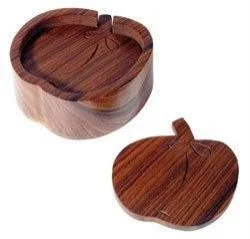
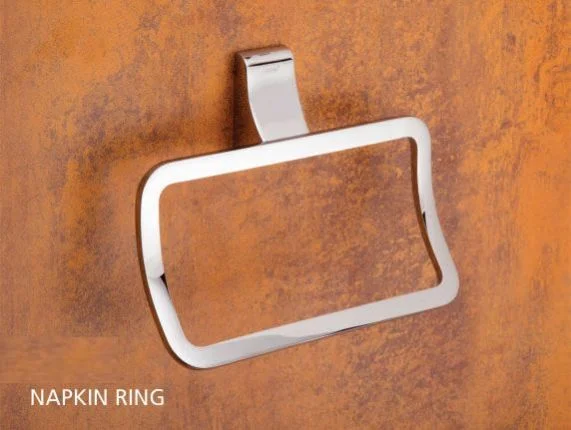
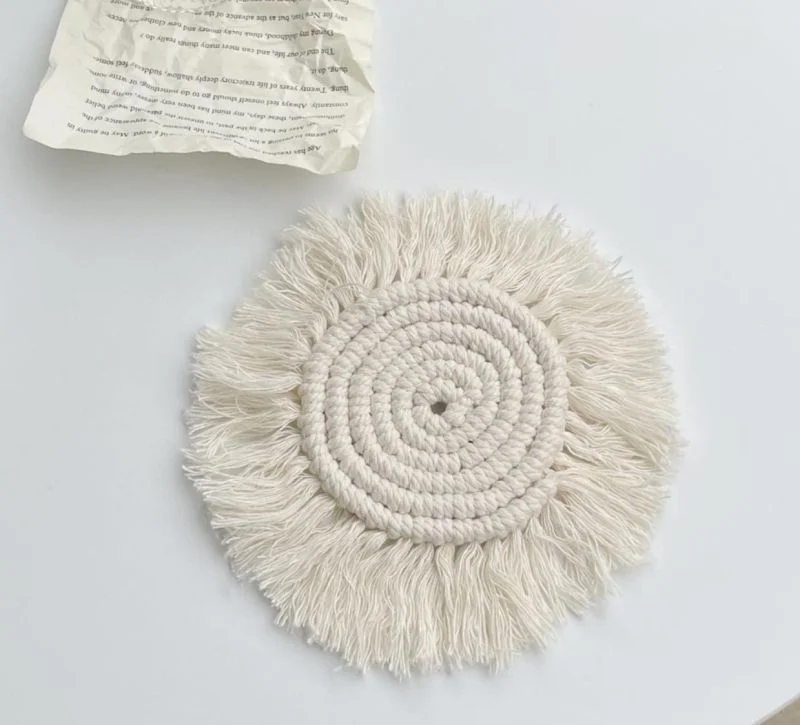
Devini LLP's catalogue centres on 30 coaster designs in at least eight material families: MDF with printed paper face (Paper MDF, Very French Hexa, Evil Eye, Cat, Green MDF), cast resin with embedded elements (Resin Flower, Glitter Resin Green, Glitter Resin Gold, Resin Capiz, Pink Flower Resin, Mosaic Resin), glass mosaic and crackle-glass (Crackle Glass Golden Mosaic, Mushroom Glass Beaded, Cat Glass Beaded), beaded fabric or felt bases (Opaque Beaded, Sea Shell Beaded, FROG Beaded, Ladybird, Lotus Beaded, Peach Beaded, Golden Panda Beaded, White Panda Beaded, Snowflake Beaded), cork sheet (Dart Board Cork, Calm Cork), woven jute (Laced Jute, Compass Jute), and shaped wooden blocks (Coloured Blocks Wooden, Triangular Ornament, Clover). Standard coaster dimensions in this segment typically run 9-10 cm square or 10 cm round with 3-5 mm thickness, and resin pieces are commonly cast at 8-12 mm to accommodate embedded shells, glitter, and dried botanicals. The remaining three categories - napkin rings, blocks/tiles & slabs, and fresh crabs - fall under different HS chapters and buyer profiles. Handmade napkin rings in India typically use MDF, jute, seagrass, resin, or beaded wraps and are sold in sets of 4 or 6 to homeware and hospitality buyers. Natural-stone blocks, tiles and slabs exported from India fall under HS code family 2515 (marble and travertine), 2516 (granite, porphyry, basalt), or 6802 (worked monumental/building stone), with common specifications including 600 x 600 mm and 800 x 800 mm tiles in 15-20 mm thickness, and gangsaw slabs in 2-3 cm and 3-4 cm thicknesses with polished, honed, or flamed finishes. Fresh crabs exported from India are typically caught from the coastal states of Kerala, Tamil Nadu, Karnataka, Goa, Maharashtra, and Gujarat, and are graded by species (mud crab Scylla serrata, blue swimmer Portunus pelagicus, three-spot crab), size (count per kg, commonly 200-500 g for mud crab), and packing style (whole live, whole chilled on ice, or frozen blocks).
Trade and Export Information - Devini LLP
Indian handicraft and homeware exports are typically shipped under HS code 4419 (tableware and kitchenware of wood), 4420 (wooden caskets, statuettes and ornamental articles), 4602 (plaited articles including jute), 7013 (glassware), or 9601 (worked ivory, bone, shell), depending on the dominant material of each SKU; resin castings generally classify under 3926 (other articles of plastics) or 4420 if the base is wood. Buyers in the EU, UK, USA, Canada, Australia, UAE, and Saudi Arabia typically require REACH compliance for articles in contact with food (relevant where coasters may contact drinkware condensation), and importers into the EU also require CE-marking and EN 71-3 toy-safety migration limits for items that could be marketed to children, along with FSC or PEFC documentation if wood or cork is claimed as sustainably sourced. For the stone category, India is among the world's top three exporters of granite and a leading processor of marble, with shipments typically going to the USA, China, the EU, the UK, and the Gulf, and buyers usually request ASTM C97 (absorption), ASTM C170 (compressive strength), and ASTM C880 (flexural strength) test reports. For fresh crabs, India exports under HS code 0306 (crustaceans, in shell or not, live, fresh, chilled, frozen, dried, salted or in brine), and shipments are typically destined for South-East Asia (China, Vietnam, Thailand, Malaysia), the EU, Japan, the USA, and the Middle East. Perishable seafood exports require a health certificate from the Export Inspection Council (EIC) or the Marine Products Export Development Authority (MPEDA), HACCP-based processing, and cold-chain integrity at 0-4 °C for chilled product or -18 °C or below for frozen blocks; live mud crab is usually shipped in insulated polystyrene boxes with moist packing at 12-18 °C. Sea-freight for handicrafts is typically arranged by FOB or CIF terms in 20 ft or 40 ft containers, with coaster cartons commonly sized 30 x 30 x 30 cm holding 24-48 pieces, while stone slabs are loaded in wooden crates or A-frame bundles and seafood moves by reefer container or air freight for live product.
Sourcing from Devini LLP - Buyer Guidance
Buyers sourcing from Devini LLP should request material-specific documentation before issuing a purchase order: for resin and MDF coasters, a REACH SVHC declaration and EN 71-3 migration test report are advisable for the EU market, plus a food-contact safe lacquer declaration if the items may sit under drinking vessels; for cork and jute items, FSC or PEFC chain-of-custody certificates should be requested if eco-claims will be made at retail. Sample evaluation should confirm coaster dimensions (typically 90-100 mm), base thickness, edge finish, and the integrity of embedded elements in resin pieces, since delamination of paper faces on MDF or yellowing of resin are common failure modes in this category. For the stone category, buyers should request the quarry name, country of origin, slab/tile dimensions, surface finish, and laboratory test reports for water absorption, density, and flexural strength, and should inspect for veining, fill, and resin treatment in person or via a third-party pre-shipment inspector. For the fresh crab line, buyers should confirm species (Latin name), size grade (count per kg), catch method, and whether the product is live, chilled, or frozen, along with the processor's MPEDA registration number, EIC health certificate, and HACCP plan. Cold-chain documentation - including temperature loggers, reefer container settings, and blast-freezing records for frozen product - is typically required, and a pre-shipment inspection covering organoleptic checks and histamine/TVB-N testing is recommended for seafood shipments to the EU and Japan. Across all categories, buyers should confirm the MOQ per SKU (handicraft coasters are often sold in export packs of 24, 48, or 96 pieces; stone in container loads; crabs by the kilogram or metric ton), the lead time from confirmed order to ex-factory dispatch, and the Incoterms under which Devini LLP typically quotes (FOB Mundra/Nhava Sheva/JNPT for handicrafts and stone, and FOB Cochin or Mumbai for seafood).
Frequently Asked Questions About Devini LLP
What product categories does Devini LLP export from India?
Devini LLP lists 128 active products across four top categories: decorative Coasters (30 SKUs in MDF, resin, jute, cork, glass mosaic, capiz shell, and beaded variants), Napkin Rings, natural-stone Blocks/Tiles & Slabs, and Fresh Crabs. The mix combines handicraft homeware, dimensional stone, and perishable seafood from a single Indian supplier.
Which materials are used in the coaster range?
The 30 coaster SKUs use MDF with printed paper face, cast resin (with glitter, dried flowers, or capiz shell), cork sheet, woven jute, glass mosaic and crackle-glass tesserae, beaded fabric or felt, and shaped wooden blocks. Decorative motifs include evil eye, lotus, mushroom, ladybird, frog, panda, peach, snowflake, compass, clover, and dart board designs.
Which HS codes typically apply to these products?
Handicraft coasters and napkin rings generally classify under HS 4419 (wooden tableware), 4420 (wooden ornamental articles), 4602 (plaited jute articles), 7013 (glassware), or 3926 (other plastic articles) depending on the dominant material. Natural stone blocks, tiles and slabs fall under HS 2515, 2516, or 6802, and fresh crabs are exported under HS 0306.
Which certifications and test reports should a buyer request?
For coasters and napkin rings destined for the EU, buyers typically request REACH SVHC declarations, EN 71-3 migration test reports, and food-contact safe lacquer statements; FSC or PEFC documentation is advisable for cork, jute, or wood items with eco-claims. For stone, ASTM C97 (absorption), ASTM C170 (compressive strength), and ASTM C880 (flexural strength) reports are standard. For fresh crabs, an MPEDA registration, EIC health certificate, and HACCP plan should be confirmed.
What are the typical packaging and shipping norms for these goods?
Coasters are usually packed in export cartons of 24-48 pieces and loaded into 20 ft or 40 ft FCL containers at FOB Mundra, JNPT, or Nhava Sheva. Stone slabs are crated in wooden bundles or A-frames, and fresh crabs are shipped chilled at 0-4 °C or frozen at -18 °C in reefer containers from Cochin or Mumbai, with live crab moved by air freight in insulated boxes at 12-18 °C.
What is the typical MOQ and lead time for a coaster order?
Handicraft coaster exporters in India typically work with MOQs of 24 to 96 pieces per design, scaling to full 20 ft container loads for large programmes. Production lead time for resin, MDF, or beaded coasters is usually 30-45 days after sample approval, plus 25-35 days sea transit to most major ports.
Which regions typically import Indian handicraft coasters and fresh crabs?
Handicraft coasters from India are commonly shipped to the EU, the UK, the USA, Canada, Australia, the UAE, and Saudi Arabia for homeware, giftware, and hospitality retail. Fresh Indian crabs are typically exported to South-East Asia (China, Vietnam, Thailand, Malaysia), the EU, Japan, the USA, and the Middle East.
How can a buyer verify quality before shipment?
Buyers typically request pre-production samples for dimensional and material approval, then arrange a third-party pre-shipment inspection (such as SGS, Bureau Veritas, or Intertek) covering AQL checks on finish, colour, and embedded elements for coasters; slab dimension, polish, and crack checks for stone; and organoleptic plus temperature-logger verification for seafood. Inspection reports and laboratory certificates should be reviewed against the agreed specification sheet before release of the shipment.




 , India