Dedania Overseas — Supplier
About Dedania Overseas - Orthopedic Equipments & Implants Supplier in India
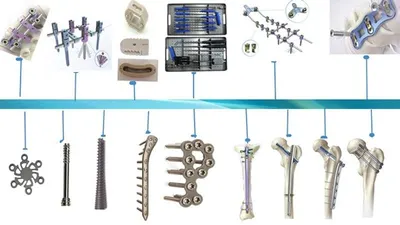
Based in India, Dedania Overseas lists five active products that cover orthopedic implants, bone screws and plates, and related drilling tools. The active product count of five is split across drill bits of 1 mm and 1.5 mm diameter, a generic ortho implant entry, a bone‑screw‑and‑plate set, and a cortical screw. All items fall under the broader categories of Orthopedic Equipments & Implants, Dental Equipments & Materials, Drilling Machines & Tools, and Screws, matching the supplier’s top‑category profile.
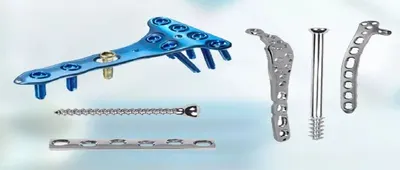
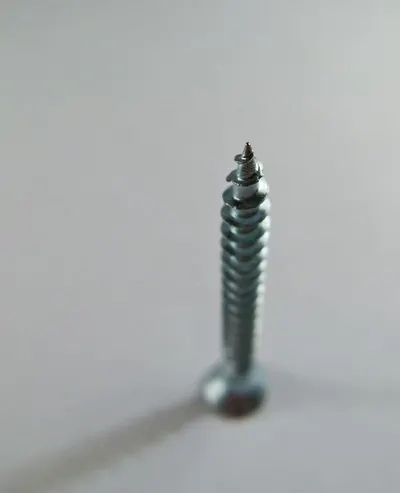
The catalogue records two drill‑bit products described as “ortho implants (Drill Bit 1 mm)” and “ortho implant (Drill Bit 1.5 mm)”. A third entry, “Ortho Implant Manu.From INDIA.”, carries HS code 9021.10 and is offered in Titanium Alloy Ti‑6Al‑4V (Grade 5) or Stainless Steel 316L. The fourth line, “BONE SCREW & PLATES (ORTHO IMPLANT) Manu.”, also uses HS code 9021.10 and specifies Titanium Grade 23 (Ti‑6Al‑4V ELI) or Stainless Steel 316L. The final item is a “Cortical Screw (Ortho)” without an explicit HS code but clearly belonging to the same HS‑code family of medical implants.
Product Range and Specialties of Dedania Overseas
The listed drill bits are sized at 1 mm and 1.5 mm, dimensions commonly used for precise bone‑cortical preparation in trauma and spinal surgery. In the orthopedic market, titanium alloy Ti‑6Al‑4V (Grade 5) meets ASTM F67 and ISO 5832‑1 specifications for strength and biocompatibility, while stainless steel 316L complies with ASTM F138 and ISO 5832‑3. Bone screws and plates made from Ti‑6Al‑4V ELI (Grade 23) provide extra‑low interstitial oxygen for improved fracture‑healing performance, a standard highlighted in ISO 5832‑2. Typical product variants include self‑tapping versus non‑self‑tapping screw threads, variable pitch options, and surface finishes such as anodized or passivated treatments. Packaging for these implants is usually provided in sterile, sealed trays or blister packs that meet ISO 11607 for barrier integrity.
Industry practice for orthopedic implants also involves strict dimensional tolerances (often ±0.01 mm for drill diameters) and surface roughness Ra ≤ 0.8 µm for screws. Buyers frequently request a full material certificate, a mechanical testing report (tensile strength, yield strength), and a sterilization validation certificate (e.g., EO or gamma) before acceptance.
Trade and Export Information - Dedania Overseas
India is a recognized exporter of medical devices under HS chapter 90, with HS code 9021.10 covering orthopaedic appliances such as implants, screws and plates. Major import destinations for Indian‑made orthopedic hardware include the United States, the European Union, the Gulf Cooperation Council countries, and emerging markets in Southeast Asia. Buyers in these regions typically require ISO 13485 certification, CE marking for EU markets, and FDA 510(k) clearance or registration for the United States. Export shipments are commonly packed in 20‑ft or 40‑ft containers, using insulated pallets and moisture‑controlled liners to preserve sterility, and are shipped under FOB or CIF Incoterms. Regulatory inspections often reference the Medical Device Regulation (MDR) in the EU and the Medical Device Amendments in the US, with customs authorities verifying the HS code, country of origin, and accompanying certificates of conformity.
Sourcing from Dedania Overseas - Buyer Guidance
When sourcing from Dedania Overseas, request the latest ISO 13485 certificate, a Declaration of Conformity for CE marking, and any FDA registration numbers relevant to the specific implant type. Verify material traceability by asking for a mill test report that confirms Ti‑6Al‑4V Grade 5 or Grade 23 chemistry and stainless steel 316L composition, and request mechanical test data that meets ASTM F67 or ASTM F138 limits. Ask for a sample pack that includes the 1 mm and 1.5 mm drill bits, a set of bone screws, and a cortical screw, all sterilized according to ISO 11607, to evaluate dimensional accuracy and surface finish before placing a full order.
Frequently Asked Questions About Dedania Overseas
What orthopaedic implant sizes does Dedania Overseas list?
The supplier lists drill bits of 1 mm and 1.5 mm diameter, a generic ortho implant entry, bone screws and plates, and a cortical screw, totaling five distinct product lines.
Which materials are used for the listed implants?
Materials are Titanium Alloy Ti‑6Al‑4V (Grade 5) and Titanium Grade 23 (Ti‑6Al‑4V ELI) for titanium options, and Stainless Steel 316L for stainless‑steel options, as specified in the catalogue.
What HS code applies to the bone screw and plate products?
Both the generic ortho implant and the bone screw & plate set are assigned HS code 9021.10, which covers orthopaedic appliances and surgical instruments.
Which certifications should a buyer request for these implants?
Buyers should request ISO 13485 compliance, a CE Declaration of Conformity for EU markets, and any FDA 510(k) or registration evidence for US imports, as these are standard for medical device trade.
What typical quality documentation accompanies orthopedic implants from India?
Typical documentation includes a material test certificate, mechanical property test report (tensile, yield strength), sterilization validation certificate, and conformity declarations to ASTM F67, ASTM F138, ISO 5832‑1/2/3.
What are common minimum order quantities and lead times for these products?
In the Indian orthopaedic market, MOQ often starts at 500 units per item, with lead times ranging from six to eight weeks after receipt of approved drawings and test reports.
How are the implants packaged for international shipment?
They are usually packed in sterile, sealed trays or blister packs that meet ISO 11607, placed on insulated pallets, and loaded into 20‑ft or 40‑ft containers under FOB or CIF terms.
Which regions typically import Indian orthopaedic hardware?
Key import regions include North America, the European Union, the Gulf states, and Southeast Asian countries, all of which apply similar regulatory requirements for medical devices.




 , India