China Free Imp & Exp Co., Ltd — Supplier
About China Free Imp & Exp Co., Ltd - Wire Mesh Supplier in China
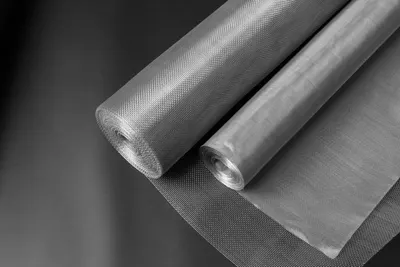
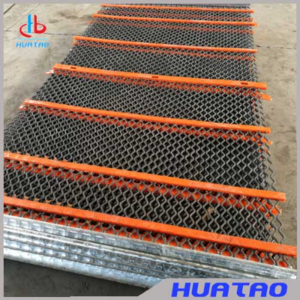
China, with a catalogue of six active products, provides a selection that spans wire mesh, reinforced concrete mesh, temporary fencing, food‑grade conveyor belts, PVC‑coated barrier fences and HESCO‑type barriers. The supplier’s top categories are listed as Wire Mesh, Fencing Materials, Conveyor Systems & Parts, and Army & Police Equipment, reflecting the range of metal and polymer structures it offers. Each product is identified by its descriptive name, for example “Stainless Steel Wire Mesh - 321 Wire Mesh” and “Metal Conveyor Belt - Food Conveyor Belt”. The product list does not include HS codes, but the items fall under standard metal‑working and polymer‑coating classifications used in international trade. The catalogue therefore targets buyers needing durable mesh, reinforced construction mesh, temporary security fencing, and industrial food‑handling conveyor solutions.
The six products are sourced or manufactured in China and are positioned for export to markets that require robust metal structures and safety barriers. The inclusion of both stainless‑steel and concrete‑reinforced meshes indicates capability to serve construction, infrastructure and security sectors. The temporary fence and PVC powder‑coated barrier fences address short‑term site security and crowd‑control needs, while the HESCO barrier system is a modular sand‑filled containment solution commonly used in military and emergency applications. By covering both metal and polymer‑based products, the supplier aligns with typical demand patterns for industrial and defence‑related procurement.
Product Range and Specialties of China Free Imp & Exp Co., Ltd
The catalogue lists stainless‑steel wire mesh (321 grade), concrete‑reinforced mesh, a temporary fence system, a food‑grade metal conveyor belt, PVC powder‑coated barrier fences and a HESCO‑type barrier system. In the wire mesh market, buyers often specify mesh opening size (e.g., 10 mm × 10 mm), wire diameter (e.g., 1.2 mm) and corrosion‑resistance grades such as 304 or 321 stainless steel. Concrete‑reinforced mesh is typically supplied with a tensile strength of about 300 MPa and a grid size of 150 mm × 150 mm. Temporary fencing products are usually made from galvanized steel with a coating thickness of 30 µm and a typical panel height of 2.0 m. Food‑grade conveyor belts must meet FDA‑compliant surface finish, a smoothness of ≤0.3 µm Ra, and operate at temperatures up to 120 °C. PVC powder‑coated barrier fences generally require a PVC layer of at least 30 µm for UV resistance, while HESCO barriers are modular panels (1 m × 2 m) designed for rapid assembly with sand or earth fill.
Trade and Export Information - China Free Imp & Exp Co., Ltd
Exporters of metal mesh and fencing products from China commonly ship to Southeast Asia, the Middle East, Africa and Latin America, where infrastructure development and security projects drive demand. HS Chapter 73 (e.g., 7308 for woven wire mesh, 7309 for other metal structures) and Chapter 84 (e.g., 8421 for conveyor belts) are the typical tariff classifications applied to these goods. Buyers usually request compliance with ISO 9001 quality management and, for food‑contact conveyor belts, certification such as FDA or EU‑Regulation 1935/2004. Chinese manufacturers often use containerised packing (20‑ft or 40‑ft containers) with corrosion‑resistant pallets, and Incoterms like FOB Shanghai or CIF Hong Kong are standard. Export documentation typically includes a commercial invoice, packing list, certificate of origin and, where applicable, a material safety data sheet for PVC‑coated products.
Sourcing from China Free Imp & Exp Co., Ltd - Buyer Guidance
When sourcing wire mesh or reinforced concrete mesh, request a product data sheet that details mesh opening, wire gauge, material grade (e.g., 321 stainless steel) and tensile test results. For temporary fencing and PVC‑coated barriers, ask for coating thickness verification, galvanisation certification and UV‑stability test reports. Food‑grade conveyor belts should be accompanied by an FDA compliance declaration, surface roughness measurement and temperature resistance certificate. Verify the supplier’s ISO 9001 certification or request an independent third‑party audit report before placing a large order. Samples of mesh or a short length of conveyor belt are standard practice to confirm dimensional tolerances and finish quality.
Frequently Asked Questions About China Free Imp & Exp Co., Ltd
What are the typical specifications for the stainless steel wire mesh offered?
Buyers usually require mesh opening sizes between 5 mm and 20 mm, wire diameters of 0.8 mm to 2.0 mm, and a stainless‑steel grade of 321 for corrosion resistance. Tensile strength and elongation at break are typically supplied in the product data sheet.
Does the concrete reinforced mesh meet standard construction requirements?
The reinforced mesh is generally supplied with a tensile strength of around 300 MPa and a grid spacing of 150 mm × 150 mm, matching common civil‑engineering specifications for slab reinforcement.
What certifications should I request for the food‑grade conveyor belt?
Request an FDA compliance statement or EU food‑contact regulation certificate, along with a surface roughness measurement (≤0.3 µm Ra) and a temperature resistance test up to 120 °C.
Are the PVC powder‑coated barrier fences UV‑stable?
UV stability is typically demonstrated by a PVC coating thickness of at least 30 µm and an accelerated weathering test report showing no significant degradation after 1,000 hours of UV exposure.
What is the typical lead time for a HESCO‑type barrier system order?
Lead times for modular HESCO panels are usually 30 - 45 days from order confirmation, depending on production scheduling and shipping arrangements.
Which HS codes are applied to these products for customs clearance?
Wire mesh and fencing structures fall under HS 7308‑7309, concrete reinforced mesh under HS 7308, metal conveyor belts under HS 8421, and PVC‑coated barriers under HS 3919. Exact classification should be confirmed with the freight forwarder.
What packaging is used for shipping the mesh and fencing products?
Products are commonly packed in wooden crates or steel pallets with anti‑corrosion wrapping, and loaded into 20‑ft or 40‑ft containers. Moisture‑proof liners are often added for concrete‑reinforced mesh.
Which Incoterms are most frequently used for exporting these goods from China?
Exporters typically offer FOB Shanghai, CIF Hong Kong or DDP to the buyer’s destination, allowing the buyer to choose the level of logistics responsibility.




 , China