Aya Export Sales — Supplier
About Aya Export Sales - Baby Diapers Supplier in Egypt
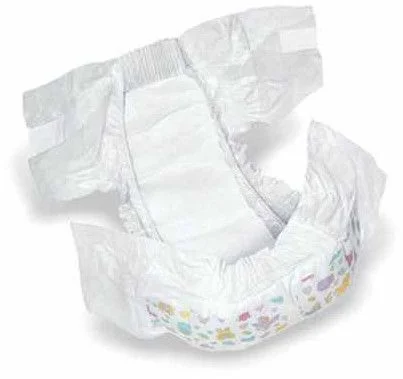
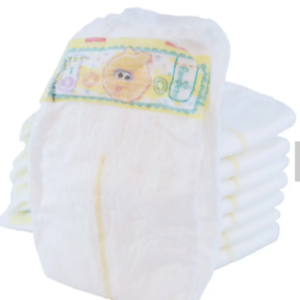
Based in Egypt, Aya Export Sales lists five active products across the disposable hygiene segment. The catalogue includes three branded baby diaper lines - Babi Dou Brand Baby Diaper, Town Baby Brand Baby Diaper, and City Baby Brand Baby Diaper - as well as a generic Disposable Babi Dou Diaper and a sanitary pad offering. All diaper products fall under HS Chapter 96, specifically HS code 9619.00 (with Babi Dou Brand Baby Diaper recorded under sub‑heading 9619.00.11). The listed materials combine non‑woven polypropylene or polyethylene layers, fluff pulp, and super‑absorbent polymer (SAP) cores, typical of disposable absorbent hygiene products. The sanitary pad entry does not provide HS or material details in the supplied data.
Product Range and Specialties of Aya Export Sales
Aya Export Sales offers three branded disposable baby diaper lines - Babi Dou, Town Baby, and City Baby - together with a generic disposable diaper under the Babi Dou name. All items are classified under HS code 9619.00, which covers baby diapers, and the Babi Dou Brand Baby Diaper is further identified by HS sub‑heading 9619.00.11. Typical industry grades for disposable diapers include absorbency levels measured by the ISO 13337 water‑absorption test, core SAP content ranging from 30 % to 50 % by weight, and a wet‑back index below 0.5 % for premium performance. Common material specifications involve a non‑woven polypropylene topsheet of 20 - 30 g/m², fluff pulp basis weight of 30 - 40 g/m², and a polyethylene backsheet with a thickness of 50 - 80 µm.
The sanitary pad product, while not detailed with HS code, generally falls under HS chapter 96.02 and is typically produced with a breathable top layer, SAP core, and a polyethylene backsheet, conforming to absorbency standards such as ISO 11968 for sanitary napkins. Standard sanitary pads are evaluated for absorbency using the ISO 11968 test, with a target liquid uptake of 15 - 30 g per pad. Buyers often require a skin‑friendly surface with a pH between 4.5 and 5.5 and a lint‑free finish. Packaging is usually in sealed cartons of 50 to 200 units per box for export stability.
Trade and Export Information - Aya Export Sales
Disposable baby diapers from Egypt are exported primarily to the Middle East, North Africa, and parts of Europe, where demand for cost‑effective hygiene solutions remains strong. The HS code 9619.00 is monitored by customs authorities for compliance with health‑product regulations, and shipments are commonly inspected under the EU REACH framework and the GCC Standardization Organization (GSO) requirements for textile products. Export logistics typically involve 20‑ft or 40‑ft containers packed in corrugated cartons of 1 000 diapers per box, with a total container load of approximately 20 000 to 40 000 units depending on size. Common Incoterms used by Egyptian suppliers include FOB Alexandria Port and CIF Dubai.
Sanitary pads, classified under HS 96.02, follow similar export pathways, with major importers in West Africa and the Gulf Cooperation Council. Buyers generally request a Certificate of Origin, a Material Safety Data Sheet (MSDS), and compliance documents such as ISO 9001 or ISO 13485 for medical‑grade hygiene products. Packaging for pads often uses sealed poly‑bag layers within cardboard cartons, accommodating 200 to 500 pads per carton for container loading. Regulatory checks may include testing for microbial limits and residual chemicals in line with ISO 18562‑1.
Sourcing from Aya Export Sales - Buyer Guidance
When sourcing baby diapers from Aya Export Sales, buyers should request a product sample together with a laboratory report confirming SAP content, absorbency (ISO 13337), and wet‑back performance. Verification of the material composition - non‑woven polypropylene topsheet weight, fluff pulp basis weight, and polyethylene backsheet thickness - helps assess consistency with the catalogue description. It is advisable to obtain a copy of any existing certifications such as ISO 9001 or CE conformity, even though they are not listed in the supplied facts, to ensure the supplier meets typical market requirements.
For the sanitary pad line, buyers should ask for an MSDS, a REACH compliance statement, and absorbency test results per ISO 11968. Confirm the packaging details, including carton dimensions and unit count, to plan container loading, and clarify the preferred Incoterm (e.g., FOB or CIF). Establish the minimum order quantity, which in the disposable diaper market often starts at one 20‑ft container (approximately 20 000 units), and verify lead times, which commonly range from 30 to 45 days after order confirmation.
Frequently Asked Questions About Aya Export Sales
What types of baby diapers does Aya Export Sales offer?
Aya Export Sales lists three branded disposable baby diaper lines - Babi Dou Brand, Town Baby Brand, and City Baby Brand - plus a generic Disposable Babi Dou Diaper. All are classified under HS code 9619.00, with the Babi Dou Brand specifically under sub‑heading 9619.00.11.
What materials are used in the listed diaper products?
The catalogue specifies a non‑woven polypropylene or polyethylene outer layer, a fluff pulp core blended with super‑absorbent polymer (SAP), and an elastic waistband. The City Baby model also mentions a breathable film as part of the backsheet construction.
Are any certifications indicated for Aya Export Sales' products?
No certifications are listed in the provided facts. Buyers should request copies of any ISO, CE, or GSO certificates that the supplier may hold before placing an order.
What HS codes apply to the products?
The baby diaper items fall under HS code 9619.00, with the Babi Dou Brand Baby Diaper recorded under the more specific sub‑heading 9619.00.11. The sanitary pad entry does not include an HS code in the supplied data.
What typical packaging is used for the diapers?
Export shipments of disposable diapers are usually packed in corrugated cartons, each containing around 1 000 diapers, and then loaded into 20‑ft or 40‑ft containers. This packaging allows a total container capacity of roughly 20 000 to 40 000 units depending on diaper size.
What documentation should a buyer request before purchasing?
Buyers should ask for a product sample, laboratory test reports for absorbency (ISO 13337) and SAP content, a Material Safety Data Sheet, and any relevant certifications such as ISO 9001 or CE conformity. A Certificate of Origin is also standard for customs clearance.
What are typical lead times and minimum order quantities for these products?
Lead times for Egyptian disposable diaper manufacturers generally range from 30 to 45 days after order confirmation. Minimum orders often start at one 20‑ft container, equating to approximately 20 000 diaper units, though exact MOQ should be confirmed with the supplier.




 , Egypt