The Answers Trade Limited — Supplier
About The Answers Trade Limited - Electric Components Supplier in China
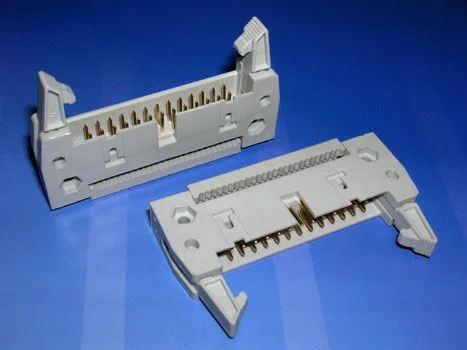
China hosts The Answers Trade Limited, a supplier that lists 14 active product entries in its catalogue. The entries are identified by codes such as 1771-am1, 1771-ibd and 1771-ife and fall under the Electric Components and Automobile Spare Parts & Supplies categories. Most items carry HS code 8537.10, which classifies them as electrical apparatus for switching or circuit protection, while one item uses HS code 8538.90 for parts of printed circuit boards. Materials disclosed include metal housings, steel chassis, FR4 printed‑circuit‑board (PCB) composites, copper wiring or contacts, and plastic enclosures. The catalogue therefore covers assembled PCB modules, switch assemblies and related electronic sub‑components.
The product list shows a consistent focus on PCB‑based assemblies with metal or steel housings, copper conductors and FR4 substrates. The presence of both steel‑mounted and plastic‑mounted versions indicates options for rugged automotive environments as well as general electronic applications. Each catalogue line specifies the material stack, for example “FR4 PCB Composite with Electronic Components” or “Steel housing with PCB assemblies and copper alloy contacts”. The supplier does not disclose certifications, so buyers must verify compliance independently.
Product Range and Specialties of The Answers Trade Limited
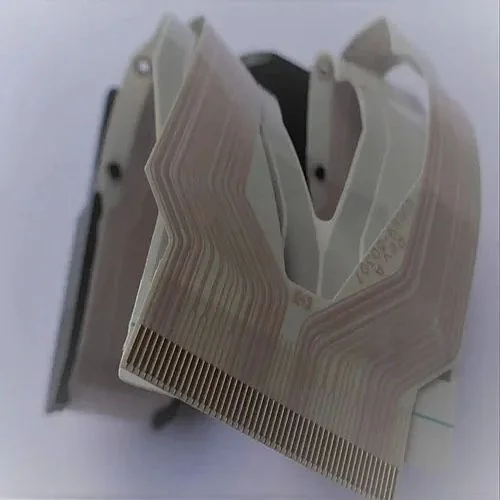
The catalogue comprises 14 items that are essentially finished electronic modules. Items such as 1771-am1, 1771-am2 and 1771-id01 are metal‑ or steel‑housing assemblies that integrate FR4 PCBs, copper tracks and mounted electronic components. The single 8538.90 entry (1771-ife) is listed as a PCB‑board part with metal housing, which is typical for connector or relay housings used in automotive and industrial equipment. In the wider industry, FR4 substrates are graded by glass‑cloth weight (e.g., 1 oz copper, 170 µm thickness) and fire‑rating (UL94‑V0). Metal housings are often stainless steel or zinc‑die‑cast, selected for durability and heat dissipation. Typical automotive‑grade modules meet IEC 60730 for safety and may be tested to IP65 ingress protection.
Buyers of Chinese electronic assemblies usually request data sheets that list PCB layer count, copper thickness (e.g., 35 µm), solder mask colour, and compliance with RoHS or REACH. For metal‑housing units, specifications often include hardness (Brinell > 150) and surface coating (e.g., zinc‑nickel). The presence of steel versus plastic housings influences weight (approximately 150 g for steel‑mounted versus 80 g for plastic‑mounted modules) and mounting options.
Trade and Export Information - The Answers Trade Limited
China remains one of the world’s largest exporters of electronic assemblies under HS chapter 85. HS 8537.10 items are commonly shipped to Southeast Asian manufacturers, European automotive suppliers and North American contract electronics firms. Export logistics typically involve 20‑foot or 40‑foot containers, with cartons or wooden pallets complying with ISPM 15 phytosanitary standards. Buyers often require CE marking for EU markets, UL certification for the United States and IEC 61340‑5‑1 testing for electrostatic discharge safety. While The Answers Trade Limited does not list its own certifications, Chinese exporters of similar components frequently hold ISO 9001 quality‑management systems and may obtain third‑party test reports on solder joint reliability and thermal cycling.
Regulatory considerations include the need for RoHS compliance documentation for lead‑free solders, as well as REACH registration for any hazardous substances in the PCB laminate. Importers must also ensure that metal housings meet customs valuation rules for HS 8537.10, which distinguishes between complete assemblies and separate parts. Shipping terms such as FOB Shanghai or CIF Guangzhou are standard for this product class, with typical transit times of 15‑25 days to Europe and 20‑30 days to North America.
Sourcing from The Answers Trade Limited - Buyer Guidance
When sourcing from The Answers Trade Limited, buyers should request a full technical data sheet for each module, specifying PCB layer stack‑up, copper weight, component list and housing material grade. Samples should be inspected for dimensional tolerances (e.g., housing thickness ±0.2 mm) and electrical performance such as contact resistance (<10 mΩ) and insulation resistance (>100 MΩ). Because the supplier does not disclose certifications, buyers are advised to ask for third‑party test reports covering RoHS, IEC 60730 safety tests and any applicable automotive standards (e.g., AEC‑Q200). Verification of the HS code used on the commercial invoice (8537.10 or 8538.90) helps customs clearance and tariff classification.
Prior to placing a large order, confirm the packaging method - most Chinese electronic modules are packed in anti‑static bags, placed in corrugated boxes with cushioning, and then palletised. Lead times reported by similar exporters range from 10 working days for stocked items to 30‑45 days for custom‑assembled modules, with minimum order quantities often set at one container load (≈1,000 units) or as low as 100 units for prototype batches.
Frequently Asked Questions About The Answers Trade Limited
What HS codes are used for the products listed by The Answers Trade Limited?
The catalogue assigns HS code 8537.10 to most assembled electronic modules and HS code 8538.90 to a printed‑circuit‑board part with metal housing.
Which material specifications are typical for the PCB assemblies?
The listed items use FR4 PCB composites, commonly supplied with 1 oz copper layers, glass‑cloth reinforcement and a fire‑rating of UL94‑V0.
How can a buyer verify compliance with environmental regulations?
Request RoHS test reports and REACH substance declarations; these documents are standard for electronic components exported from China.
What certifications should a buyer ask for before ordering?
Ask for IEC safety test reports, CE declaration of conformity for EU shipments, and UL or CSA certification if the goods will enter North America.
What are typical packaging and shipping practices for these modules?
Modules are usually placed in anti‑static bags, packed in corrugated cartons, palletised on wooden pallets, and shipped in 20‑ft or 40‑ft containers under FOB or CIF terms.
What is a realistic lead time for a standard order?
Standard stocked items often ship within 10‑15 working days, while custom‑assembled units may require 30‑45 days from order confirmation.
Are there minimum order quantities for the listed products?
Exporters of similar Chinese electronic assemblies typically set MOQs at one container load (about 1,000 units) or accept smaller prototype batches of around 100 units.
How should a buyer handle product testing before full purchase?
Obtain a sample for functional testing, verify dimensions, contact resistance (<10 mΩ) and insulation resistance (>100 MΩ), and compare the results against the supplier’s data sheet.




 , China