Shenzhen Sanpo Instrument Co., Ltd. — Supplier

About Shenzhen Sanpo Instrument Co., Ltd. - Tools & Instruments Supplier in China

Shenzhen Sanpo Instrument Co., Ltd. is a China-based supplier registered in Shenzhen, Guangdong province, listing 16 active products concentrated in portable measurement instruments, with secondary exposure to electric power meters, computer printing consumables, solar power equipment, and chemical/adhesive products. The catalogue is dominated by light and radiation measurement devices, including UVC, UVB 297 nm, UVA 365 nm, and UVV 405 nm and 420 nm irradiation meters, plus a UVC radiometer, a screen luminance meter, a digital lux meter, and a solar power meter covering the 200 nm to 1100 nm range typically used in photovoltaic testing. A second cluster covers material moisture testing with dedicated wood, paper, grain, and inductive moisture meters, while mechanical and acoustic measurement is represented by photo/contact tachometers and a sound level meter, and indoor air quality by a formaldehyde (CH2O) tester built around an electrochemical HCHO sensor classified under HS code 9027.80. The product mix places the supplier firmly in the handheld test and measurement segment of China's electronics manufacturing base in the Pearl River Delta, a region that hosts a large share of the country's instrument OEMs and exporters.

The breadth of the listed items spans five of the six categories shown on the supplier's profile, but the technical centre of gravity is optical, radiometric, and moisture measurement, with single-product representation in acoustic and electrochemical gas detection. The formaldehyde tester is the only catalogue entry with a declared HS code (9027.80, covering instruments and apparatus for physical or chemical analysis, for example polarimeters, refractometers, spectrometers, gas or smoke analysis apparatus), and is described as an electronic sensor instrument with an electrochemical HCHO sensor, the same detection principle used in most portable indoor air quality monitors in this category. The remaining instruments fall under Chapter 90 of the Harmonized System, primarily heading 9027 for chemical/physical analysis instruments and 9031 for optical measurement and inspection instruments, which together cover most handheld light, moisture, and tachometry devices exported from Shenzhen.

Product Range and Specialties of Shenzhen Sanpo Instrument Co., Ltd.

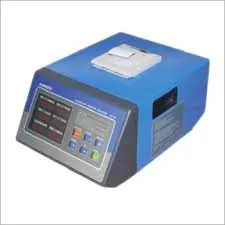
The 16-product catalogue breaks down into four functional groups. The radiometric group covers nine items: a UVC light meter/UV radiometer, a screen brightness/luminance meter, a digital lux meter, a UVB 297 nm irradiation meter, a UVV 405 nm black light irradiation meter, a UVA 365 nm ultraviolet illuminometer, a UVV 420 nm black light irradiation meter, a solar power meter, and the formaldehyde tester. Buyers in this segment typically evaluate units on spectral range (commonly 200 nm to 400 nm for UVA/UVB/UVC and 400 nm to 1100 nm for solar), irradiance range in mW/cm^2 or µW/cm^2, sensor type (silicon carbide, GaN or Si photodiode with filters), accuracy (often +/- 4 to +/- 5 percent of reading plus 2 digits), sampling time, data logging, and USB or Bluetooth output. The moisture group has four items (wood, paper, grain, and inductive), where buyers typically compare pin versus pinless (inductive/capacitive) sensing, measurement range (for example 5 to 40 percent for wood, 0.2 to 60 percent for grain depending on crop), resolution to 0.1 percent, and species or material calibration curves. The mechanical and acoustic group covers two photo/contact tachometers (rpm range typically 0.5 to 99,999 rpm with contact and non-contact modes) and a sound level meter (typically 30 to 130 dB, A and C weighting, IEC 61672 Class 2).

Across the wider category of handheld test and measurement instruments exported from China, common specifications buyers encounter include CE marking for the European Union, FCC Part 15 for the United States, RoHS and REACH compliance for restricted substances, and ISO 9001 quality management at the manufacturing level. For radiometers and lux meters, the relevant standards are typically CIE 69, CIE 85, and ISO/CIE 19476 for photometer calibration, while moisture meters for wood and grain often reference ISO 3130 for wood conditioning and ISO 712 for cereal moisture reference methods. Solar power meters are typically cross-checked against ASTM E1036 or IEC 60904 for reference cell calibration, and formaldehyde testers are commonly validated against EPA TO-11A or ISO 16000-3 indoor air methods. Materials in this category are largely ABS or PC/ABS enclosures, silicone keypads, LCD or OLED displays, and printed circuit boards with photodiodes, thermistors, or electrochemical cells depending on the function.

Trade and Export Information - Shenzhen Sanpo Instrument Co., Ltd.

Handheld test and measurement instruments exported from China, particularly from the Shenzhen and Dongguan manufacturing cluster, are typically shipped to industrial buyers in Southeast Asia, the Middle East, Africa, Eastern Europe, and Latin America, with significant volumes also moving to Western European distributors and North American import brands under private label. The principal HS code families are 9027 (instruments and apparatus for physical or chemical analysis), 9030 (oscilloscopes, spectrum analysers, and other instruments for measuring electrical quantities), 9031 (optical measurement and inspection instruments), and 9032 (automatic regulating or controlling instruments), with the formaldehyde tester at 9027.80 sitting squarely within the analytical instrument chapter. Electric power meters exported from the same cluster typically fall under 9028, and solar power equipment components under 8541 (semiconductor devices) or 8543 (electrical machines with individual functions).

For these categories, importers and procurement officers commonly require a commercial invoice, packing list, bill of lading or airway bill, certificate of origin (Form E for ASEAN, Form F for China-Chile, or GSP Form A where applicable), and conformity documents such as a CE Declaration of Conformity, FCC test report, or RoHS test report depending on destination. Inspection is typically carried out against AQL 2.5 or 4.0 sampling plans on dimensions, function, and cosmetic appearance, with calibration certificates traceable to NIST or NIM standards often requested for radiometric and acoustic instruments. Standard export packaging is individual colour box with foam insert, master carton of 10 to 20 units, and 20 ft or 40 ft container loads depending on instrument size, with FOB Shenzhen, FOB Yantian, or CIF destination port being the most common Incoterms. Chinese instrument exporters in this segment typically target OEM/ODM buyers, laboratory supply distributors, and e-commerce private-label sellers, with peak production lead times of 15 to 45 days after deposit and sample approval.

Sourcing from Shenzhen Sanpo Instrument Co., Ltd. - Buyer Guidance

Buyers evaluating Shenzhen Sanpo Instrument Co., Ltd. should request the specific spectral range, irradiance range, accuracy class, and sensor type for any radiometric or lux meter, and confirm whether a calibration certificate traceable to a national metrology institute (NIM or NIST) is supplied per shipment. For moisture meters, the species or material calibration library (for example, the grain list covering wheat, maize, rice, barley, coffee, and similar crops) and pin versus inductive sensing method should be confirmed in writing, along with the operating temperature and humidity range. For the formaldehyde tester at HS 9027.80, buyers should request the sensor manufacturer and model, detection range in ppm or mg/m^3, resolution, response time, and whether the unit supports continuous monitoring or spot sampling. CE, FCC, RoHS, and ISO 9001 documentation should be requested as scanned copies with each formal enquiry, and a pre-shipment inspection arranged against a written specification sheet, ideally with functional tests on at least 5 percent of lot quantity. Sample units are the most reliable way to confirm measurement accuracy against a reference instrument before placing a production order, and a written warranty of 12 to 24 months with defined RMA procedure is standard practice in this category.

Given the supplier's harbor trust tier, prudent buyers should verify business registration via the unified social credit code on China's National Enterprise Credit Information Publicity System, confirm the legal entity name matches the proforma invoice and bank account, and use Alibaba Trade Assurance or an irrevocable L/C at sight for first orders. Lead times, MOQ (commonly 100 to 500 units per model for OEM colour-box orders), and packaging requirements should be locked into the purchase contract along with the agreed accuracy class, calibration document, and accessory list. For instruments with rechargeable batteries, UN 38.3 test summaries and MSDS for the lithium cell are typically required for air freight and several destination markets.

Frequently Asked Questions About Shenzhen Sanpo Instrument Co., Ltd.

What product categories does Shenzhen Sanpo Instrument Co., Ltd. list?

The supplier lists 16 active products across Tools & Instruments, Electric Power Meters, Computer Printers & Materials, Solar Power Equipments, and Chemicals & Allied Products. The technical core is handheld radiometric, moisture, tachometry, acoustic, and gas detection instruments, with the formaldehyde tester carrying HS code 9027.80.

Which HS code applies to the formaldehyde tester?

The formaldehyde (CH2O) tester is classified under HS 9027.80, which covers instruments and apparatus for physical or chemical analysis, including gas or smoke analysis apparatus. The remaining light, moisture, tachometry, and sound level meters fall under Chapter 90, primarily headings 9027 and 9031.

What specifications should I request for the UVC and UVA/UVB meters?

Buyers should request spectral range (for example 220 to 280 nm for UVC, 280 to 315 nm for UVB, 315 to 400 nm for UVA), irradiance range in mW/cm^2 or µW/cm^2, accuracy (commonly +/- 4 percent plus 2 digits), sensor type, sampling time, and data output. A calibration certificate traceable to NIM or NIST is standard for this category.

What documents should I request before placing an order?

Request a CE Declaration of Conformity, FCC test report (for the US market), RoHS test report, ISO 9001 certificate from the manufacturer, and a calibration certificate for radiometric or acoustic instruments. For shipments, request commercial invoice, packing list, bill of lading, certificate of origin, and a pre-shipment inspection report against AQL 2.5 or 4.0.

What is the typical MOQ and lead time for handheld instruments from Shenzhen?

For OEM colour-box orders, MOQ is typically 100 to 500 units per model, with sample lead time of 5 to 10 days and production lead time of 15 to 45 days after deposit. Container loads vary by instrument size, with 20 ft containers commonly holding several thousand small handheld units.

Which regions typically import handheld test and measurement instruments from China?

Typical importing regions include Southeast Asia, the Middle East, Africa, Eastern Europe, and Latin America, alongside Western European distributors and North American private-label brands. Industrial buyers, laboratory supply distributors, and e-commerce resellers are the main end-user channels.

What packaging and Incoterms are standard for this category?

Standard export packaging is an individual colour box with foam insert, master carton of 10 to 20 units, and palletised 20 ft or 40 ft container loads. The most common Incoterms are FOB Shenzhen, FOB Yantian, or CIF destination port, with sea freight being typical for full container loads and air freight for samples or urgent replenishment.

How can I verify the supplier before placing a first order?

Verify the legal entity name and unified social credit code on China's National Enterprise Credit Information Publicity System, confirm the company name matches the proforma invoice and beneficiary bank account, and use Alibaba Trade Assurance or an irrevocable L/C at sight for the first order. A written warranty of 12 to 24 months and a defined RMA procedure should be included in the purchase contract.


Featured Products from this Supplier

Other Suppliers in Primary Category

Top Trusted Suppliers

Related Products

Trending in Parent Category

More Suppliers in Category

Related Products

Other Suppliers

EximNext
7.1K+ live requirements
Register Free🎁 Reach global buyers
Post Requirement
🌍 Trusted by 225K+ businesses in 200+ countries|
7.1K+ active requirements right now
✉️ [email protected]
|
Sell on EximNextPost Requirement
EximNext
AgricultureApparelConstructionElectronicFoodHomeIndustrialMineralsMiscellaneous
🔥 Deals|✨ AI Match|🏭 Suppliers|📋 Buy Leads|💰 Trade Finance
7.1K+ live RFQs·194.8K+ suppliers
🎁 Reach global buyers →
EximNext
EximNext
Register Free
🎁 Reach global buyers
Sign In
📋Post Requirement💬Get Quotes✨AI Match📋RFQ Marketplace
All Categories
Services & Tools
🏭Supplier Directory🔥Today's Deals💰Trade Finance
Sell on EximNext →
AboutContactBlogHelp
Electronics  ·  China
16
products listed

Shenzhen Sanpo Instrument Co., Ltd.

⚓ Harbor
Country flag , ChinaNew supplier / no reviews yet
🛡️
77/100
Trust Score

Shenzhen Sanpo Instrument Co., Ltd. Product Catalog

Showing 12 of 16 products
View all products →
Grain Moisture Meter
⚓ Harbor
Grain Moisture Meter
Contact
MOQ: 1 Unit
Inductive Moisture Meter
⚓ Harbor
Inductive Moisture Meter
Contact
MOQ: 1 Unit
Sound Level Meter
⚓ Harbor
Sound Level Meter
Contact
MOQ: 1 Unit
Paper Moisture Meter
⚓ Harbor
Paper Moisture Meter
Contact
MOQ: 1 Unit
Ultraviolet Illuminmeter Uva365
⚓ Harbor
Ultraviolet Illuminmeter Uva365
Contact
MOQ: 1 Unit
Black Light Irradiation Meter Uvv420
⚓ Harbor
Black Light Irradiation Meter Uvv420
Contact
MOQ: 1 Unit
Photo/contact Tachometer
⚓ Harbor
Photo/contact Tachometer
Contact
MOQ: 1 Unit
Photo Contact Tachometer
⚓ Harbor
Photo Contact Tachometer
Contact
MOQ: 1 Unit
Solar Power Meter
⚓ Harbor
Solar Power Meter
Contact
MOQ: 1 Unit
Formaldehyde (ch2o) Tester
⚓ Harbor
Formaldehyde (ch2o) Tester
Contact
MOQ: 1 Unit
Uvb297 Irradiation Meter
⚓ Harbor
Uvb297 Irradiation Meter
Contact
MOQ: 1 Unit
Black Light Irradiation Meter Uvv405
⚓ Harbor
Black Light Irradiation Meter Uvv405
Contact
MOQ: 1 Unit

About Shenzhen Sanpo Instrument Co., Ltd. - Tools & Instruments Supplier in China

Shenzhen Sanpo Instrument Co., Ltd. is a China-based supplier registered in Shenzhen, Guangdong province, listing 16 active products concentrated in portable measurement instruments, with secondary exposure to electric power meters, computer printing consumables, solar power equipment, and chemical/adhesive products. The catalogue is dominated by light and radiation measurement devices, including UVC, UVB 297 nm, UVA 365 nm, and UVV 405 nm and 420 nm irradiation meters, plus a UVC radiometer, a screen luminance meter, a digital lux meter, and a solar power meter covering the 200 nm to 1100 nm range typically used in photovoltaic testing. A second cluster covers material moisture testing with dedicated wood, paper, grain, and inductive moisture meters, while mechanical and acoustic measurement is represented by photo/contact tachometers and a sound level meter, and indoor air quality by a formaldehyde (CH2O) tester built around an electrochemical HCHO sensor classified under HS code 9027.80. The product mix places the supplier firmly in the handheld test and measurement segment of China's electronics manufacturing base in the Pearl River Delta, a region that hosts a large share of the country's instrument OEMs and exporters.

The breadth of the listed items spans five of the six categories shown on the supplier's profile, but the technical centre of gravity is optical, radiometric, and moisture measurement, with single-product representation in acoustic and electrochemical gas detection. The formaldehyde tester is the only catalogue entry with a declared HS code (9027.80, covering instruments and apparatus for physical or chemical analysis, for example polarimeters, refractometers, spectrometers, gas or smoke analysis apparatus), and is described as an electronic sensor instrument with an electrochemical HCHO sensor, the same detection principle used in most portable indoor air quality monitors in this category. The remaining instruments fall under Chapter 90 of the Harmonized System, primarily heading 9027 for chemical/physical analysis instruments and 9031 for optical measurement and inspection instruments, which together cover most handheld light, moisture, and tachometry devices exported from Shenzhen.

Product Range and Specialties of Shenzhen Sanpo Instrument Co., Ltd.

The 16-product catalogue breaks down into four functional groups. The radiometric group covers nine items: a UVC light meter/UV radiometer, a screen brightness/luminance meter, a digital lux meter, a UVB 297 nm irradiation meter, a UVV 405 nm black light irradiation meter, a UVA 365 nm ultraviolet illuminometer, a UVV 420 nm black light irradiation meter, a solar power meter, and the formaldehyde tester. Buyers in this segment typically evaluate units on spectral range (commonly 200 nm to 400 nm for UVA/UVB/UVC and 400 nm to 1100 nm for solar), irradiance range in mW/cm^2 or µW/cm^2, sensor type (silicon carbide, GaN or Si photodiode with filters), accuracy (often +/- 4 to +/- 5 percent of reading plus 2 digits), sampling time, data logging, and USB or Bluetooth output. The moisture group has four items (wood, paper, grain, and inductive), where buyers typically compare pin versus pinless (inductive/capacitive) sensing, measurement range (for example 5 to 40 percent for wood, 0.2 to 60 percent for grain depending on crop), resolution to 0.1 percent, and species or material calibration curves. The mechanical and acoustic group covers two photo/contact tachometers (rpm range typically 0.5 to 99,999 rpm with contact and non-contact modes) and a sound level meter (typically 30 to 130 dB, A and C weighting, IEC 61672 Class 2).

Across the wider category of handheld test and measurement instruments exported from China, common specifications buyers encounter include CE marking for the European Union, FCC Part 15 for the United States, RoHS and REACH compliance for restricted substances, and ISO 9001 quality management at the manufacturing level. For radiometers and lux meters, the relevant standards are typically CIE 69, CIE 85, and ISO/CIE 19476 for photometer calibration, while moisture meters for wood and grain often reference ISO 3130 for wood conditioning and ISO 712 for cereal moisture reference methods. Solar power meters are typically cross-checked against ASTM E1036 or IEC 60904 for reference cell calibration, and formaldehyde testers are commonly validated against EPA TO-11A or ISO 16000-3 indoor air methods. Materials in this category are largely ABS or PC/ABS enclosures, silicone keypads, LCD or OLED displays, and printed circuit boards with photodiodes, thermistors, or electrochemical cells depending on the function.

Trade and Export Information - Shenzhen Sanpo Instrument Co., Ltd.

Handheld test and measurement instruments exported from China, particularly from the Shenzhen and Dongguan manufacturing cluster, are typically shipped to industrial buyers in Southeast Asia, the Middle East, Africa, Eastern Europe, and Latin America, with significant volumes also moving to Western European distributors and North American import brands under private label. The principal HS code families are 9027 (instruments and apparatus for physical or chemical analysis), 9030 (oscilloscopes, spectrum analysers, and other instruments for measuring electrical quantities), 9031 (optical measurement and inspection instruments), and 9032 (automatic regulating or controlling instruments), with the formaldehyde tester at 9027.80 sitting squarely within the analytical instrument chapter. Electric power meters exported from the same cluster typically fall under 9028, and solar power equipment components under 8541 (semiconductor devices) or 8543 (electrical machines with individual functions).

For these categories, importers and procurement officers commonly require a commercial invoice, packing list, bill of lading or airway bill, certificate of origin (Form E for ASEAN, Form F for China-Chile, or GSP Form A where applicable), and conformity documents such as a CE Declaration of Conformity, FCC test report, or RoHS test report depending on destination. Inspection is typically carried out against AQL 2.5 or 4.0 sampling plans on dimensions, function, and cosmetic appearance, with calibration certificates traceable to NIST or NIM standards often requested for radiometric and acoustic instruments. Standard export packaging is individual colour box with foam insert, master carton of 10 to 20 units, and 20 ft or 40 ft container loads depending on instrument size, with FOB Shenzhen, FOB Yantian, or CIF destination port being the most common Incoterms. Chinese instrument exporters in this segment typically target OEM/ODM buyers, laboratory supply distributors, and e-commerce private-label sellers, with peak production lead times of 15 to 45 days after deposit and sample approval.

Sourcing from Shenzhen Sanpo Instrument Co., Ltd. - Buyer Guidance

Buyers evaluating Shenzhen Sanpo Instrument Co., Ltd. should request the specific spectral range, irradiance range, accuracy class, and sensor type for any radiometric or lux meter, and confirm whether a calibration certificate traceable to a national metrology institute (NIM or NIST) is supplied per shipment. For moisture meters, the species or material calibration library (for example, the grain list covering wheat, maize, rice, barley, coffee, and similar crops) and pin versus inductive sensing method should be confirmed in writing, along with the operating temperature and humidity range. For the formaldehyde tester at HS 9027.80, buyers should request the sensor manufacturer and model, detection range in ppm or mg/m^3, resolution, response time, and whether the unit supports continuous monitoring or spot sampling. CE, FCC, RoHS, and ISO 9001 documentation should be requested as scanned copies with each formal enquiry, and a pre-shipment inspection arranged against a written specification sheet, ideally with functional tests on at least 5 percent of lot quantity. Sample units are the most reliable way to confirm measurement accuracy against a reference instrument before placing a production order, and a written warranty of 12 to 24 months with defined RMA procedure is standard practice in this category.

Given the supplier's harbor trust tier, prudent buyers should verify business registration via the unified social credit code on China's National Enterprise Credit Information Publicity System, confirm the legal entity name matches the proforma invoice and bank account, and use Alibaba Trade Assurance or an irrevocable L/C at sight for first orders. Lead times, MOQ (commonly 100 to 500 units per model for OEM colour-box orders), and packaging requirements should be locked into the purchase contract along with the agreed accuracy class, calibration document, and accessory list. For instruments with rechargeable batteries, UN 38.3 test summaries and MSDS for the lithium cell are typically required for air freight and several destination markets.

Frequently Asked Questions About Shenzhen Sanpo Instrument Co., Ltd.

What product categories does Shenzhen Sanpo Instrument Co., Ltd. list?

The supplier lists 16 active products across Tools & Instruments, Electric Power Meters, Computer Printers & Materials, Solar Power Equipments, and Chemicals & Allied Products. The technical core is handheld radiometric, moisture, tachometry, acoustic, and gas detection instruments, with the formaldehyde tester carrying HS code 9027.80.

Which HS code applies to the formaldehyde tester?

The formaldehyde (CH2O) tester is classified under HS 9027.80, which covers instruments and apparatus for physical or chemical analysis, including gas or smoke analysis apparatus. The remaining light, moisture, tachometry, and sound level meters fall under Chapter 90, primarily headings 9027 and 9031.

What specifications should I request for the UVC and UVA/UVB meters?

Buyers should request spectral range (for example 220 to 280 nm for UVC, 280 to 315 nm for UVB, 315 to 400 nm for UVA), irradiance range in mW/cm^2 or µW/cm^2, accuracy (commonly +/- 4 percent plus 2 digits), sensor type, sampling time, and data output. A calibration certificate traceable to NIM or NIST is standard for this category.

What documents should I request before placing an order?

Request a CE Declaration of Conformity, FCC test report (for the US market), RoHS test report, ISO 9001 certificate from the manufacturer, and a calibration certificate for radiometric or acoustic instruments. For shipments, request commercial invoice, packing list, bill of lading, certificate of origin, and a pre-shipment inspection report against AQL 2.5 or 4.0.

What is the typical MOQ and lead time for handheld instruments from Shenzhen?

For OEM colour-box orders, MOQ is typically 100 to 500 units per model, with sample lead time of 5 to 10 days and production lead time of 15 to 45 days after deposit. Container loads vary by instrument size, with 20 ft containers commonly holding several thousand small handheld units.

Which regions typically import handheld test and measurement instruments from China?

Typical importing regions include Southeast Asia, the Middle East, Africa, Eastern Europe, and Latin America, alongside Western European distributors and North American private-label brands. Industrial buyers, laboratory supply distributors, and e-commerce resellers are the main end-user channels.

What packaging and Incoterms are standard for this category?

Standard export packaging is an individual colour box with foam insert, master carton of 10 to 20 units, and palletised 20 ft or 40 ft container loads. The most common Incoterms are FOB Shenzhen, FOB Yantian, or CIF destination port, with sea freight being typical for full container loads and air freight for samples or urgent replenishment.

How can I verify the supplier before placing a first order?

Verify the legal entity name and unified social credit code on China's National Enterprise Credit Information Publicity System, confirm the company name matches the proforma invoice and beneficiary bank account, and use Alibaba Trade Assurance or an irrevocable L/C at sight for the first order. A written warranty of 12 to 24 months and a defined RMA procedure should be included in the purchase contract.

About Shenzhen Sanpo Instrument Co., Ltd. - Tools & Instruments Supplier in China

Shenzhen Sanpo Instrument Co., Ltd. is a China-based supplier registered in Shenzhen, Guangdong province, listing 16 active products concentrated in portable measurement instruments, with secondary exposure to electric power meters, computer printing consumables, solar power equipment, and chemical/adhesive products. The catalogue is dominated by light and radiation measurement devices, including UVC, UVB 297 nm, UVA 365 nm, and UVV 405 nm and 420 nm irradiation meters, plus a UVC radiometer, a screen luminance meter, a digital lux meter, and a solar power meter covering the 200 nm to 1100 nm range typically used in photovoltaic testing. A second cluster covers material moisture testing with dedicated wood, paper, grain, and inductive moisture meters, while mechanical and acoustic measurement is represented by photo/contact tachometers and a sound level meter, and indoor air quality by a formaldehyde (CH2O) tester built around an electrochemical HCHO sensor classified under HS code 9027.80. The product mix places the supplier firmly in the handheld test and measurement segment of China's electronics manufacturing base in the Pearl River Delta, a region that hosts a large share of the country's instrument OEMs and exporters.

The breadth of the listed items spans five of the six categories shown on the supplier's profile, but the technical centre of gravity is optical, radiometric, and moisture measurement, with single-product representation in acoustic and electrochemical gas detection. The formaldehyde tester is the only catalogue entry with a declared HS code (9027.80, covering instruments and apparatus for physical or chemical analysis, for example polarimeters, refractometers, spectrometers, gas or smoke analysis apparatus), and is described as an electronic sensor instrument with an electrochemical HCHO sensor, the same detection principle used in most portable indoor air quality monitors in this category. The remaining instruments fall under Chapter 90 of the Harmonized System, primarily heading 9027 for chemical/physical analysis instruments and 9031 for optical measurement and inspection instruments, which together cover most handheld light, moisture, and tachometry devices exported from Shenzhen.

Product Range and Specialties of Shenzhen Sanpo Instrument Co., Ltd.

The 16-product catalogue breaks down into four functional groups. The radiometric group covers nine items: a UVC light meter/UV radiometer, a screen brightness/luminance meter, a digital lux meter, a UVB 297 nm irradiation meter, a UVV 405 nm black light irradiation meter, a UVA 365 nm ultraviolet illuminometer, a UVV 420 nm black light irradiation meter, a solar power meter, and the formaldehyde tester. Buyers in this segment typically evaluate units on spectral range (commonly 200 nm to 400 nm for UVA/UVB/UVC and 400 nm to 1100 nm for solar), irradiance range in mW/cm^2 or µW/cm^2, sensor type (silicon carbide, GaN or Si photodiode with filters), accuracy (often +/- 4 to +/- 5 percent of reading plus 2 digits), sampling time, data logging, and USB or Bluetooth output. The moisture group has four items (wood, paper, grain, and inductive), where buyers typically compare pin versus pinless (inductive/capacitive) sensing, measurement range (for example 5 to 40 percent for wood, 0.2 to 60 percent for grain depending on crop), resolution to 0.1 percent, and species or material calibration curves. The mechanical and acoustic group covers two photo/contact tachometers (rpm range typically 0.5 to 99,999 rpm with contact and non-contact modes) and a sound level meter (typically 30 to 130 dB, A and C weighting, IEC 61672 Class 2).

Across the wider category of handheld test and measurement instruments exported from China, common specifications buyers encounter include CE marking for the European Union, FCC Part 15 for the United States, RoHS and REACH compliance for restricted substances, and ISO 9001 quality management at the manufacturing level. For radiometers and lux meters, the relevant standards are typically CIE 69, CIE 85, and ISO/CIE 19476 for photometer calibration, while moisture meters for wood and grain often reference ISO 3130 for wood conditioning and ISO 712 for cereal moisture reference methods. Solar power meters are typically cross-checked against ASTM E1036 or IEC 60904 for reference cell calibration, and formaldehyde testers are commonly validated against EPA TO-11A or ISO 16000-3 indoor air methods. Materials in this category are largely ABS or PC/ABS enclosures, silicone keypads, LCD or OLED displays, and printed circuit boards with photodiodes, thermistors, or electrochemical cells depending on the function.

Trade and Export Information - Shenzhen Sanpo Instrument Co., Ltd.

Handheld test and measurement instruments exported from China, particularly from the Shenzhen and Dongguan manufacturing cluster, are typically shipped to industrial buyers in Southeast Asia, the Middle East, Africa, Eastern Europe, and Latin America, with significant volumes also moving to Western European distributors and North American import brands under private label. The principal HS code families are 9027 (instruments and apparatus for physical or chemical analysis), 9030 (oscilloscopes, spectrum analysers, and other instruments for measuring electrical quantities), 9031 (optical measurement and inspection instruments), and 9032 (automatic regulating or controlling instruments), with the formaldehyde tester at 9027.80 sitting squarely within the analytical instrument chapter. Electric power meters exported from the same cluster typically fall under 9028, and solar power equipment components under 8541 (semiconductor devices) or 8543 (electrical machines with individual functions).

For these categories, importers and procurement officers commonly require a commercial invoice, packing list, bill of lading or airway bill, certificate of origin (Form E for ASEAN, Form F for China-Chile, or GSP Form A where applicable), and conformity documents such as a CE Declaration of Conformity, FCC test report, or RoHS test report depending on destination. Inspection is typically carried out against AQL 2.5 or 4.0 sampling plans on dimensions, function, and cosmetic appearance, with calibration certificates traceable to NIST or NIM standards often requested for radiometric and acoustic instruments. Standard export packaging is individual colour box with foam insert, master carton of 10 to 20 units, and 20 ft or 40 ft container loads depending on instrument size, with FOB Shenzhen, FOB Yantian, or CIF destination port being the most common Incoterms. Chinese instrument exporters in this segment typically target OEM/ODM buyers, laboratory supply distributors, and e-commerce private-label sellers, with peak production lead times of 15 to 45 days after deposit and sample approval.

Sourcing from Shenzhen Sanpo Instrument Co., Ltd. - Buyer Guidance

Buyers evaluating Shenzhen Sanpo Instrument Co., Ltd. should request the specific spectral range, irradiance range, accuracy class, and sensor type for any radiometric or lux meter, and confirm whether a calibration certificate traceable to a national metrology institute (NIM or NIST) is supplied per shipment. For moisture meters, the species or material calibration library (for example, the grain list covering wheat, maize, rice, barley, coffee, and similar crops) and pin versus inductive sensing method should be confirmed in writing, along with the operating temperature and humidity range. For the formaldehyde tester at HS 9027.80, buyers should request the sensor manufacturer and model, detection range in ppm or mg/m^3, resolution, response time, and whether the unit supports continuous monitoring or spot sampling. CE, FCC, RoHS, and ISO 9001 documentation should be requested as scanned copies with each formal enquiry, and a pre-shipment inspection arranged against a written specification sheet, ideally with functional tests on at least 5 percent of lot quantity. Sample units are the most reliable way to confirm measurement accuracy against a reference instrument before placing a production order, and a written warranty of 12 to 24 months with defined RMA procedure is standard practice in this category.

Given the supplier's harbor trust tier, prudent buyers should verify business registration via the unified social credit code on China's National Enterprise Credit Information Publicity System, confirm the legal entity name matches the proforma invoice and bank account, and use Alibaba Trade Assurance or an irrevocable L/C at sight for first orders. Lead times, MOQ (commonly 100 to 500 units per model for OEM colour-box orders), and packaging requirements should be locked into the purchase contract along with the agreed accuracy class, calibration document, and accessory list. For instruments with rechargeable batteries, UN 38.3 test summaries and MSDS for the lithium cell are typically required for air freight and several destination markets.

Frequently Asked Questions About Shenzhen Sanpo Instrument Co., Ltd.
What product categories does Shenzhen Sanpo Instrument Co., Ltd. list?
The supplier lists 16 active products across Tools & Instruments, Electric Power Meters, Computer Printers & Materials, Solar Power Equipments, and Chemicals & Allied Products. The technical core is handheld radiometric, moisture, tachometry, acoustic, and gas detection instruments, with the formaldehyde tester carrying HS code 9027.80.
Which HS code applies to the formaldehyde tester?
The formaldehyde (CH2O) tester is classified under HS 9027.80, which covers instruments and apparatus for physical or chemical analysis, including gas or smoke analysis apparatus. The remaining light, moisture, tachometry, and sound level meters fall under Chapter 90, primarily headings 9027 and 9031.
What specifications should I request for the UVC and UVA/UVB meters?
Buyers should request spectral range (for example 220 to 280 nm for UVC, 280 to 315 nm for UVB, 315 to 400 nm for UVA), irradiance range in mW/cm^2 or µW/cm^2, accuracy (commonly +/- 4 percent plus 2 digits), sensor type, sampling time, and data output. A calibration certificate traceable to NIM or NIST is standard for this category.
What documents should I request before placing an order?
Request a CE Declaration of Conformity, FCC test report (for the US market), RoHS test report, ISO 9001 certificate from the manufacturer, and a calibration certificate for radiometric or acoustic instruments. For shipments, request commercial invoice, packing list, bill of lading, certificate of origin, and a pre-shipment inspection report against AQL 2.5 or 4.0.
What is the typical MOQ and lead time for handheld instruments from Shenzhen?
For OEM colour-box orders, MOQ is typically 100 to 500 units per model, with sample lead time of 5 to 10 days and production lead time of 15 to 45 days after deposit. Container loads vary by instrument size, with 20 ft containers commonly holding several thousand small handheld units.
Which regions typically import handheld test and measurement instruments from China?
Typical importing regions include Southeast Asia, the Middle East, Africa, Eastern Europe, and Latin America, alongside Western European distributors and North American private-label brands. Industrial buyers, laboratory supply distributors, and e-commerce resellers are the main end-user channels.
What packaging and Incoterms are standard for this category?
Standard export packaging is an individual colour box with foam insert, master carton of 10 to 20 units, and palletised 20 ft or 40 ft container loads. The most common Incoterms are FOB Shenzhen, FOB Yantian, or CIF destination port, with sea freight being typical for full container loads and air freight for samples or urgent replenishment.
How can I verify the supplier before placing a first order?
Verify the legal entity name and unified social credit code on China's National Enterprise Credit Information Publicity System, confirm the company name matches the proforma invoice and beneficiary bank account, and use Alibaba Trade Assurance or an irrevocable L/C at sight for the first order. A written warranty of 12 to 24 months and a defined RMA procedure should be included in the purchase contract.

Shenzhen Sanpo Instrument Co., Ltd.
Country flag China
⚓ HarborElectronics
77/100
Trust Score
16
Products
✓ Free to contact — no commission
✓ Escrow payment available
✓ Verified business identity
Compare more suppliers
Post a requirement — get 10 quotes free
Let verified suppliers compete for your business. Free, fast, no commitment.
Due Diligence
Verify this supplier's real shipping history.
Every shipment, every buyer, every port. Trade data that can't be faked.
Run due diligence →
Discover More

Related Suppliers & Products

Explore similar suppliers, related products and trending categories

Featured Products from this Supplier

Other Suppliers in Primary Category

Top Trusted Suppliers

Related Products

Trending in Parent Category

More Suppliers in Category

Stay ahead in global trade
Weekly market insights & new supplier alerts.
EximNext
Exim Next is a leading global B2B marketplace, connecting over 220,000 registered suppliers and buyers across 200+ countries. As a trusted import export marketplace, it serves as the essential B2B portal for businesses worldwide, empowering them to expand their international reach. With Exim Next, businesses can trade smarter and grow faster.
SECURE PAYMENTS
VISAMastercardPayPalSWIFTL/CEscrow
Follow us
© 2026 EximNext