Hangzhou Wanjing New Material Co. — Supplier
About Hangzhou Wanjing New Material Co. - Titanium Dioxide Supplier in China
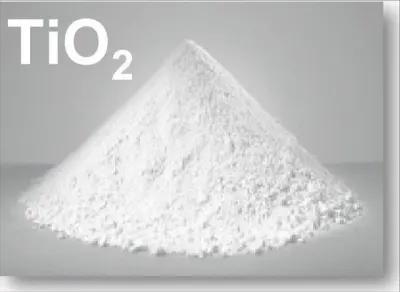
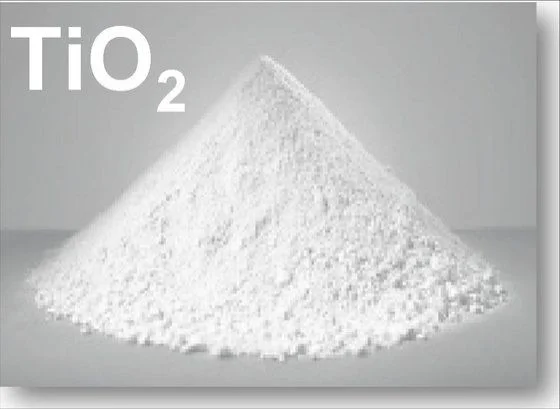
Hangzhou Wanjing New Material Co. is based in Hangzhou, China and currently lists five active products. The supplier is classified as an imported, harbor‑tier supplier on the platform. Its catalogue is concentrated on titanium dioxide, which falls under the broader “Chemicals & Allied Products” category. All five entries belong to the inorganic pigment and functional oxide segment that is recorded under HS chapter 28 (Inorganic chemicals). The company’s product list includes both anatase and rutile crystal forms of TiO₂, covering standard and nano‑scaled grades.
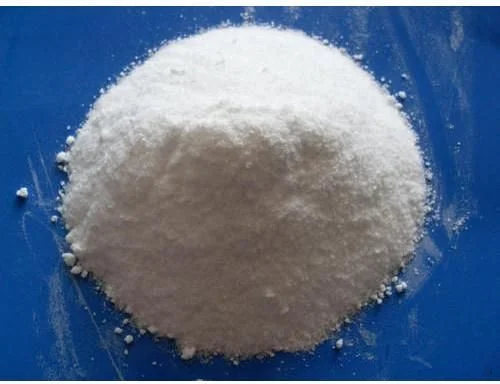
The anatase titanium dioxide product is typically used for photocatalytic applications where high UV activity is required. The “highly catalytic and active” titanium dioxide entry suggests a formulation with enhanced surface area, often measured above 30 m²/g. Three rutile‑based items are offered: a general nano rutile, a hydrophilic nano rutile, and a hydrophobic nano rutile, each differentiated by surface treatment that modifies water affinity. In international trade, rutile TiO₂ is commonly exported under HS code 2802.00 and is subject to REACH registration for the European Union. Buyers typically request specifications such as TiO₂ purity (≥99 %), particle size distribution (50 - 150 nm for nano grades), and moisture content (<0.5 %). Packaging for these powders is usually 25 kg polypropylene bags suitable for bulk container loading.
Product Range and Specialties of Hangzhou Wanjing New Material Co.
The catalogue lists five titanium dioxide products: anatase TiO₂, a highly catalytic TiO₂, and three rutile nano TiO₂ variants (standard, hydrophilic, and hydrophobic). In the industry anatase grades are valued for photocatalysis and usually present a purity above 99 % with particle sizes between 100 nm and 200 nm, while rutile nano grades target pigment and coating markets and are often specified with purity ≥99.5 %, average particle size 30‑80 nm, and surface treatments that render the particles either water‑attracting or water‑repelling.
Titanium dioxide grades are classified by crystal structure (anatase vs. rutile), particle size (micron vs. nano), and surface modification (hydrophilic/hydrophobic). Common applications include pigments for paints, plastics, paper, cosmetics, and functional additives in solar‑cell coatings. Buyers normally require a Certificate of Analysis, Safety Data Sheet, and for nano grades a nanomaterial safety assessment. Export shipments are typically packed in 25 kg bags and consolidated in 20‑ft containers that can hold up to 20 tons of product.
Trade and Export Information - Hangzhou Wanjing New Material Co.
China is a leading exporter of titanium dioxide, with HS code 2802.00 covering both pigment and functional grades. Major import destinations include the European Union, United States, Japan, South Korea, and Middle Eastern countries, and shipments are usually loaded in 20‑ft or 40‑ft containers with 25 kg moisture‑proof bags placed on pallets.
Buyers often request compliance documents such as REACH registration, ISO 9001 quality‑system certification, and for nano TiO₂ a Safety Data Sheet that addresses EU CLP and US EPA TSCA nanomaterial requirements. Typical incoterms are FOB Hangzhou or CIF to the destination port, and logistics considerations include temperature‑controlled storage to prevent moisture uptake and careful handling to avoid dust exposure.
Sourcing from Hangzhou Wanjing New Material Co. - Buyer Guidance
When sourcing from Hangzhou Wanjing, buyers should obtain a current Certificate of Analysis that details TiO₂ purity, Fe₂O₃ content, particle‑size distribution, and moisture level. A Safety Data Sheet covering nano‑material handling, inhalation limits, and first‑aid measures is also essential.
Verify that the supplier can provide REACH registration numbers and any applicable ISO certifications. Request a sample batch to test against intended application criteria such as pigment dispersion in polymer matrices or photocatalytic activity under UV light. Confirm packaging details (25 kg bags sealed in polyethylene liners) and discuss lead times, which for bulk orders typically range from 30 to 45 days, with minimum order quantities often set at 500 kg.
Frequently Asked Questions About Hangzhou Wanjing New Material Co.
What crystal forms of TiO₂ does Hangzhou Wanjing supply?
The company lists anatase TiO₂, a highly catalytic TiO₂, and three rutile nano TiO₂ variants (standard, hydrophilic, and hydrophobic). Each variant is offered as a powder suitable for different industrial applications.
Are nano‑grade TiO₂ products covered by specific safety regulations?
Yes, nano TiO₂ is subject to REACH nanomaterial requirements in the EU and to US EPA TSCA regulations. Suppliers normally provide a detailed Safety Data Sheet and a nanomaterial safety assessment to demonstrate compliance.
Which specifications should be checked for pigment‑grade TiO₂?
Key parameters include TiO₂ purity of at least 99 %, Fe₂O₃ impurity below 0.2 %, particle size between 50 nm and 150 nm for nano grades, and moisture content under 0.5 %. Surface treatment details (hydrophilic or hydrophobic) are also important for end‑use performance.
What documentation is typically required before placing an order?
Buyers usually request a current Certificate of Analysis, Safety Data Sheet, proof of REACH registration, and any ISO quality‑system certificates the supplier holds. These documents confirm purity, safety, and regulatory compliance.
How is the product packaged for international shipment?
Titanium dioxide powders are commonly packed in 25 kg polypropylene or polyethylene bags that are moisture‑proof. The bags are palletised and loaded into 20‑ft or 40‑ft containers for ocean freight.
Which incoterms are commonly used for shipping TiO₂ from China?
FOB Hangzhou and CIF to the buyer’s destination port are the most frequently employed terms for bulk chemical shipments. The chosen incoterm determines responsibility for freight, insurance, and customs clearance.
What are typical lead times and minimum order quantities?
Bulk orders generally require 30 - 45 days from order confirmation, depending on grade and packaging. Many exporters set a minimum order quantity around 500 kg, although exact figures may vary by product specification.




 , China