Agriculture›
 Apparel and fashion accessories›
 Construction & real estate›💡Electronic & Electrical›🍎Food & Beverages›🛋️Home furnishing & supplies›⚗️Industrial goods & chemical›🪨Minerals & metals›📦Miscellaneous›Agriculture›Apparel and fashion accessories›Construction & real estate›💡Electronic & Electrical›🍎Food & Beverages›🛋️Home furnishing & supplies›⚗️Industrial goods & chemical›🪨Minerals & metals›📦Miscellaneous›
Arthur Wang Co. Product Catalog
About Arthur Wang Co. - Industrial Chemicals Supplier in Taiwan
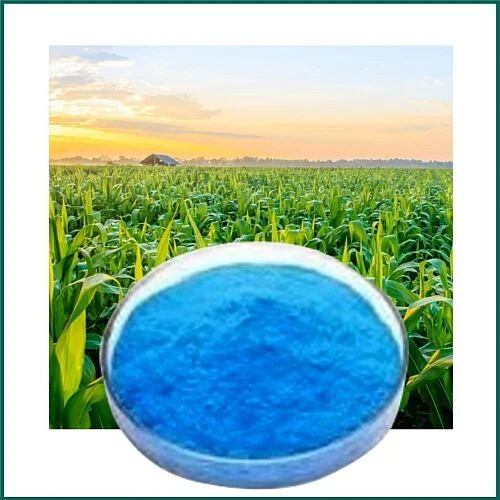
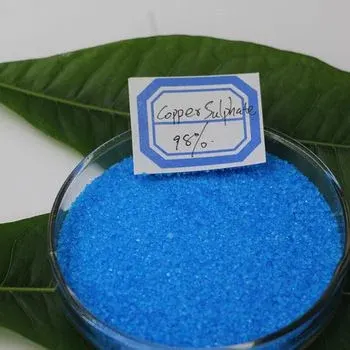
Arthur Wang Co. operates from Taiwan and currently lists seven active chemical products in its catalogue. The company classifies its offerings under the Industrial Chemicals and Chemicals & Allied Products categories, reflecting a focus on bulk inorganic and specialty chemicals. The product list includes Sulphamic Acid with a minimum purity of 99.8%, Copper Sulphate Pentahydrate with copper contents ranging from 23 % to 25 %, Ferric Chloride, Zinc Chloride, Para‑Toluene Sulphonic Acid Monohydrate (PTSA), Potassium Carbonate at 99.5 % purity, and both flake and liquid forms of Potassium Hydroxide. Each item is presented without additional specifications such as HS codes or certifications in the supplied data. Buyers can therefore evaluate the basic chemical grades before requesting detailed compliance documentation.
The catalogue does not mention any proprietary processing facilities or production capacities, limiting the public profile to the seven listed chemicals. While the supplier’s trust tier is recorded as “harbor,” no further performance metrics are disclosed. Potential importers should therefore focus on the explicit chemical grades and request standard safety data sheets and quality certificates to confirm suitability for their applications. The absence of stated certifications means that buyers must verify compliance with relevant international standards during the sourcing process.
Product Range and Specialties of Arthur Wang Co.
The seven chemicals listed by Arthur Wang Co. cover common inorganic acids, salts, and alkali compounds used across multiple industrial sectors. Sulphamic Acid at 99.8 % purity is typical for descaling and cleaning applications, while Copper Sulphate Pentahydrate with 23‑25 % Cu is standard for electroplating, algaecides, and wood preservation. Ferric Chloride and Zinc Chloride are frequently employed in metal surface treatment and textile dyeing, respectively. Para‑Toluene Sulphonic Acid Monohydrate (PTSA) serves as an intermediate in the production of detergents and dyes. Potassium Carbonate (99.5 %) is a common alkaline buffer in glass manufacturing and food processing, and Potassium Hydroxide is offered both as flakes for solid handling and as a liquid solution for rapid dissolution. In the broader market, these chemicals are usually supplied in grades such as “technical grade,” “industrial grade,” or “reagent grade,” with specifications for moisture content, particle size, and impurity limits documented in product data sheets.
Industry practice for these categories includes typical purity thresholds (e.g., ≥99 % for industrial grade acids, ≤0.5 % moisture for salts) and standard packaging formats such as 25 kg bags for bulk salts, 20 L drums for liquid alkalis, and 5 kg drums for powdered acids. Buyers often request certificates of analysis (CoA) that detail assay, moisture, and heavy‑metal limits, as well as Safety Data Sheets (SDS) that comply with GHS labeling requirements.
Frequently Asked Questions About Arthur Wang Co.
What types of chemicals does Arthur Wang Co. list in its catalogue?
The catalogue includes Sulphamic Acid (≥99.8 % purity), Copper Sulphate Pentahydrate (Cu 23‑25 %), Ferric Chloride, Zinc Chloride, Para‑Toluene Sulphonic Acid Monohydrate, Potassium Carbonate (99.5 %), and both flake and liquid Potassium Hydroxide.
What certifications should a buyer request from Arthur Wang Co.?
Buyers should ask for a current Certificate of Analysis, an up‑to‑date Safety Data Sheet, and any applicable ISO 9001 or REACH registration documents, as these are commonly required for industrial chemical imports.
Are there standard purity grades for these chemicals?
Yes. In the industry, Sulphamic Acid and Potassium Carbonate are typically supplied at ≥99 % purity, while copper and zinc salts are often produced with metal contents of 23‑25 % and 20‑30 % respectively. Ferric Chloride and PTSA are usually offered as industrial grade with impurity limits defined in the SDS.
Which HS code families apply to the listed products?
The products fall under Chapter 28 of the HS system: acids and inorganic chemicals such as Sulphamic Acid (2816), Copper Sulphate (2833), Ferric Chloride (2825), Zinc Chloride (2830), PTSA (2915), Potassium Carbonate (2835) and Potassium Hydroxide (2815).
What are typical packaging formats for these chemicals?
Bulk inorganic chemicals are usually packed in 25 kg woven polypropylene bags, 20 L steel drums for liquid alkalis, and 5 kg fiber drums for powdered acids. Packaging must meet UN recommendations for hazardous goods where relevant.
 Taiwan
Related Suppliers & Products
Explore similar suppliers, related products and trending categories