Agriculture›
 Apparel and fashion accessories›
 Construction & real estate›💡Electronic & Electrical›🍎Food & Beverages›🛋️Home furnishing & supplies›⚗️Industrial goods & chemical›🪨Minerals & metals›📦Miscellaneous›Agriculture›Apparel and fashion accessories›Construction & real estate›💡Electronic & Electrical›🍎Food & Beverages›🛋️Home furnishing & supplies›⚗️Industrial goods & chemical›🪨Minerals & metals›📦Miscellaneous›
Akdag Kaucuk Ltd. Sti. Product Catalog



About Akdag Kaucuk Ltd. Sti. - Gaskets Supplier in Turkey
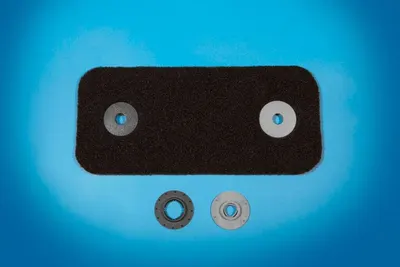
Akdag Kaucuk Ltd. Sti. operates out of Turkey and lists five distinct gasket‑related products in its catalogue. The portfolio includes standard gaskets, bellows, low‑ped gaskets, conductive gaskets and thermal gaskets, each classified under the broader “Gaskets” category. The supplier’s catalogue does not provide HS‑code details, so buyers must verify the appropriate tariff headings during customs clearance. Product descriptions focus on functional types rather than material composition, indicating a range that likely covers elastomeric and metallic options. Turkish manufacturers of sealing components typically serve automotive, machinery and HVAC sectors, exporting to Europe, the Middle East and North Africa.
The listed items cover both static sealing (standard, thermal and conductive gaskets) and dynamic sealing (bellows, low‑ped designs). Conductive gaskets are used where electrical continuity across a sealed joint is required, while thermal gaskets address heat‑transfer applications. The catalogue’s five‑product count suggests a focused offering rather than a broad fastener line, despite “Other Type Of Fasteners” appearing in the top‑category list. Buyers should expect specifications such as hardness (Shore A), temperature limits, compression set and material compatibility to be defined on request. The Turkish manufacturing environment often adheres to ISO‑based quality systems, which can be confirmed through documentation before purchase.
Product Range and Specialties of Akdag Kaucuk Ltd. Sti.
The catalogue enumerates five gasket types: a generic gasket, a bellows style seal, a low‑ped (low‑profile) gasket, a conductive gasket and a thermal gasket. In the sealing industry, standard gaskets are frequently produced from nitrile (NBR), EPDM, silicone or fiber‑reinforced rubber, with hardness values ranging from 40 to 80 Shore A. Bellows are typically fabricated from flexible metal or reinforced elastomeric material to accommodate axial movement, and are sized in millimetres for inner‑diameter, outer‑diameter and wall thickness. Low‑ped gaskets are designed for tight‑space applications and often have thicknesses under 2 mm. Conductive gaskets incorporate carbon or metallic particles and are rated by volume resistivity (e.g., ≤10 µΩ·cm). Thermal gaskets may be silicone‑based or metal‑filled, with thermal conductivity values cited in W/m·K (commonly 0.5 - 2.5 W/m·K). Buyers can compare these typical grades to the supplier’s technical data sheets to verify suitability.
Frequently Asked Questions About Akdag Kaucuk Ltd. Sti.
What material options are available for the standard gasket listed in the catalogue?
The supplier’s catalogue does not list material specifics, so buyers should request a material data sheet indicating whether the gasket is NBR, EPDM, silicone or another elastomer, along with any reinforcement details.
How is a conductive gasket tested for electrical performance?
Conductive gaskets are usually evaluated for volume resistivity (µΩ·cm) and surface resistance (Ω) using a four‑point probe method; buyers should ask for the test report that includes these values at the intended operating temperature.
What are typical dimensions and packaging for the bellows product?
Bellows are sized by inner‑diameter, outer‑diameter and wall thickness, often expressed in millimetres. They are commonly packed in wooden crates or bulk bags, with each crate holding multiple units to fit a 20‑ft container.
Which certifications should a buyer request for these gasket products?
Buyers normally request ISO 9001 for quality management, ISO 14001 for environmental compliance, and any material‑specific certifications such as REACH compliance or UL listing for conductive variants.
What is the usual minimum order quantity (MOQ) for custom‑size gaskets?
MOQs for custom gaskets typically start at 500 units per size, though standard stock sizes may be supplied in smaller batches of 100 units.
 Turkey
Related Suppliers & Products
Explore similar suppliers, related products and trending categories