EximNext
55.8K+ live requirements
Register Free🎁 5 free buy-lead credits
Post Requirement
🌍 Trusted by 222.9K+ businesses in 200+ countries|
55.8K+ active requirements right now
✉️ [email protected]
|
Sell on EximNextPost Requirement
EximNext
AgricultureMachineryTextilesElectronicsMetalsChemicalsConstructionAutoPharmaceuticals
🔥 Deals|✨ AI Match|🏭 Suppliers|📋 Buy Leads|💰 Trade Finance|⭐ Upgrade
55.8K+ live RFQs·193.9K+ suppliers
🎁 5 free credits →
EximNext
HomeCategoriesLinen Fabric

Global Linen Fabric Manufacturers, Suppliers & Wholesale Directory

Source Linen Fabric products from verified global suppliers on EximNext

0+
Sub-categories
193.9K+
Verified Suppliers
200
Countries

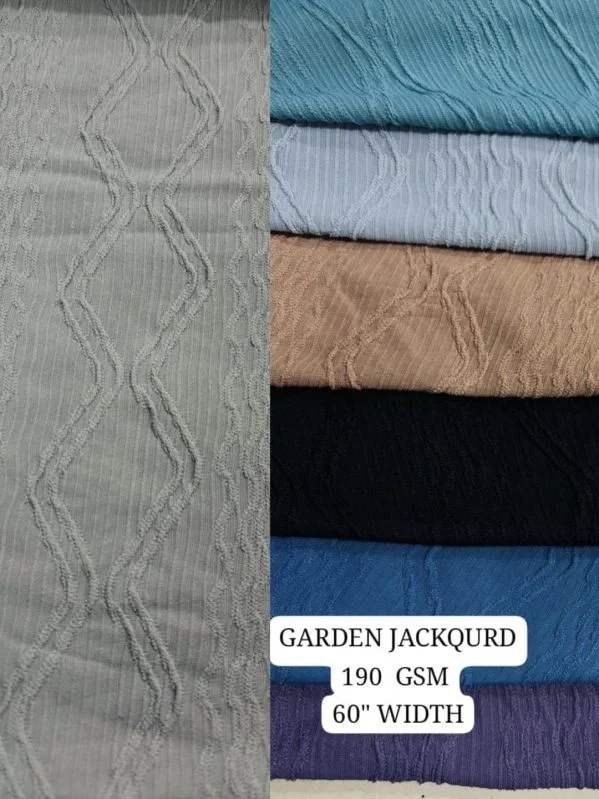
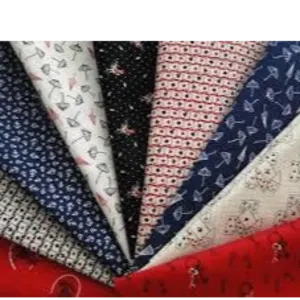
Trending Wholesale Linen Fabric Products
View all
Loading products...
Can't find the right Linen supplier?
Post a requirement and get competing quotes from verified suppliers within 24 hours — free.

Wholesale Linen Fabric Industry Overview and Global Market Insights

Wholesale demand for linen fabric flows through fashion retail, home-textile distribution, hospitality supply, uniform and workwear manufacturing, and converter mills. As a category, linen fabric spans fibres and yarns, woven and knitted fabrics, garments and apparel, home textiles, leather, footwear, and made-up textiles. In customs terms it is classified under HS Chapters 50 to 63, with cotton in Chapter 52, man-made filaments and staple fibres in Chapters 54 and 55, knitted apparel in Chapter 61, and woven apparel in Chapter 62, so sourcing requirements vary widely across the category. Buyers source against fibre composition, construction, and shade, so tech packs, lab dips, colour-fastness data, and an approved pre-production sample drive sign-off, and minimum order quantities track fabric and dye-lot economics. The Linen Fabric directory on EximNext surfaces verified suppliers across grades and variants, so importers can drill from broad industry view down to specific specification within a few clicks. The buyer profile on this page covers brand owners, distributors, manufacturers, trading houses, and procurement teams searching for reliable bulk supply, transparent specification, and verified credentials before they release a purchase order. Listings show supplier location, business type, the products handled, and where available certification and inspection signals, so buyers can shortlist on verifiable capability rather than self-claimed marketing copy. Filters let importers narrow on origin country, business type (manufacturer, exporter, trading company), verification status, and certification, so the shortlist that goes into a request for quotation reflects the criteria that matter to that specific buyer. The directory also surfaces related sub-categories, recently posted buy leads, and the questions and live sourcing activity further down this page, which together help a buyer benchmark an offer before sending a request for quotation.

How to Buy Linen Fabric in Bulk from Verified Manufacturers, Suppliers and Exporters

Suppliers preparing a bulk linen fabric quotation should be ready to disclose fibre composition, GSM or yarn count where applicable, ply, weave or knit structure, color shade with Pantone or Lab reference, color fastness ratings against washing, rubbing, and light, dimensional shrinkage after wash, and tensile or tear strength. Buyers evaluate offers on the transparency and completeness of this specification disclosure before they move to price comparison, so structured spec sheets convert measurably better than ad-hoc reply messages. Compliance documentation buyers expect on wholesale linen fabric shipments includes OEKO-TEX Standard 100, GOTS for organic claims, BCI for sustainable sourcing, Sedex SMETA for ethical audit, and ZDHC where restricted-substances compliance is required. Third-party verification from SGS, Bureau Veritas, Intertek, or accredited regional laboratories strengthens the offer and is normally a condition precedent under L/C documents. Bulk packaging is normally individual polybag with size and shade tickets, packed into bar-coded export cartons (typically 30 to 50 units per carton depending on product weight), stacked on heat-treated pallets and loaded into 20-foot or 40-foot FCL configurations with care labels and country-of-origin labels conforming to the destination market's regulations. Trade terms most often negotiated on wholesale linen fabric orders include FOB at the supplier's nearest export port, CIF at the buyer's nominated discharge port, and occasionally CFR or EXW depending on the buyer's logistics preference. Quote Incoterms 2020 explicitly in every offer to remove ambiguity over risk transfer. Payment instruments commonly accepted are irrevocable L/C at sight or 30 to 90 day usance, T/T with 30 percent advance and 70 percent balance against scanned shipping documents, and platform-mediated escrow for first-time supplier pairings. Production and consolidation lead time for bulk linen fabric typically runs 30 to 60 days from order confirmation including pre-production sample approval, with peak-season programs running longer. A complete first response covers specification compliance against the buyer's note, indicative price with a validity window, MOQ, packaging, port of dispatch, lead time, and certification copies, which together let the buyer evaluate the offer against the rest of the shortlist without a back-and-forth clarification round.

Import Linen Fabric: HS Code, FOB Pricing, MOQ and Top Exporting Countries

Wholesale linen fabric is classified under HS Chapters 50 to 63, with cotton in Chapter 52, man-made filaments and staple fibres in Chapters 54 and 55, knitted apparel in Chapter 61, and woven apparel in Chapter 62. Buyers and suppliers should agree the correct ten-digit national tariff line with a licensed customs broker in the destination market before shipment, since duty rates can vary materially across sub-headings, and the HS code declared on the commercial invoice, packing list, and certificate of origin must remain consistent for one-pass clearance. The leading commercial export origins for linen fabric are concentrated in China, Bangladesh, India, Vietnam, Turkey, and Pakistan, and shipments to importers worldwide commonly load through Shanghai, Chittagong, Mumbai, Ho Chi Minh City, and Istanbul, depending on the supplier's facility location and the buyer's preferred routing. FOB pricing for wholesale linen fabric varies by grade, packaging configuration, certification load, origin country, and order volume; suppliers should quote a defensible FOB number with a clear validity window (commonly 7 to 15 days) and disclose what triggers a re-quote, such as a significant change in raw input cost or a request for additional certification. Minimum order quantities run from full container loads for bulk commodity-grade material down to smaller carton-level quantities for specialty or high-value processed grades, with most suppliers willing to negotiate a trial-order arrangement on the first transaction. Ocean transit times to importing markets vary by routing through transshipment hubs, with intra-regional lanes typically running two to three weeks and longer transcontinental routings running four to six weeks port to port. Buyers comparing offers across multiple origins should normalize quotes to a common Incoterm (FOB or CIF at the same nominated discharge port) before ranking, so freight, insurance, and local handling differences do not distort what is actually a specification or quality difference between suppliers. Quality benchmarks that drive price differentiation include certification depth, third-party inspection scope, batch documentation, and the supplier's verifiable export history into the buyer's destination market, all of which the EximNext directory surfaces alongside the basic listing so buyers can evaluate against the full picture rather than headline FOB alone.

Frequently Asked Questions About Wholesale Linen Fabric Sourcing

What HS code applies to wholesale linen fabric imports?
Wholesale linen fabric is classified under HS Chapters 50 to 63, with cotton in Chapter 52, man-made filaments and staple fibres in Chapters 54 and 55, knitted apparel in Chapter 61, and woven apparel in Chapter 62. Confirm the exact ten-digit national tariff line with a licensed customs broker in the destination market before shipment, since duty rates vary materially across sub-headings, and keep the HS code consistent on the commercial invoice, packing list, and certificate of origin so clearance lands in one pass.
What is the typical FOB price band for bulk linen fabric?
FOB price bands for linen fabric vary by grade, packaging, certification load, origin country, and order volume, so a single global figure rarely holds. Suppliers should quote a defensible FOB number with a clear validity window (commonly 7 to 15 days) and disclose what triggers a re-quote, such as a major change in raw input cost or a request for additional certification. Buyers in turn assess offers against total landed cost rather than headline FOB alone, so a slightly higher FOB with stronger certification or shorter lead time often wins.
Which countries are the leading global exporters of linen fabric?
The leading commercial export origins for linen fabric are concentrated in China, Bangladesh, India, Vietnam, Turkey, and Pakistan. Buyers typically source from a mix of nearby regional suppliers, which carry an advantage on freight and lead time, and farther-out specialist origins, which carry an advantage on quality, certification, or price. Suppliers can position themselves competitively by referencing their country's track record as an export origin, current production capacity, and the typical transit time and freight band to the buyer's preferred discharge port.
What pre-shipment inspection scope is standard for linen fabric?
Third-party inspection on bulk linen fabric typically covers visual examination on a statistical sample (commonly AQL 2.5 for major and AQL 4.0 for minor defects), color matching against the approved Pantone or buyer-supplied master shade, GSM and dimensional check, color fastness verification, fibre composition confirmation, label and hangtag accuracy against the tech pack, and carton marking verification. SGS, Bureau Veritas, Intertek, TUV, and accredited regional inspection bodies are the agencies most often appointed. The inspection report is released either against L/C documents or directly to the buyer, and serves as the basis for any pre-shipment rejection or rework instruction before vessel sailing.
What is the typical ocean transit time for linen fabric shipments?
Transit time depends heavily on the origin port and the routing through transshipment hubs. As a rough planning guide, intra-regional routings typically run two to three weeks port to port, longer-haul routings commonly run four to six weeks, and trans-Pacific or trans-Atlantic routings fall between these bands. Shipments commonly load through Shanghai, Chittagong, Mumbai, Ho Chi Minh City, and Istanbul, with Maersk, MSC, CMA CGM, COSCO, Evergreen, and ONE among the major carriers serving wholesale linen fabric trade lanes.
What certifications and quality documentation do buyers expect for linen fabric?
Compliance documentation buyers expect on wholesale linen fabric orders includes OEKO-TEX Standard 100, GOTS for organic claims, BCI for sustainable sourcing, Sedex SMETA for ethical audit, and ZDHC where restricted-substances compliance is required. Third-party analysis reports from SGS, Bureau Veritas, Intertek, or accredited regional laboratories strengthen the offer. Buyers may additionally request batch-specific Certificates of Analysis, country-of-origin certificates, and any sector-specific certification the destination market enforces, and suppliers should attach certification copies in the first quotation rather than wait for a request.
How should bulk linen fabric be packed for FCL ocean shipment?
Standard packaging for bulk linen fabric uses individual polybag with size and shade tickets, packed into bar-coded export cartons (typically 30 to 50 units per carton depending on product weight), stacked on heat-treated pallets and loaded into 20-foot or 40-foot FCL configurations with care labels and country-of-origin labels conforming to the destination market's regulations. Container loading patterns should follow the CTU (Cargo Transport Unit) Code guidance, with appropriate lashing and chock blocking to prevent in-transit shifting. Wood packaging requires ISPM-15 heat treatment and a fumigation certificate for clearance in most destination markets, and suppliers should specify pallet dimensions, container loading pattern, and any phytosanitary or fumigation treatments applied to wood components in the offer.
What customs documentation is required to clear a wholesale linen fabric shipment?
Standard import documentation includes the commercial invoice, packing list, ocean bill of lading or air waybill, certificate of origin issued by a recognized chamber of commerce in the supplier's country, fumigation certificate where wood packaging is used, the pre-shipment inspection report, and any category-specific certification the destination market enforces. Document accuracy and consistency across the set materially affects clearance speed and reduces the risk of physical inspection or customs hold at the port of entry.
How are pre-shipment samples handled on wholesale linen fabric orders?
Pre-production sample (PPS), lab dip, and shade reference are standard before bulk approval. Industry practice is the supplier supplies the PPS and lab dip free of charge while the buyer covers international courier. Bulk production starts only after the buyer signs off on the PPS against the tech pack. Sample lead time is typically 3 to 7 working days for production and another 3 to 5 days for international courier, and suppliers should mention the courier accounts they accept (DHL, FedEx, UPS) so the buyer can arrange shipping on their preferred carrier and account.
What payment terms work best for first-time linen fabric sourcing?

First-time supplier pairings typically settle on one of three structures. Telegraphic transfer with a 30 percent advance and 70 percent balance against scanned shipping documents is the most common compromise on a modest first order. An irrevocable letter of credit at sight, opened through a reputable bank and confirmed across the supplier's banking relationship, gives stronger protection on larger first orders but adds banking cost and timeline. Platform-mediated escrow holds buyer funds in trust until shipping documents are released and is increasingly used on smaller first orders where neither party wants to underwrite a full L/C process.

Linen Fabric Community & Live Sourcing Activity

903 members592 answered24 active now
Live sourcing activity
Su█████ In██████ requested a bulk quote of USD ███,███ to Sa█████ Ho███ for Bed Sheet Sets · 1 hour ago
Ha████ Fo███ requested a bulk quote of USD 4█,███ to An████ Tr█████ for Cotton T-Shirts · 1 hour ago
Go████ Ha█████ P██ L██ posted a buy requirement valued USD 1██,███ to Ea██████ Co██████ for Denim Fabric · 2 hours ago
Em█████ Ex█████ confirmed an FOB contract worth USD 8█,███ to Br██████ Fo███ for Canvas Shoes · 5 hours ago
Sa█████ Tr█████ submitted a shipment order of USD ███,███ to Be█████ Im██████ for Cotton Yarn · 6 hours ago
De███ Pr█████ L██ posted a buy requirement valued USD 8█,███ to Ma██████ Im█████ for Woven Carpets · 4 hours ago
Community questions & answers
What lead time should I expect on a bulk linen fabric order?
Asked by Grace Mwangi · Supply Chain Manager · yesterday · 365 views · 1 answer
S
Sergei IvanovFreight Forwarder
Production and consolidation usually runs 30 to 60 days from order confirmation, including pre-production sample approval, plus ocean transit to your port.
38 found this helpful
Which HS chapter covers linen fabric?
Asked by Nguyen Van An · Wholesale Buyer · 2 days ago · 782 views · 1 answer
S
Stefan MullerExport Specialist
Linen fabric typically falls under HS Chapters 50 to 63. Confirm the exact ten-digit national line with a licensed customs broker before filing, since duty rates vary across sub-headings.
28 found this helpful
How do I confirm the right tariff line for linen fabric?
Asked by Layla Mansour · Importer · yesterday · 754 views · 1 answer
J
Joon-ho ParkDocumentation OfficerVERIFIED
Start from HS Chapters 50 to 63, then get a written ruling or a broker's classification for the exact linen fabric specification, because small differences in grade or composition can change the duty rate.
7 found this helpful
What MOQ is typical for linen fabric?
Asked by Ravi Deshmukh · Importer · 2 days ago · 521 views · 1 answer
R
Ravi ShankarProcurement ManagerVERIFIED
It ranges from a full container load for commodity grades down to carton or pallet quantities for specialty linen fabric, and most suppliers will discuss a trial order on the first deal.
16 found this helpful
Can I place a small trial order of linen fabric first?
Asked by Kwame Mensah · Importer · 11 hours ago · 516 views · 1 answer
I
Imran QureshiSourcing HeadVERIFIED
Most suppliers will. A trial order on linen fabric lets you verify quality, packing, and documentation before a full programme, and it builds the track record that unlocks better terms later.
34 found this helpful
Active Buyers Right Now
🇦🇪
Sunflower Oil
500 MT · 2 min ago
🇩🇪
Steel Billets
1,000 MT · 5 min ago
🇹🇷
PP Granules
200 MT · 8 min ago
🇮🇳
Copper Scrap
50 MT · 12 min ago
🇸🇦
Basmati Rice
300 MT · 15 min ago
Platform Stats
Total Suppliers193.9K+
Total Buyers29K+
Active RFQs55.8K+
Countries200
Why EximNext?
Verified Suppliers Only
Trust Score System
AI-Powered Matching
200+ Countries
Related Categories
Agriculture, Food & Beverage
Machinery & Equipment
Textiles & Apparel
Electronics
Metals & Minerals
For Suppliers
List your Linen products
Access 29K+ active buyers. Free to start.
Stay ahead in global trade
Weekly market insights & new supplier alerts.
EximNext
Exim Next is a leading global B2B marketplace, connecting over 205,000 verified suppliers and buyers across 200+ countries. As a trusted import export marketplace, it serves as the essential B2B portal for businesses worldwide, empowering them to expand their international reach. With Exim Next, businesses can trade smarter and grow faster.
DOWNLOAD APP
App Store
Google Play
SECURE PAYMENTS
VISAMastercardPayPalSWIFTL/CEscrow
Follow us
© 2026 EximNext