Snaa Industries — Supplier
About Snaa Industries - Medical Instruments Supplier in Pakistan
Snaa Industries is based in Pakistan and currently lists five active medical‑instrument products. The catalogue includes an amalgam carrier, a universal tray, an otoscope, homeostatic forceps and a vaginal speculum. Each item is presented as a separate SKU and falls under the broader classification of medical instruments used in dentistry, otolaryngology and obstetrics/gynecology. The supplier is identified as an imported tier with a harbor trust rating, indicating that it operates through established trade channels for export. The product set reflects typical handheld or tray‑type devices that are manufactured from medical‑grade stainless steel or polymer components. While the facts do not specify material grades, the items correspond to common industry categories such as dental auxiliary tools, diagnostic optics and surgical forceps. Buyers can therefore expect the items to be compatible with standard sterilisation processes and to meet the dimensional tolerances required by clinical protocols.
Product Range and Specialties of Snaa Industries
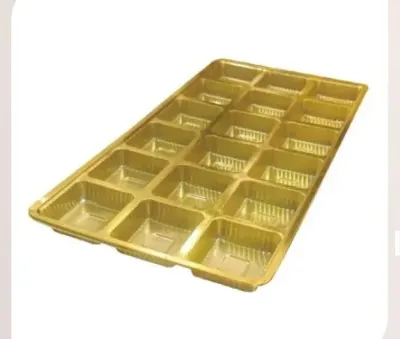
The amalgam carrier listed by Snaa Industries is a stainless‑steel tool used to transport and place dental amalgam within a cavity preparation. Universal trays are generally supplied in polycarbonate or stainless‑steel and serve as reusable platforms for arranging dental prosthetic components. The otoscope is a handheld diagnostic instrument that typically incorporates a light source (LED or fibre‑optic) and interchangeable magnifying lenses; medical‑grade plastic housings are common. Homeostatic forceps are surgical‑grade forceps, often made from 304 or 316 stainless steel, designed for precise tissue handling with calibrated grip pressure. The vaginal speculum is a bifurcated instrument, usually constructed from stainless steel or high‑strength polymer, sized to standard gynecological dimensions (e.g., 85 mm to 115 mm blade length). In the global market, these categories are offered in grades such as ASTM F138 (surgical stainless steel) and comply with ISO 7153 for reusable medical devices.
Trade and Export Information - Snaa Industries
Pakistan’s medical‑device sector exports primarily to the Middle East, North Africa and select European markets, where demand for cost‑effective yet compliant instruments remains strong. Export shipments are usually classified under HS Chapter 90 (medical instruments) and are subject to customs inspections that verify material composition and sterility status. Buyers commonly require certificates such as ISO 13485 quality‑management system approval, CE‑Marking for EU entry, and, where applicable, FDA 510(k) clearance for the United States. Packaging standards include sterile barrier packs for forceps and speculums, and bulk cartons with moisture‑resistant liners for trays and carriers. Typical Incoterms used by Pakistani exporters are FOB Karachi or CIF Dubai, leveraging the country’s major seaports for containerised shipments (20‑ft or 40‑ft containers).
Sourcing from Snaa Industries - Buyer Guidance
When sourcing from Snaa Industries, purchasers should request detailed product data sheets that list material grade (e.g., 304/316 stainless steel), dimensions, surface finish (e.g., mirror‑polished or passivated), and sterilisation compatibility (steam‑autoclave, EtO). Independent test reports for tensile strength, corrosion resistance and biocompatibility are standard verification tools. Buyers are advised to ask for a CE Declaration of Conformity or ISO 13485 certificate to confirm the supplier’s quality‑management system. Sample orders are typically accepted for a minimum of one pallet (approximately 1,000 units) with a lead time of 30‑45 days, after which bulk production can be scheduled. Shipping is normally arranged in sealed, moisture‑controlled cartons, with bar‑coded labeling to facilitate traceability through the supply chain.
Frequently Asked Questions About Snaa Industries
What material grades are used for the forceps and speculum?
Snaa Industries’ homeostatic forceps and vaginal speculum are expected to be manufactured from surgical‑grade stainless steel, commonly ASTM F138 (304) or ASTM F139 (316). Buyers should request the exact grade in the product data sheet.
Are the otoscopes supplied with a light source?
The catalogue lists an otoscope as a handheld diagnostic device; typical models include an integrated LED light source and interchangeable magnifying lenses. Confirm the lumen output and battery type with the supplier.
What certifications should I verify before purchase?
Request ISO 13485 certification, a CE Declaration of Conformity for EU markets, and any FDA 510(k) documentation if the products will be sold in the United States.
What are the typical minimum order quantities?
For reusable medical instruments, suppliers often set a MOQ of around 1,000 pieces per item, packed in standard 20‑ft containers. Exact MOQ should be confirmed for each product.
How long is the lead time for a first order?
Lead times for new orders from Pakistan are generally 30‑45 days after order confirmation and receipt of any required samples or test reports.
What packaging is used for sterile instruments?
Sterile instruments such as forceps and speculums are usually packed in sealed, sterile barrier pouches with moisture‑resistant liners; trays and carriers are placed in reinforced bulk cartons with interior cushioning.
Which Incoterms are commonly offered?
Exporters from Pakistan commonly use FOB Karachi or CIF Dubai, allowing buyers to arrange onward freight and insurance as needed.
How can I request a sample?
Contact the supplier to specify the exact product, required material grade and quantity (typically one pallet). Samples are shipped in protective packaging and may be subject to a nominal cost recovery fee.




 , Pakistan