Shenzhen Firstop Industry Co. Ltd. — Supplier
About Shenzhen Firstop Industry Co. Ltd. - Film extrusion machines Supplier in China
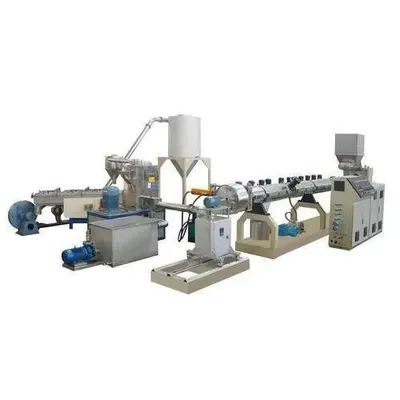
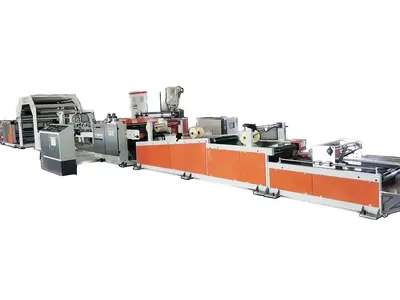
Shenzhen Firstop Industry Co. Ltd. is based in Shenzhen, China and lists five distinct machine types in its current catalogue. The company focuses on equipment for producing polyethylene (PE) and polypropylene (PP) films, covering both agricultural and packaging applications. Each entry in the catalogue describes a specific extrusion line, ranging from high‑speed cut‑size web sheeters to multi‑layer co‑extrusion systems. The product titles indicate the material families (PE, PP) and the form of the film (stretch, field, co‑extruded). No additional product variants or accessories are listed beyond the five machine models.
The five machines cover the full extrusion process chain: raw polymer feeding, melt extrusion, film cooling, and winding or cutting. The catalogue includes a Hi‑speed cut‑size web sheeter, a PE stretch film extrusion line, a farmer’s field film line, a two‑layer PE co‑extrusion line and an album‑type PP film extrusion line. All machines fall under the broader category of plastic film extrusion equipment, which is classified in the machinery tariff heading 8421. The listing does not provide capacity figures, but the product names imply capabilities such as high line speed, multi‑layer construction, and suitability for agricultural film grades.
Product Range and Specialties of Shenzhen Firstop Industry Co. Ltd.
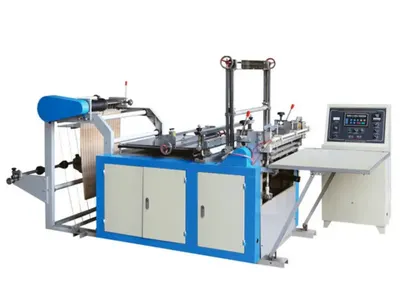
The Hi‑speed cut‑size web sheeter is designed for rapid downstream processing of extruded film, typically handling widths up to 2 m and speeds above 200 m/min. In the industry, cut‑size sheeters are paired with film thicknesses from 10 µm to 80 µm and are often equipped with automatic slitting and rewinding stations. The PE stretch film extrusion machine targets linear low‑density polyethylene (LLDPE) grades, commonly producing films in the 10 µm - 30 µm range with stretch ratios of 5:1 to 10:1, used for pallet wrapping. The farmer’s field film extrusion line is optimized for low‑cost agricultural mulch, usually processing low‑density polyethylene (LDPE) or linear low‑density grades at thicknesses of 30 µm - 70 µm, with UV‑stabilizers added for field durability. The 2‑layer PE film co‑extrusion machine can combine a base layer (e.g., LDPE) with a functional top layer (e.g., UV‑inhibitor or anti‑weed) at total thicknesses of 30 µm - 120 µm, a common specification for specialty agricultural films. The album PP film extrusion machine produces polypropylene films for packaging, typically in the 15 µm - 50 µm range, with melt flow indices (MFI) between 2 and 10 g/10 min to meet clarity and strength requirements.
Trade and Export Information - Shenzhen Firstop Industry Co. Ltd.
China is the world’s largest exporter of plastic film extrusion machinery, with most shipments classified under HS heading 8421.30 (machinery for extruding plastics). Buyers in Southeast Asia, the Middle East, Africa and Latin America frequently import such equipment for local packaging converters and agricultural film producers. Typical import requirements include CE marking for safety, ISO 9001 quality management certification, and compliance with the destination country’s machinery safety standards. Machines of this size are usually packed in 40‑foot containers, with dimensions up to 2.5 m × 2.2 m × 2.4 m and a gross weight between 10 t and 18 t, depending on the line configuration. Export documentation commonly includes a commercial invoice, packing list, bill of lading, and test certificates for electrical safety (IEC 60204) and performance parameters such as output speed and film thickness tolerance.
Sourcing from Shenzhen Firstop Industry Co. Ltd. - Buyer Guidance
When sourcing a film extrusion line from Shenzhen Firstop, request the detailed technical data sheet for each machine, including motor power (kW), extrusion screw diameter (mm), barrel temperature range, and film width capability. Ask for third‑party test reports that verify film tensile strength, puncture resistance and thickness uniformity for the target polymer grade. Verify that the supplier can provide CE certification or an equivalent safety declaration, and confirm the availability of ISO 9001 documentation for the manufacturing process. Buyers should also clarify the standard packaging (e.g., crate‑on‑pallet or container‑direct) and the incoterm, with CIF or FOB being common for these heavy‑weight items. Typical lead times for a complete extrusion line range from 8 to 12 weeks after receipt of a purchase order and a down‑payment, and the minimum order quantity is generally one complete machine set.
Frequently Asked Questions About Shenzhen Firstop Industry Co. Ltd.
What types of film can be produced with the machines listed by Shenzhen Firstop?
The catalogue covers PE stretch film, agricultural field film, two‑layer co‑extruded PE film, and PP packaging film, each matching common industry thickness ranges from 10 µm to 120 µm.
Which HS code is normally used for these extrusion machines when exporting from China?
Export shipments of plastic film extrusion equipment are typically classified under HS heading 8421.30, which covers machinery for extruding plastics.
What certifications should a buyer request before purchasing?
Buyers should ask for CE safety marking, ISO 9001 quality‑management certification, and any performance test reports (tensile strength, thickness tolerance) relevant to the intended film grade.
What is the usual container size for shipping a complete extrusion line?
A standard 40‑foot container is most common, accommodating machine dimensions up to about 2.5 m × 2.2 m × 2.4 m and a gross weight between 10 t and 18 t.
How long does it typically take to receive the equipment after order confirmation?
Lead times are generally 8 to 12 weeks, depending on the specific line configuration and any custom options requested.
What documentation is needed for customs clearance in the buyer’s country?
Customs usually require a commercial invoice, packing list, bill of lading, CE declaration of conformity and any applicable test certificates for electrical safety and performance.
Can the machines be customized for different polymer grades?
Manufacturers commonly offer adjustments to screw design, temperature zones and downstream cooling to accommodate LDPE, LLDPE, HDPE or PP grades, but the buyer should confirm the available options in the technical specification.
What are typical power requirements for the listed extrusion machines?
Industrial extrusion lines of this class generally need motor power between 75 kW and 250 kW, with three‑phase supply at 380‑440 V, but exact figures should be verified on the machine’s data sheet.




 , China