Paper store — Supplier

About Paper store - Envelope and Paper Packaging Supplier in Czech Republic

Paper store is a Czech Republic-based supplier listing 5 active products in the paper stationery and protective mailing segment, with all items falling under the envelopes and padded mailers category used across office, e-commerce and direct-mail operations. The catalogue covers the four principal ISO envelope formats - C5, C6, C4 and DL - alongside a bubble-lined (padded) envelope, giving buyers a compact but functionally complete envelope range sourced from a Central European origin. Envelopes in this family are classified under HS code 4817 - the World Customs Organization chapter covering letter cards, plain postcards and correspondence cards, boxes, pouches, wallets and writing compendiums, of paper or paperboard - and the padded variant typically falls under the same heading due to its paper/paperboard outer construction. The C5, C6, C4 and DL formats are the internationally standardised sizes defined by ISO 269, with dimensions in millimetres that buyers should confirm when matching inserts, printers and folder lines. Sourcing from the Czech Republic places the supplier within an EU member state, which means shipments to other EU buyers move as intra-community trade with VAT and customs implications distinct from extra-EU flows.

The five-SKU envelope range reflects a focused, single-category offering rather than a broad paper goods portfolio, which is consistent with the supplier's imported trust tier and harbour-level verification status. Buyers in office supplies, mailing houses, fulfilment centres and small-parcel e-commerce operations are the typical end-users of this mix: DL is the standard business-correspondence size matching A4 paper folded into thirds, C5 fits A4 folded once or A5 flat, C6 fits A4 folded twice or A5 folded once, and C4 holds A4 flat for catalogues and certificates. The bubble envelope variant extends the catalogue into protective mailing, where a paper or kraft outer is laminated or bonded to a polyethylene-air-bubble inner cushion, used for shipping small electronics, cosmetics, jewellery, books and accessories. Together, these five items cover roughly 80-90% of routine commercial envelope demand in a typical European office or dispatch environment, which is the practical scope of the Paper store catalogue.

Product Range and Specialties of Paper store

The Paper store catalogue is built entirely around paper-based mailing products, specifically the four ISO 269 envelope formats (C5 at 162 x 229 mm, DL at 110 x 220 mm, C6 at 114 x 162 mm, and C4 at 229 x 324 mm) plus a bubble-lined mailer. Envelopes in this category are typically produced from wood-free uncoated paper, kraft paper, or coated papers in substance weights of 70-120 g/m², with white, manila, kraft and recycled variants being the most common. Closure types seen in this segment include gummed (moisten-and-seal), self-seal (latex or acrylic pressure-sensitive strips), and peel-and-seal, with windowed versions (usually a 35 x 90 mm or 45 x 100 mm clear film window) widely used for invoicing and direct mail. Print compatibility is a key specification: most commercial envelopes are designed for inkjet, laser or offset printing, and buyers typically confirm toner adhesion and jam-free feeding before bulk orders. The C4 and C5 formats are the standard sizes for sending A4 documents without folding, while DL is the dominant size for business correspondence in Europe and C6 is widely used for invitations, greeting cards and small invoices.

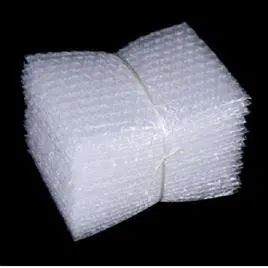
The bubble envelope in the range is a hybrid paper-plastic mailer, typically with a 70-90 g/m² kraft outer face laminated to a polyethylene bubble lining of 10 mm bubble diameter and approximately 50-60 g/m² film weight. These padded mailers are commonly available in sizes from A/000 (90 x 145 mm) up to G/7 (360 x 480 mm) and are graded by burst strength, tear resistance and puncture resistance of the outer paper face. Common material variants include fully paper-based (FSC-certified kraft with paper wadding instead of bubble), co-extruded kraft-poly, and all-poly mailers; the paper-faced bubble envelope is the most traditional format for European postal use. Buyers in this category typically request confirmation of the outer paper grammage, bubble film thickness, peel-and-seal adhesive strength (usually a hot-melt synthetic rubber at 15-25 g/m² coat weight), and compliance with postal operator specifications such as Royal Mail, Deutsche Post, La Poste or Česká pošta. FSC or PEFC chain-of-custody certification on the paper component is increasingly requested by EU public-sector and corporate buyers, and ISO 9001 quality management on the converter is a common baseline requirement.

Trade and Export Information - Paper store

Envelopes and padded mailers are a globally traded paper product category, with the major export flows historically running from Germany, Italy, Sweden, Poland, the Czech Republic, China and India into Western European, North American and Middle Eastern markets. The Czech Republic has an established paper converting and stationery manufacturing base, supplying both domestic demand and intra-EU trade, and EU-origin envelopes benefit from free circulation across all 27 member states without customs duties. The relevant HS code family is heading 4817 (envelopes, letter cards, plain postcards and correspondence cards, boxes, pouches and writing compendiums of paper or paperboard), with subheadings typically covering plain envelopes (4817.10), the full letter-card/correspondence set (4817.20), and assorted boxes/pouches/wallets (4817.30). For padded mailers with a plastic bubble inner, classification can in some customs administrations fall under 4817 or under 3923 (plastic articles for the conveyance or packing of goods), so buyers should confirm the declared code on the commercial invoice. Typical Incoterms used in this segment are EXW, FCA, FOB and DAP, with palletised shipments on EUR/EPAL pallets (1200 x 800 mm) and stretch-wrapped being the standard export packing. A standard EUR-pallet load of C5 or DL envelopes typically holds 100,000-200,000 pieces depending on paper weight, while a 20 ft container can carry approximately 8-10 pallets of envelopes and a 40 ft container approximately 18-22 pallets, subject to weight limits of roughly 20-24 tonnes per 40 ft.

The principal buyer industries for this category are office and stationery wholesalers, print management companies, direct-mail and marketing agencies, e-commerce fulfilment houses, banks and insurance companies (for policy and statement mailings), and government and educational institutions. Required and commonly requested certifications for envelope and padded mailer suppliers include FSC Chain of Custody (for the paper component), PEFC Chain of Custody, ISO 9001 quality management, ISO 14001 environmental management, and for food-contact or pharmaceutical secondary packaging, compliance with EC 1935/2004 or FDA 21 CFR. Postal authority approval (Royal Mail, USPS, Deutsche Post, La Poste, PostNL) is often required for envelopes intended to be machine-franked or auto-processed, and buyers should request the supplier's postal operator test certificates. REACH and RoHS compliance apply to any plastic bubble component, and recycled-content claims should be backed by FSC Recycled or PEFC Recycled certification. CE marking is not typically required for plain envelopes, but applies to certain specialty mailing products. Typical export documentation includes a commercial invoice, packing list, CMR or B/L depending on transport mode, and for non-EU destinations, a certificate of origin and any phytosanitary or conformity documents required by the destination country.

Sourcing from Paper store - Buyer Guidance

Buyers sourcing from Paper store should approach the catalogue as a focused envelope and padded mailer range and verify the technical specifications against their own use case before placing volume orders. The most important specifications to request and confirm in writing are: the ISO 269 size designation (C4, C5, C6 or DL) and exact dimensions in millimetres, the paper substance weight in g/m², the window size and position if windowed, the closure type (gummed, self-seal or peel-and-seal), the print compatibility (inkjet, laser, offset or hand), and for the bubble envelope, the outer paper grammage, bubble film thickness, and adhesive type. Buyers should also request a physical sample pack including at least 5-10 pieces of each SKU to test on their own inserting machines, franking systems and printers before confirming a purchase order. Standard documents to request are the product data sheet, a declaration of paper origin and recycled content if claimed, FSC/PEFC certificates if claimed, ISO 9001 certificate if held, and a REACH/RoHS declaration for the bubble envelope. MOQ in this category is typically one pallet per SKU (roughly 10,000-50,000 pieces depending on size), with lead times of 2-4 weeks for stock items and 6-10 weeks for custom-printed or made-to-order envelopes. Buyers should also clarify pallet configuration, delivery terms (EXW, FCA, DAP), and whether prices are quoted per 1,000 pieces or per carton, and confirm response times on technical queries as a practical indicator of supplier reliability in this segment.

Verification points specific to this product category include checking the paper's opacity (typically 85-95% for white envelopes to prevent show-through), the seal strength (peel-and-seal envelopes should achieve a fibre-tear bond rather than adhesive peel), and the dimensional tolerance (usually ±1-2 mm for ISO formats). For bubble envelopes, puncture resistance of the outer face (typically tested by the Elmendorf tear method, ISO 1974) and bubble retention after a drop test are the key performance indicators. Buyers should ask whether the supplier holds FSC or PEFC chain-of-custody certification for the paper component and request the certificate number to verify on the FSC or PEFC public databases. For EU buyers, confirming that the supplier is VAT-registered and able to issue an intra-community invoice (with a valid EU VAT number) is essential for zero-rated intra-EU supply. Lead time signals to watch for are: a written confirmation within 2-3 working days, a sample dispatch within 5-7 working days, and a production lead time stated in weeks rather than vague terms. Finally, buyers should request references from at least one European office supplies wholesaler or mailing house, and where possible, audit the converting facility or commission a third-party pre-shipment inspection covering quantity, dimensions, print quality and pack integrity.

Frequently Asked Questions About Paper store

What product categories does Paper store supply?

Paper store lists 5 active products, all within the paper mailing segment: C5, DL, C6 and C4 envelopes (the four standard ISO 269 formats) plus a bubble-lined padded envelope. The range covers roughly 80-90% of routine commercial envelope demand for office, direct-mail and small-parcel e-commerce use.

What are the dimensions of the C5, DL, C6 and C4 envelopes?

These are the ISO 269 standard sizes: C4 is 229 x 324 mm (fits A4 flat), C5 is 162 x 229 mm (fits A4 folded once or A5 flat), C6 is 114 x 162 mm (fits A4 folded twice), and DL is 110 x 220 mm (fits A4 folded into thirds, the standard European business-correspondence size). Buyers should confirm exact tolerances with the supplier, typically ±1-2 mm.

What HS code applies to Paper store's envelopes?

Envelopes and correspondence cards of paper or paperboard are classified under HS heading 4817, with subheading 4817.10 typically covering plain envelopes. Padded or bubble-lined mailers may be classified under 4817 or, in some customs administrations, under 3923 (plastic packing goods) depending on the declared composition, so the code on the commercial invoice should be confirmed.

Which certifications should buyers request from Paper store?

Buyers should ask for FSC or PEFC Chain of Custody certification on the paper component, ISO 9001 quality management on the converting operation, and a REACH/RoHS declaration for the bubble envelope's plastic lining. Postal operator approval (e.g. Česká pošta, Deutsche Post, Royal Mail) is useful if the envelopes will be machine-franked, and ISO 14001 is a common additional request from EU corporate and public-sector buyers.

What is the typical MOQ and lead time for envelopes in this category?

MOQ is typically one EUR-pallet per SKU, which corresponds to roughly 10,000-50,000 pieces depending on envelope size and paper weight. Lead times are usually 2-4 weeks for stock catalogue items and 6-10 weeks for custom-printed or made-to-order envelopes, with sample dispatch typically within 5-7 working days of a written request.

What packaging and shipping standards apply to envelope exports?

Envelopes are typically palletised on EUR/EPAL pallets (1200 x 800 mm), stretch-wrapped and shipped by road, sea or air. A 20 ft container holds approximately 8-10 pallets and a 40 ft container approximately 18-22 pallets, subject to a 20-24 tonne weight limit. Common Incoterms in this segment are EXW, FCA, FOB and DAP, with CMR or B/L as the standard transport documents.

How should buyers verify the quality of Paper store's envelopes before ordering?

Buyers should request a physical sample pack (5-10 pieces per SKU) and test on their own inserting machines, franking systems and printers. Key checks are dimensional tolerance (within ±1-2 mm of ISO 269), paper opacity (typically 85-95% for white envelopes), seal strength (peel-and-seal should achieve fibre-tear bond), and for the bubble envelope, puncture resistance and bubble retention after a drop test.

Can Paper store supply custom-printed envelopes?

Custom printing (offset, flexo or digital) is a standard service in the European envelope converting industry, including one- to four-colour face printing, inside printing, security tints, sequential numbering and personalised variable-data print. Buyers should request a printed proof on the actual paper stock before confirming a production run, and confirm the print method compatibility with their inserting and franking equipment.


Featured Products from this Supplier

EximNext
7.2K+ live requirements
Register Free🎁 Reach global buyers
Post Requirement
🌍 Trusted by 225K+ businesses in 200+ countries|
7.2K+ active requirements right now
✉️ [email protected]
|
Sell on EximNextPost Requirement
EximNext
AgricultureApparelConstructionElectronicFoodHomeIndustrialMineralsMiscellaneous
🔥 Deals|✨ AI Match|🏭 Suppliers|📋 Buy Leads|💰 Trade Finance
7.2K+ live RFQs·194.8K+ suppliers
🎁 Reach global buyers →
EximNext
EximNext
Register Free
🎁 Reach global buyers
Sign In
📋Post Requirement💬Get Quotes✨AI Match📋RFQ Marketplace
All Categories
Services & Tools
🏭Supplier Directory🔥Today's Deals💰Trade Finance
Sell on EximNext →
AboutContactBlogHelp
Global Trade  ·  Czech Republic
5
products listed

Paper store

⚓ Harbor
Country flag , Czech RepublicNew supplier / no reviews yet
🛡️
56/100
Trust Score

Paper store Product Catalog

Showing 5 of 5 products
View all products →
Bubble envelope
⚓ Harbor
Bubble envelope
Contact
MOQ: 1 Unit
Envelope c4
⚓ Harbor
Envelope c4
Contact
MOQ: 1 Unit
Envelope c6
⚓ Harbor
Envelope c6
Contact
MOQ: 1 Unit
Envelope DL
⚓ Harbor
Envelope DL
Contact
MOQ: 1 Unit
Envelope c5
⚓ Harbor
Envelope c5
Contact
MOQ: 1 Unit

About Paper store - Envelope and Paper Packaging Supplier in Czech Republic

Paper store is a Czech Republic-based supplier listing 5 active products in the paper stationery and protective mailing segment, with all items falling under the envelopes and padded mailers category used across office, e-commerce and direct-mail operations. The catalogue covers the four principal ISO envelope formats - C5, C6, C4 and DL - alongside a bubble-lined (padded) envelope, giving buyers a compact but functionally complete envelope range sourced from a Central European origin. Envelopes in this family are classified under HS code 4817 - the World Customs Organization chapter covering letter cards, plain postcards and correspondence cards, boxes, pouches, wallets and writing compendiums, of paper or paperboard - and the padded variant typically falls under the same heading due to its paper/paperboard outer construction. The C5, C6, C4 and DL formats are the internationally standardised sizes defined by ISO 269, with dimensions in millimetres that buyers should confirm when matching inserts, printers and folder lines. Sourcing from the Czech Republic places the supplier within an EU member state, which means shipments to other EU buyers move as intra-community trade with VAT and customs implications distinct from extra-EU flows.

The five-SKU envelope range reflects a focused, single-category offering rather than a broad paper goods portfolio, which is consistent with the supplier's imported trust tier and harbour-level verification status. Buyers in office supplies, mailing houses, fulfilment centres and small-parcel e-commerce operations are the typical end-users of this mix: DL is the standard business-correspondence size matching A4 paper folded into thirds, C5 fits A4 folded once or A5 flat, C6 fits A4 folded twice or A5 folded once, and C4 holds A4 flat for catalogues and certificates. The bubble envelope variant extends the catalogue into protective mailing, where a paper or kraft outer is laminated or bonded to a polyethylene-air-bubble inner cushion, used for shipping small electronics, cosmetics, jewellery, books and accessories. Together, these five items cover roughly 80-90% of routine commercial envelope demand in a typical European office or dispatch environment, which is the practical scope of the Paper store catalogue.

Product Range and Specialties of Paper store

The Paper store catalogue is built entirely around paper-based mailing products, specifically the four ISO 269 envelope formats (C5 at 162 x 229 mm, DL at 110 x 220 mm, C6 at 114 x 162 mm, and C4 at 229 x 324 mm) plus a bubble-lined mailer. Envelopes in this category are typically produced from wood-free uncoated paper, kraft paper, or coated papers in substance weights of 70-120 g/m², with white, manila, kraft and recycled variants being the most common. Closure types seen in this segment include gummed (moisten-and-seal), self-seal (latex or acrylic pressure-sensitive strips), and peel-and-seal, with windowed versions (usually a 35 x 90 mm or 45 x 100 mm clear film window) widely used for invoicing and direct mail. Print compatibility is a key specification: most commercial envelopes are designed for inkjet, laser or offset printing, and buyers typically confirm toner adhesion and jam-free feeding before bulk orders. The C4 and C5 formats are the standard sizes for sending A4 documents without folding, while DL is the dominant size for business correspondence in Europe and C6 is widely used for invitations, greeting cards and small invoices.

The bubble envelope in the range is a hybrid paper-plastic mailer, typically with a 70-90 g/m² kraft outer face laminated to a polyethylene bubble lining of 10 mm bubble diameter and approximately 50-60 g/m² film weight. These padded mailers are commonly available in sizes from A/000 (90 x 145 mm) up to G/7 (360 x 480 mm) and are graded by burst strength, tear resistance and puncture resistance of the outer paper face. Common material variants include fully paper-based (FSC-certified kraft with paper wadding instead of bubble), co-extruded kraft-poly, and all-poly mailers; the paper-faced bubble envelope is the most traditional format for European postal use. Buyers in this category typically request confirmation of the outer paper grammage, bubble film thickness, peel-and-seal adhesive strength (usually a hot-melt synthetic rubber at 15-25 g/m² coat weight), and compliance with postal operator specifications such as Royal Mail, Deutsche Post, La Poste or Česká pošta. FSC or PEFC chain-of-custody certification on the paper component is increasingly requested by EU public-sector and corporate buyers, and ISO 9001 quality management on the converter is a common baseline requirement.

Trade and Export Information - Paper store

Envelopes and padded mailers are a globally traded paper product category, with the major export flows historically running from Germany, Italy, Sweden, Poland, the Czech Republic, China and India into Western European, North American and Middle Eastern markets. The Czech Republic has an established paper converting and stationery manufacturing base, supplying both domestic demand and intra-EU trade, and EU-origin envelopes benefit from free circulation across all 27 member states without customs duties. The relevant HS code family is heading 4817 (envelopes, letter cards, plain postcards and correspondence cards, boxes, pouches and writing compendiums of paper or paperboard), with subheadings typically covering plain envelopes (4817.10), the full letter-card/correspondence set (4817.20), and assorted boxes/pouches/wallets (4817.30). For padded mailers with a plastic bubble inner, classification can in some customs administrations fall under 4817 or under 3923 (plastic articles for the conveyance or packing of goods), so buyers should confirm the declared code on the commercial invoice. Typical Incoterms used in this segment are EXW, FCA, FOB and DAP, with palletised shipments on EUR/EPAL pallets (1200 x 800 mm) and stretch-wrapped being the standard export packing. A standard EUR-pallet load of C5 or DL envelopes typically holds 100,000-200,000 pieces depending on paper weight, while a 20 ft container can carry approximately 8-10 pallets of envelopes and a 40 ft container approximately 18-22 pallets, subject to weight limits of roughly 20-24 tonnes per 40 ft.

The principal buyer industries for this category are office and stationery wholesalers, print management companies, direct-mail and marketing agencies, e-commerce fulfilment houses, banks and insurance companies (for policy and statement mailings), and government and educational institutions. Required and commonly requested certifications for envelope and padded mailer suppliers include FSC Chain of Custody (for the paper component), PEFC Chain of Custody, ISO 9001 quality management, ISO 14001 environmental management, and for food-contact or pharmaceutical secondary packaging, compliance with EC 1935/2004 or FDA 21 CFR. Postal authority approval (Royal Mail, USPS, Deutsche Post, La Poste, PostNL) is often required for envelopes intended to be machine-franked or auto-processed, and buyers should request the supplier's postal operator test certificates. REACH and RoHS compliance apply to any plastic bubble component, and recycled-content claims should be backed by FSC Recycled or PEFC Recycled certification. CE marking is not typically required for plain envelopes, but applies to certain specialty mailing products. Typical export documentation includes a commercial invoice, packing list, CMR or B/L depending on transport mode, and for non-EU destinations, a certificate of origin and any phytosanitary or conformity documents required by the destination country.

Sourcing from Paper store - Buyer Guidance

Buyers sourcing from Paper store should approach the catalogue as a focused envelope and padded mailer range and verify the technical specifications against their own use case before placing volume orders. The most important specifications to request and confirm in writing are: the ISO 269 size designation (C4, C5, C6 or DL) and exact dimensions in millimetres, the paper substance weight in g/m², the window size and position if windowed, the closure type (gummed, self-seal or peel-and-seal), the print compatibility (inkjet, laser, offset or hand), and for the bubble envelope, the outer paper grammage, bubble film thickness, and adhesive type. Buyers should also request a physical sample pack including at least 5-10 pieces of each SKU to test on their own inserting machines, franking systems and printers before confirming a purchase order. Standard documents to request are the product data sheet, a declaration of paper origin and recycled content if claimed, FSC/PEFC certificates if claimed, ISO 9001 certificate if held, and a REACH/RoHS declaration for the bubble envelope. MOQ in this category is typically one pallet per SKU (roughly 10,000-50,000 pieces depending on size), with lead times of 2-4 weeks for stock items and 6-10 weeks for custom-printed or made-to-order envelopes. Buyers should also clarify pallet configuration, delivery terms (EXW, FCA, DAP), and whether prices are quoted per 1,000 pieces or per carton, and confirm response times on technical queries as a practical indicator of supplier reliability in this segment.

Verification points specific to this product category include checking the paper's opacity (typically 85-95% for white envelopes to prevent show-through), the seal strength (peel-and-seal envelopes should achieve a fibre-tear bond rather than adhesive peel), and the dimensional tolerance (usually ±1-2 mm for ISO formats). For bubble envelopes, puncture resistance of the outer face (typically tested by the Elmendorf tear method, ISO 1974) and bubble retention after a drop test are the key performance indicators. Buyers should ask whether the supplier holds FSC or PEFC chain-of-custody certification for the paper component and request the certificate number to verify on the FSC or PEFC public databases. For EU buyers, confirming that the supplier is VAT-registered and able to issue an intra-community invoice (with a valid EU VAT number) is essential for zero-rated intra-EU supply. Lead time signals to watch for are: a written confirmation within 2-3 working days, a sample dispatch within 5-7 working days, and a production lead time stated in weeks rather than vague terms. Finally, buyers should request references from at least one European office supplies wholesaler or mailing house, and where possible, audit the converting facility or commission a third-party pre-shipment inspection covering quantity, dimensions, print quality and pack integrity.

Frequently Asked Questions About Paper store

What product categories does Paper store supply?

Paper store lists 5 active products, all within the paper mailing segment: C5, DL, C6 and C4 envelopes (the four standard ISO 269 formats) plus a bubble-lined padded envelope. The range covers roughly 80-90% of routine commercial envelope demand for office, direct-mail and small-parcel e-commerce use.

What are the dimensions of the C5, DL, C6 and C4 envelopes?

These are the ISO 269 standard sizes: C4 is 229 x 324 mm (fits A4 flat), C5 is 162 x 229 mm (fits A4 folded once or A5 flat), C6 is 114 x 162 mm (fits A4 folded twice), and DL is 110 x 220 mm (fits A4 folded into thirds, the standard European business-correspondence size). Buyers should confirm exact tolerances with the supplier, typically ±1-2 mm.

What HS code applies to Paper store's envelopes?

Envelopes and correspondence cards of paper or paperboard are classified under HS heading 4817, with subheading 4817.10 typically covering plain envelopes. Padded or bubble-lined mailers may be classified under 4817 or, in some customs administrations, under 3923 (plastic packing goods) depending on the declared composition, so the code on the commercial invoice should be confirmed.

Which certifications should buyers request from Paper store?

Buyers should ask for FSC or PEFC Chain of Custody certification on the paper component, ISO 9001 quality management on the converting operation, and a REACH/RoHS declaration for the bubble envelope's plastic lining. Postal operator approval (e.g. Česká pošta, Deutsche Post, Royal Mail) is useful if the envelopes will be machine-franked, and ISO 14001 is a common additional request from EU corporate and public-sector buyers.

What is the typical MOQ and lead time for envelopes in this category?

MOQ is typically one EUR-pallet per SKU, which corresponds to roughly 10,000-50,000 pieces depending on envelope size and paper weight. Lead times are usually 2-4 weeks for stock catalogue items and 6-10 weeks for custom-printed or made-to-order envelopes, with sample dispatch typically within 5-7 working days of a written request.

What packaging and shipping standards apply to envelope exports?

Envelopes are typically palletised on EUR/EPAL pallets (1200 x 800 mm), stretch-wrapped and shipped by road, sea or air. A 20 ft container holds approximately 8-10 pallets and a 40 ft container approximately 18-22 pallets, subject to a 20-24 tonne weight limit. Common Incoterms in this segment are EXW, FCA, FOB and DAP, with CMR or B/L as the standard transport documents.

How should buyers verify the quality of Paper store's envelopes before ordering?

Buyers should request a physical sample pack (5-10 pieces per SKU) and test on their own inserting machines, franking systems and printers. Key checks are dimensional tolerance (within ±1-2 mm of ISO 269), paper opacity (typically 85-95% for white envelopes), seal strength (peel-and-seal should achieve fibre-tear bond), and for the bubble envelope, puncture resistance and bubble retention after a drop test.

Can Paper store supply custom-printed envelopes?

Custom printing (offset, flexo or digital) is a standard service in the European envelope converting industry, including one- to four-colour face printing, inside printing, security tints, sequential numbering and personalised variable-data print. Buyers should request a printed proof on the actual paper stock before confirming a production run, and confirm the print method compatibility with their inserting and franking equipment.

About Paper store - Envelope and Paper Packaging Supplier in Czech Republic

Paper store is a Czech Republic-based supplier listing 5 active products in the paper stationery and protective mailing segment, with all items falling under the envelopes and padded mailers category used across office, e-commerce and direct-mail operations. The catalogue covers the four principal ISO envelope formats - C5, C6, C4 and DL - alongside a bubble-lined (padded) envelope, giving buyers a compact but functionally complete envelope range sourced from a Central European origin. Envelopes in this family are classified under HS code 4817 - the World Customs Organization chapter covering letter cards, plain postcards and correspondence cards, boxes, pouches, wallets and writing compendiums, of paper or paperboard - and the padded variant typically falls under the same heading due to its paper/paperboard outer construction. The C5, C6, C4 and DL formats are the internationally standardised sizes defined by ISO 269, with dimensions in millimetres that buyers should confirm when matching inserts, printers and folder lines. Sourcing from the Czech Republic places the supplier within an EU member state, which means shipments to other EU buyers move as intra-community trade with VAT and customs implications distinct from extra-EU flows.

The five-SKU envelope range reflects a focused, single-category offering rather than a broad paper goods portfolio, which is consistent with the supplier's imported trust tier and harbour-level verification status. Buyers in office supplies, mailing houses, fulfilment centres and small-parcel e-commerce operations are the typical end-users of this mix: DL is the standard business-correspondence size matching A4 paper folded into thirds, C5 fits A4 folded once or A5 flat, C6 fits A4 folded twice or A5 folded once, and C4 holds A4 flat for catalogues and certificates. The bubble envelope variant extends the catalogue into protective mailing, where a paper or kraft outer is laminated or bonded to a polyethylene-air-bubble inner cushion, used for shipping small electronics, cosmetics, jewellery, books and accessories. Together, these five items cover roughly 80-90% of routine commercial envelope demand in a typical European office or dispatch environment, which is the practical scope of the Paper store catalogue.

Product Range and Specialties of Paper store

The Paper store catalogue is built entirely around paper-based mailing products, specifically the four ISO 269 envelope formats (C5 at 162 x 229 mm, DL at 110 x 220 mm, C6 at 114 x 162 mm, and C4 at 229 x 324 mm) plus a bubble-lined mailer. Envelopes in this category are typically produced from wood-free uncoated paper, kraft paper, or coated papers in substance weights of 70-120 g/m², with white, manila, kraft and recycled variants being the most common. Closure types seen in this segment include gummed (moisten-and-seal), self-seal (latex or acrylic pressure-sensitive strips), and peel-and-seal, with windowed versions (usually a 35 x 90 mm or 45 x 100 mm clear film window) widely used for invoicing and direct mail. Print compatibility is a key specification: most commercial envelopes are designed for inkjet, laser or offset printing, and buyers typically confirm toner adhesion and jam-free feeding before bulk orders. The C4 and C5 formats are the standard sizes for sending A4 documents without folding, while DL is the dominant size for business correspondence in Europe and C6 is widely used for invitations, greeting cards and small invoices.

The bubble envelope in the range is a hybrid paper-plastic mailer, typically with a 70-90 g/m² kraft outer face laminated to a polyethylene bubble lining of 10 mm bubble diameter and approximately 50-60 g/m² film weight. These padded mailers are commonly available in sizes from A/000 (90 x 145 mm) up to G/7 (360 x 480 mm) and are graded by burst strength, tear resistance and puncture resistance of the outer paper face. Common material variants include fully paper-based (FSC-certified kraft with paper wadding instead of bubble), co-extruded kraft-poly, and all-poly mailers; the paper-faced bubble envelope is the most traditional format for European postal use. Buyers in this category typically request confirmation of the outer paper grammage, bubble film thickness, peel-and-seal adhesive strength (usually a hot-melt synthetic rubber at 15-25 g/m² coat weight), and compliance with postal operator specifications such as Royal Mail, Deutsche Post, La Poste or Česká pošta. FSC or PEFC chain-of-custody certification on the paper component is increasingly requested by EU public-sector and corporate buyers, and ISO 9001 quality management on the converter is a common baseline requirement.

Trade and Export Information - Paper store

Envelopes and padded mailers are a globally traded paper product category, with the major export flows historically running from Germany, Italy, Sweden, Poland, the Czech Republic, China and India into Western European, North American and Middle Eastern markets. The Czech Republic has an established paper converting and stationery manufacturing base, supplying both domestic demand and intra-EU trade, and EU-origin envelopes benefit from free circulation across all 27 member states without customs duties. The relevant HS code family is heading 4817 (envelopes, letter cards, plain postcards and correspondence cards, boxes, pouches and writing compendiums of paper or paperboard), with subheadings typically covering plain envelopes (4817.10), the full letter-card/correspondence set (4817.20), and assorted boxes/pouches/wallets (4817.30). For padded mailers with a plastic bubble inner, classification can in some customs administrations fall under 4817 or under 3923 (plastic articles for the conveyance or packing of goods), so buyers should confirm the declared code on the commercial invoice. Typical Incoterms used in this segment are EXW, FCA, FOB and DAP, with palletised shipments on EUR/EPAL pallets (1200 x 800 mm) and stretch-wrapped being the standard export packing. A standard EUR-pallet load of C5 or DL envelopes typically holds 100,000-200,000 pieces depending on paper weight, while a 20 ft container can carry approximately 8-10 pallets of envelopes and a 40 ft container approximately 18-22 pallets, subject to weight limits of roughly 20-24 tonnes per 40 ft.

The principal buyer industries for this category are office and stationery wholesalers, print management companies, direct-mail and marketing agencies, e-commerce fulfilment houses, banks and insurance companies (for policy and statement mailings), and government and educational institutions. Required and commonly requested certifications for envelope and padded mailer suppliers include FSC Chain of Custody (for the paper component), PEFC Chain of Custody, ISO 9001 quality management, ISO 14001 environmental management, and for food-contact or pharmaceutical secondary packaging, compliance with EC 1935/2004 or FDA 21 CFR. Postal authority approval (Royal Mail, USPS, Deutsche Post, La Poste, PostNL) is often required for envelopes intended to be machine-franked or auto-processed, and buyers should request the supplier's postal operator test certificates. REACH and RoHS compliance apply to any plastic bubble component, and recycled-content claims should be backed by FSC Recycled or PEFC Recycled certification. CE marking is not typically required for plain envelopes, but applies to certain specialty mailing products. Typical export documentation includes a commercial invoice, packing list, CMR or B/L depending on transport mode, and for non-EU destinations, a certificate of origin and any phytosanitary or conformity documents required by the destination country.

Sourcing from Paper store - Buyer Guidance

Buyers sourcing from Paper store should approach the catalogue as a focused envelope and padded mailer range and verify the technical specifications against their own use case before placing volume orders. The most important specifications to request and confirm in writing are: the ISO 269 size designation (C4, C5, C6 or DL) and exact dimensions in millimetres, the paper substance weight in g/m², the window size and position if windowed, the closure type (gummed, self-seal or peel-and-seal), the print compatibility (inkjet, laser, offset or hand), and for the bubble envelope, the outer paper grammage, bubble film thickness, and adhesive type. Buyers should also request a physical sample pack including at least 5-10 pieces of each SKU to test on their own inserting machines, franking systems and printers before confirming a purchase order. Standard documents to request are the product data sheet, a declaration of paper origin and recycled content if claimed, FSC/PEFC certificates if claimed, ISO 9001 certificate if held, and a REACH/RoHS declaration for the bubble envelope. MOQ in this category is typically one pallet per SKU (roughly 10,000-50,000 pieces depending on size), with lead times of 2-4 weeks for stock items and 6-10 weeks for custom-printed or made-to-order envelopes. Buyers should also clarify pallet configuration, delivery terms (EXW, FCA, DAP), and whether prices are quoted per 1,000 pieces or per carton, and confirm response times on technical queries as a practical indicator of supplier reliability in this segment.

Verification points specific to this product category include checking the paper's opacity (typically 85-95% for white envelopes to prevent show-through), the seal strength (peel-and-seal envelopes should achieve a fibre-tear bond rather than adhesive peel), and the dimensional tolerance (usually ±1-2 mm for ISO formats). For bubble envelopes, puncture resistance of the outer face (typically tested by the Elmendorf tear method, ISO 1974) and bubble retention after a drop test are the key performance indicators. Buyers should ask whether the supplier holds FSC or PEFC chain-of-custody certification for the paper component and request the certificate number to verify on the FSC or PEFC public databases. For EU buyers, confirming that the supplier is VAT-registered and able to issue an intra-community invoice (with a valid EU VAT number) is essential for zero-rated intra-EU supply. Lead time signals to watch for are: a written confirmation within 2-3 working days, a sample dispatch within 5-7 working days, and a production lead time stated in weeks rather than vague terms. Finally, buyers should request references from at least one European office supplies wholesaler or mailing house, and where possible, audit the converting facility or commission a third-party pre-shipment inspection covering quantity, dimensions, print quality and pack integrity.

Frequently Asked Questions About Paper store
What product categories does Paper store supply?
Paper store lists 5 active products, all within the paper mailing segment: C5, DL, C6 and C4 envelopes (the four standard ISO 269 formats) plus a bubble-lined padded envelope. The range covers roughly 80-90% of routine commercial envelope demand for office, direct-mail and small-parcel e-commerce use.
What are the dimensions of the C5, DL, C6 and C4 envelopes?
These are the ISO 269 standard sizes: C4 is 229 x 324 mm (fits A4 flat), C5 is 162 x 229 mm (fits A4 folded once or A5 flat), C6 is 114 x 162 mm (fits A4 folded twice), and DL is 110 x 220 mm (fits A4 folded into thirds, the standard European business-correspondence size). Buyers should confirm exact tolerances with the supplier, typically ±1-2 mm.
What HS code applies to Paper store's envelopes?
Envelopes and correspondence cards of paper or paperboard are classified under HS heading 4817, with subheading 4817.10 typically covering plain envelopes. Padded or bubble-lined mailers may be classified under 4817 or, in some customs administrations, under 3923 (plastic packing goods) depending on the declared composition, so the code on the commercial invoice should be confirmed.
Which certifications should buyers request from Paper store?
Buyers should ask for FSC or PEFC Chain of Custody certification on the paper component, ISO 9001 quality management on the converting operation, and a REACH/RoHS declaration for the bubble envelope's plastic lining. Postal operator approval (e.g. Česká pošta, Deutsche Post, Royal Mail) is useful if the envelopes will be machine-franked, and ISO 14001 is a common additional request from EU corporate and public-sector buyers.
What is the typical MOQ and lead time for envelopes in this category?
MOQ is typically one EUR-pallet per SKU, which corresponds to roughly 10,000-50,000 pieces depending on envelope size and paper weight. Lead times are usually 2-4 weeks for stock catalogue items and 6-10 weeks for custom-printed or made-to-order envelopes, with sample dispatch typically within 5-7 working days of a written request.
What packaging and shipping standards apply to envelope exports?
Envelopes are typically palletised on EUR/EPAL pallets (1200 x 800 mm), stretch-wrapped and shipped by road, sea or air. A 20 ft container holds approximately 8-10 pallets and a 40 ft container approximately 18-22 pallets, subject to a 20-24 tonne weight limit. Common Incoterms in this segment are EXW, FCA, FOB and DAP, with CMR or B/L as the standard transport documents.
How should buyers verify the quality of Paper store's envelopes before ordering?
Buyers should request a physical sample pack (5-10 pieces per SKU) and test on their own inserting machines, franking systems and printers. Key checks are dimensional tolerance (within ±1-2 mm of ISO 269), paper opacity (typically 85-95% for white envelopes), seal strength (peel-and-seal should achieve fibre-tear bond), and for the bubble envelope, puncture resistance and bubble retention after a drop test.
Can Paper store supply custom-printed envelopes?
Custom printing (offset, flexo or digital) is a standard service in the European envelope converting industry, including one- to four-colour face printing, inside printing, security tints, sequential numbering and personalised variable-data print. Buyers should request a printed proof on the actual paper stock before confirming a production run, and confirm the print method compatibility with their inserting and franking equipment.

Paper store
Country flag Czech Republic
⚓ HarborGlobal Trade
56/100
Trust Score
5
Products
✓ Free to contact — no commission
✓ Escrow payment available
✓ Verified business identity
Compare more suppliers
Post a requirement — get 10 quotes free
Let verified suppliers compete for your business. Free, fast, no commitment.
Due Diligence
Verify this supplier's real shipping history.
Every shipment, every buyer, every port. Trade data that can't be faked.
Run due diligence →
Discover More

Related Suppliers & Products

Explore similar suppliers, related products and trending categories

Featured Products from this Supplier

Stay ahead in global trade
Weekly market insights & new supplier alerts.
EximNext
Exim Next is a leading global B2B marketplace, connecting over 220,000 registered suppliers and buyers across 200+ countries. As a trusted import export marketplace, it serves as the essential B2B portal for businesses worldwide, empowering them to expand their international reach. With Exim Next, businesses can trade smarter and grow faster.
SECURE PAYMENTS
VISAMastercardPayPalSWIFTL/CEscrow
Follow us
© 2026 EximNext