Ningbo Kangtai Hardware Factory — Verified Supplier
About Ningbo Kangtai Hardware Factory - Hardware Supplier in China
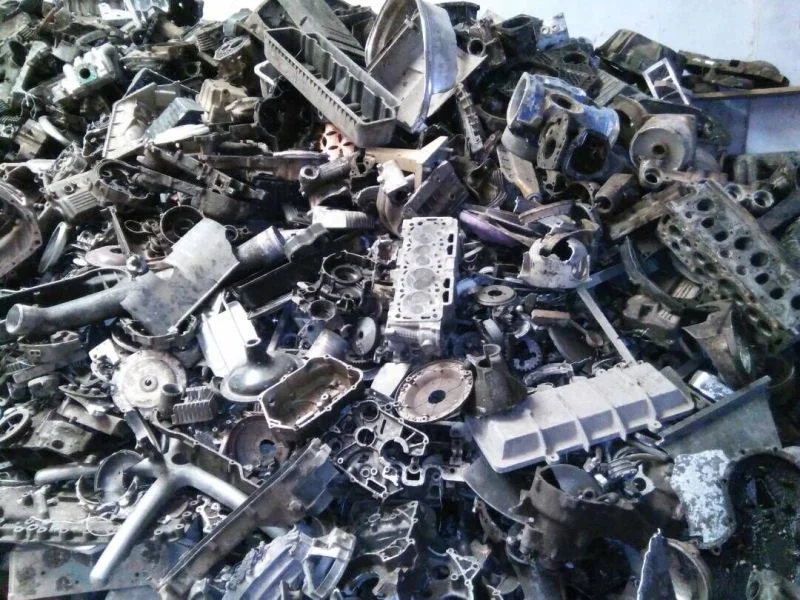
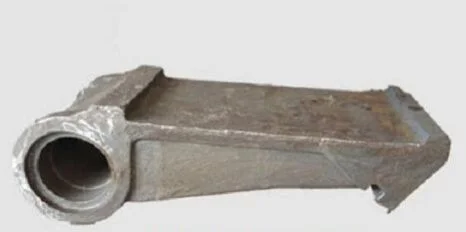
Ningbo Kangtai Hardware Factory is based in Ningbo, China and currently lists five active product lines. The catalogue includes metal stamping, metal stamping parts, machining & screws, forging & casting, and cold forming & casting. Each line falls under the broader hardware manufacturing sector and aligns with HS Chapter 73 (articles of iron or steel) and Chapter 72 (iron and steel) classifications commonly used for such products. The supplier’s focus is on metal component production for industrial applications.
The metal stamping and stamping parts are produced from carbon steel and alloy steel blanks, typically conforming to dimensional tolerances of ±0.1 mm and surface finishes of Ra 0.8 µm or better. Machining & screws cover turned, milled, and threaded fasteners, often supplied in metric sizes ranging from M2 to M24 with hardness grades up to 45 HRC. Forging & casting and cold forming & casting encompass steel and aluminum alloys, with typical casting grades such as ASTM A536 ductile iron or EN AC‑AlSi10Mg for aluminum. These categories reflect standard product families used in machinery, automotive, and construction sectors.
Product Range and Specialties of Ningbo Kangtai Hardware Factory
The listed product families comprise standard metal‑working processes. Metal stamping and stamping parts are commonly produced from hot‑rolled or cold‑rolled steel sheets, with grades such as ASTM A36 for general purpose or higher‑strength grades like S355J2 for engineering applications. Machining & screws include fasteners made from alloy steel (e.g., 8.8, 10.9 strength classes) or stainless steel (AISI 304/316), with thread tolerances defined by ISO 965. Forging & casting cover both open‑die and closed‑die forging of carbon steel, alloy steel, and aluminum alloys, where typical forging grades include 42CrMo4 or 6061‑T6. Cold forming & casting often use low‑carbon steel blanks or aluminum alloys, with casting methods such as sand, die, or investment casting delivering surface roughness around Ra 1.6 µm and dimensional accuracy within ±0.2 mm.
Trade and Export Information - Ningbo Kangtai Hardware Factory
China is a major exporter of metal hardware, with the majority of shipments leaving via ports in Shanghai, Ningbo, and Shenzhen. Typical destination regions for these products include Southeast Asia, the European Union, and North America, where automotive, machinery, and construction industries source stamped and forged components. HS Chapter 73 (e.g., 7308 for tube or pipe fittings, 7307 for tubes and pipes) and Chapter 72 (e.g., 7208 for bars and rods) are the standard tariff headings applied to metal stamping, forging, and casting items. Buyers usually require compliance with ISO 9001 quality management systems, and for certain markets CE marking or RoHS compliance may be requested, especially for components used in electrical equipment. Export shipments are frequently packed in wooden crates or bulk metal pallets, protected with anti‑corrosion coating, and shipped under FOB or CIF terms in 20‑ft or 40‑ft containers, with weight loads up to 22 t per container.
Sourcing from Ningbo Kangtai Hardware Factory - Buyer Guidance
When sourcing from Ningbo Kangtai Hardware Factory, request material test reports (MTR) that specify chemical composition and mechanical properties such as tensile strength and hardness. Verify that the supplier can provide ISO 9001 certification or equivalent quality system documentation, and ask for product drawings or CAD files to confirm tolerances and dimensions. For fasteners and machined parts, ask for thread inspection reports and hardness test results; for forged or cast items, request casting inspection certificates and non‑destructive testing (NDT) reports where applicable. Confirm packaging details, such as whether parts are pre‑treated with phosphating or powder coating, and clarify the agreed Incoterm to align logistics responsibilities.
Frequently Asked Questions About Ningbo Kangtai Hardware Factory
What product categories does Ningbo Kangtai Hardware Factory list in its catalogue?
The supplier lists five categories: metal stamping, metal stamping parts, machining & screws, forging & casting, and cold forming & casting.
Which HS chapters are typically applied to the listed metal products?
Metal stamping, forging, and casting items are usually classified under HS Chapter 73 (articles of iron or steel) or Chapter 72 (iron and steel) for raw bars and rods.
What material grades are common for the metal stamping and stamping parts?
Common grades include carbon steel such as ASTM A36 for general use, and higher‑strength structural steels like S355J2, with surface finishes around Ra 0.8 µm and dimensional tolerances of ±0.1 mm.
Which certifications should a buyer request for hardware components from China?
Buyers should request ISO 9001 quality management certification, and depending on the end‑use, CE marking or RoHS compliance may be required. Material test reports and specific product certifications (e.g., DIN, ASTM) are also advisable.
What are typical lead times and minimum order quantities for forged or cast components?
Lead times for forged or cast parts generally range from 4 to 8 weeks after final design approval, with minimum order quantities often starting at 500 kg or a single batch of 10 units, depending on size and complexity.
How are the products typically packaged for international shipment?
Products are usually packed in wooden crates or bulk metal pallets, with anti‑corrosion coating applied where needed. Containers are loaded according to standard 20‑ft or 40‑ft specifications, respecting a maximum payload of about 22 tonnes.
Which markets most frequently import metal hardware from China?
Key import markets include the European Union, the United States, and countries in Southeast Asia, where automotive, machinery, and construction sectors source stamped, machined, and forged components.
What documentation is needed to verify the quality of screws and fasteners?
Buyers should obtain thread inspection reports, hardness test certificates, and material test reports that confirm compliance with standards such as ISO 965 for threads and ISO 898‑1 for mechanical properties.




 , China