Jinhu Kingyi Machinery Co., Ltd. — Supplier
About Jinhu Kingyi Machinery Co., Ltd. - Exhibition Booth Supplier in China
Jinhu Kingyi Machinery Co., Ltd. is based in China and currently lists five active products in its catalogue. The catalogue includes a standard exhibition booth for trade‑show display, an aluminum portable exhibition display, a straight‑tension‑lock exhibition system, a standard aluminium truss exhibition stall truss, and an aluminium eight‑way upright extrusion used in exhibition structures. Each item is described using the generic category of exhibition‑equipment and specifies the primary material as aluminium or aluminium‑based components. The supplier’s product list reflects typical modular solutions used for temporary trade‑show construction and on‑site assembly.
The listed products cover both fixed‑size booth modules and configurable structural elements such as trusses and extrusions. The tension‑lock system provides a quick‑connect method for assembling panel frames without permanent fasteners. The aluminium truss and eight‑way upright extrusion are engineered for load‑bearing applications in booth frameworks, while the portable display emphasizes lightweight transport. All five items are positioned for export to markets that require disassemblable, reusable exhibition infrastructure.
Product Range and Specialties of Jinhu Kingyi Machinery Co., Ltd.
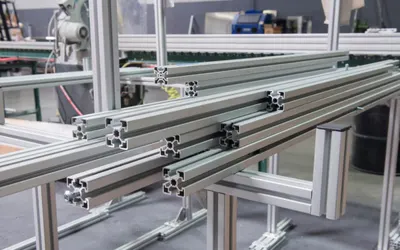
The catalogue’s standard exhibition booth is a pre‑engineered module that can be shipped in container‑size packs and assembled on site with bolt‑on connections. The aluminium portable display uses alloy profiles that balance strength and weight, commonly supplied in standard lengths of 2 m to 3 m. The straight tension‑lock exhibition system employs a mechanical locking mechanism that aligns panels without welding, a method often used for rapid‑change booth layouts. The standard aluminium truss stall truss is fabricated from extruded aluminium sections, typically conforming to grade 6063-T5 for a tensile strength around 190 MPa and a corrosion‑resistant finish. The eight‑way upright extrusion provides multi‑directional support points and is usually offered in wall thicknesses of 2 mm to 4 mm, suitable for mounting lighting, signage, or display panels.
Trade and Export Information - Jinhu Kingyi Machinery Co., Ltd.
China accounts for a large share of global export volume for exhibition structures, with major destination regions including North America, Western Europe, the Middle East, and Southeast Asia. Buyers of modular booths and truss systems generally request compliance with safety standards such as EN 14600 for temporary structures in the EU or ANSI standards in the United States. Although no specific certifications are listed for this supplier, importers typically ask for CE marking, ISO 9001 quality‑management certificates, and material test reports confirming aluminium alloy grades. Shipping is normally arranged in 20‑ft or 40‑ft containers, with products packed in wooden crates or reinforced pallets to protect extruded profiles during ocean freight. Common Incoterms used by Chinese exhibition‑equipment exporters are FOB Shanghai or CIF destination port.
Sourcing from Jinhu Kingyi Machinery Co., Ltd. - Buyer Guidance
When sourcing from Jinhu Kingyi Machinery, buyers should request detailed engineering drawings that specify profile dimensions, load‑bearing calculations, and surface‑treatment specifications. Material test certificates confirming alloy composition (e.g., Al 6063) and tensile strength are standard documents to verify product durability. Requesting a physical sample of a joint or a mock‑up of the tension‑lock mechanism can help assess assembly ease and finish quality before committing to larger orders. Typical minimum order quantities are based on the number of booth modules or truss sections required for a project, and lead times reported by similar Chinese manufacturers range from four to eight weeks after final design approval. Packaging should be confirmed as crate‑packed with moisture‑resistant barriers to meet international shipping standards.
Frequently Asked Questions About Jinhu Kingyi Machinery Co., Ltd.
What types of exhibition structures does Jinhu Kingyi Machinery list in its catalogue?
The catalogue includes a standard exhibition booth, an aluminium portable display, a straight‑tension‑lock system, a standard aluminium truss stall truss, and an aluminium eight‑way upright extrusion used for booth frameworks.
Which material grades are typical for the aluminium products offered?
Chinese exhibition‑equipment manufacturers usually supply aluminium profiles in alloy 6063‑T5 or 6061‑T6, providing tensile strengths between 190 MPa and 260 MPa and a surface finish suitable for painting or anodizing.
Are there any certifications that buyers should ask for before purchasing?
Buyers should request ISO 9001 quality‑management certification, CE marking for EU markets, and material test reports that verify alloy composition and mechanical properties.
What is a common packaging method for these exhibition products?
Products are typically packed in reinforced wooden crates or on double‑layer wooden pallets, with protective film or moisture‑barrier liners to prevent damage during sea freight.
Which international markets commonly import Chinese exhibition booths and truss systems?
Major importers include the United States, Canada, Germany, the United Kingdom, the United Arab Emirates, and Singapore, where trade‑show organizers require modular, reusable structures.
What lead time should a buyer expect for a standard booth order?
Lead times of four to eight weeks are common after the buyer approves engineering drawings and provides any required test certificates or sample approvals.
How can a buyer verify the load‑bearing capacity of the truss components?
Request a structural calculation report or third‑party test certificate that specifies maximum vertical and lateral loads, typically expressed in kilonewtons (kN) per metre of truss.
What Incoterms are frequently used for exporting these exhibition items from China?
Exporters often use FOB Shanghai for buyers who arrange their own freight, or CIF to the buyer’s destination port when the seller handles shipping and insurance.




 , China