Humera Sankyo Corporation — Verified Supplier
About Humera Sankyo Corporation - Medical Instruments Supplier in Pakistan
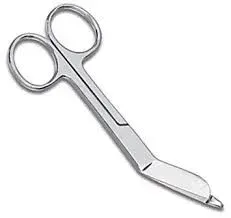
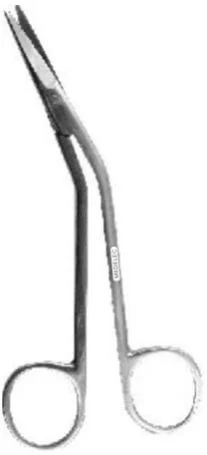
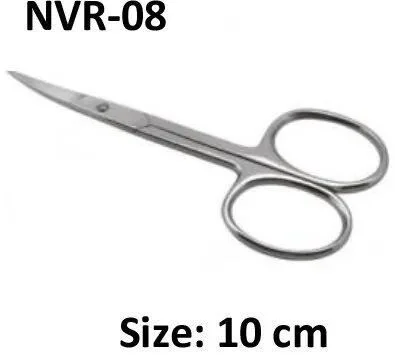
Humera Sankyo Corporation operates from Pakistan and currently lists six active products in its catalogue. The portfolio includes universal scissors, bandage scissors, dressing scissors, Adson forceps, dental forceps, and a BP handle, all of which are classified under medical instrument categories used in surgical and clinical settings. Each item is presented without additional HS‑code detail in the catalogue, but they fall within the broader HS Chapter 90 grouping for medical devices.
The listed instruments are typically manufactured from surgical‑grade stainless steel, such as 304 or 316, to provide corrosion resistance and maintain sharpness after repeated sterilisation cycles. These tools are intended for use in hospitals, dental clinics, and outpatient care facilities, where precise cutting and grasping performance are essential. The supplier’s catalogue does not specify size dimensions, but standard lengths for scissors range from 150 mm to 250 mm, and forceps commonly feature tip lengths of 30 mm to 45 mm.
Product Range and Specialties of Humera Sankyo Corporation
The catalogue shows six distinct items: universal scissors, bandage scissors, dressing scissors, Adson forceps, dental forceps, and a BP handle. In the medical instrument market, universal scissors are often offered in straight or angled blades with a cutting edge tolerance of ±0.02 mm, while bandage and dressing scissors commonly feature blunt tips to prevent tissue damage. Adson and dental forceps are usually forged from stainless steel 316L and may include serrated or smooth gripping surfaces depending on the intended application. BP handles, used for blood pressure measurement devices, are typically supplied as part of a cuff assembly and require precise dimensional tolerances to ensure accurate readings.
Industry practice for these categories includes compliance with ISO 7153 for surgical scissors and ISO 7389 for forceps, which define material composition, finish, and functional testing. Buyers often look for instruments that meet the ASTM F899 standard for surgical instruments, which covers sharpness, fatigue resistance, and corrosion testing. Providing detailed product data sheets that list blade length, tip type, and material grade helps buyers assess suitability for their specific clinical protocols.
Trade and Export Information - Humera Sankyo Corporation
Pakistan’s medical instrument export sector primarily serves regions such as the Middle East, North Africa, and parts of Southeast Asia, where demand for cost‑effective yet reliable surgical tools remains strong. Export shipments of instruments like scissors and forceps are usually classified under HS Chapter 90 and are subject to customs inspection for compliance with safety and quality standards. Importing countries commonly require CE marking for the European market and FDA 510(k) clearance or equivalent documentation for North American buyers, although the supplier’s current catalogue does not list any certifications.
Typical trade terms for Pakistani medical device exporters include FOB Karachi or CIF destination ports, with packaging in sterilised medical‑grade paper or poly‑propylene wraps within sealed cartons. Buyers should verify that the supplier can provide material test reports (e.g., ASTM A240 for stainless steel) and conformity declarations that align with the destination country’s regulatory framework. Logistics often involve 20‑ft containers holding up to 1,200 units of small instruments, depending on packaging density.
Sourcing from Humera Sankyo Corporation - Buyer Guidance
When sourcing from Humera Sankyo Corporation, buyers should request a full product specification sheet that details the stainless‑steel grade, blade geometry, and any surface treatments such as electropolishing. It is advisable to ask for a sample batch accompanied by a material certification (e.g., ISO 9001 or ISO 13485) and a functional test report confirming compliance with relevant ISO or ASTM standards. Verification of sterilisation compatibility - typically autoclave cycles at 121 °C for 15 minutes - should also be confirmed before placing a larger order.
Additionally, buyers should clarify the minimum order quantity, which for small‑tool medical instruments often starts at 500 units per SKU, and confirm lead times that usually range from 30 to 45 days after order confirmation. Ensuring that packaging meets ISO 11607 standards for barrier integrity will facilitate smooth customs clearance and maintain product sterility during transit.
Frequently Asked Questions About Humera Sankyo Corporation
What types of medical instruments does Humera Sankyo Corporation list in its catalogue?
The catalogue includes universal scissors, bandage scissors, dressing scissors, Adson forceps, dental forceps, and a BP handle, all intended for surgical or clinical use.
Which material is typically used for the listed instruments?
Medical instruments of this type are commonly forged from surgical‑grade stainless steel, such as 304 or 316L, to ensure corrosion resistance and durability through repeated sterilisation.
What certifications should a buyer request for these instruments?
Buyers should request material test reports, a CE conformity declaration for European markets, and any applicable ISO 13485 or ISO 9001 certificates that demonstrate quality‑management compliance.
What is a typical minimum order quantity for these tools?
For small surgical instruments, suppliers often set a minimum order quantity around 500 units per product line, though the exact figure should be confirmed with the supplier.
What packaging standards are relevant for shipping medical scissors and forceps?
Packaging usually follows ISO 11607 for barrier integrity, using sterilised medical‑grade paper or poly‑propylene wraps inside sealed cartons to protect sterility and meet regulatory requirements.
Which regions commonly import medical instruments from Pakistan?
Export destinations frequently include the Middle East, North Africa, and Southeast Asian countries, where cost‑effective surgical tools are in demand.
What lead time can a buyer expect for an order from this supplier?
Lead times typically range from 30 to 45 days after order confirmation, depending on product availability and required certifications.
How can a buyer obtain a sample before placing a larger order?
Buyers should request a sample batch together with the product data sheet and material certification; this allows verification of dimensions, material grade, and compliance with relevant standards before scaling up the purchase.




 , Pakistan