Freird Technology (Hong Kong) Limited — Supplier
About Freird Technology (Hong Kong) Limited - Mold Supplier in China
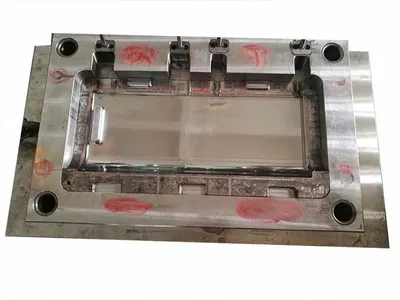
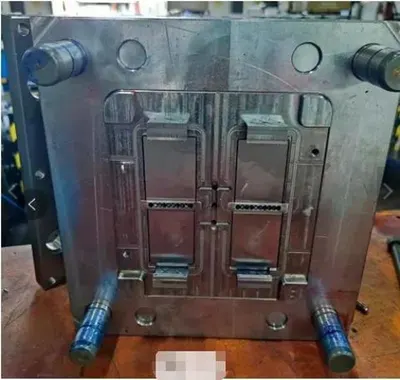
China is the origin of Freird Technology (Hong Kong) Limited, which currently lists five active products in its catalogue. The company focuses on manufacturing molds, including precision molds, custom molds, electronics molds, electrical molds, and home and office appliance molds. Each of these items falls under the general HS chapter for moulds used in plastic processing (HS 8486). The supplier is classified as an imported tier in the platform’s trust hierarchy. The catalogue does not provide additional technical specifications for the listed molds.
The five mold types cover a range of applications from high‑tolerance precision components to larger appliances used in domestic and office environments. Precision and custom molds are typically engineered for tight dimensional control, while electronics and electrical molds cater to components such as connectors, housings, and circuit board enclosures. Home and office appliance molds are sized for larger casings such as blenders, coffee makers, or printer bodies. No further product details, such as material grade or cavity count, are supplied in the catalogue.
Product Range and Specialties of Freird Technology (Hong Kong) Limited
The catalogue lists five distinct mold categories: precision, custom, electronics, electrical, and home‑and‑office appliance molds. In the mould‑making industry, precision molds are often produced from tool steels such as P20, H13, or S7, with surface finishes of 0.8 µm Ra or better and tolerances of ±0.02 mm. Custom molds may use a broader range of steels or aluminum alloys depending on the part geometry and production volume. Electronics and electrical molds frequently require conductive‑coated inserts and are designed for small, high‑volume plastic parts, usually adhering to IEC standards for component safety. Home and office appliance molds are larger, often employing steel grades with high wear resistance and may include cooling channels to manage cycle times. Typical mould specifications include cavity count, clamp force (e.g., 150 - 350 t), and projected area, which buyers should verify against their part requirements.
Trade and Export Information - Freird Technology (Hong Kong) Limited
China is a global exporter of injection‑mould tooling, with the majority of moulds classified under HS 8486. Exporters of moulds from China commonly ship to manufacturers in Southeast Asia, Europe, and North America, where electronics, automotive, and consumer‑goods industries source tooling. Buyers usually request ISO 9001 certification for the manufacturing system and may also ask for CE marking when the end‑products are intended for the EU market. Standard export packaging includes wooden crates with internal bracing, moisture‑resistant liners, and surface protection film to prevent corrosion of steel tools. Incoterms such as FOB Shanghai or CIF destination port are typical, with container loads ranging from 20‑ft for a few large molds to 40‑ft for multiple smaller units. Chinese mold exporters often provide test‑run reports or sample parts to demonstrate dimensional accuracy before full‑scale production.
Sourcing from Freird Technology (Hong Kong) Limited - Buyer Guidance
When sourcing molds from Freird Technology (Hong Kong) Limited, buyers should request detailed material certificates for the tool steel, including hardness (e.g., HRC 30 - 38 for P20) and chemical composition. It is advisable to obtain a CAD drawing of the proposed mould cavity, a tolerance sheet, and a surface‑finish specification (e.g., Ra 0.8 µm). Buyers normally ask for a pilot‑run sample part and corresponding measurement report (e.g., CMM data) to verify that the mould meets functional requirements. Confirmation of ISO 9001 or equivalent quality‑management certification, as well as any relevant export licences, should be part of the pre‑order documentation. Verify the agreed clamp force, cavity count, and lead time - typical lead times for new moulds range from 6 to 12 weeks depending on complexity.
Frequently Asked Questions About Freird Technology (Hong Kong) Limited
What types of molds does Freird Technology (Hong Kong) Limited offer?
The supplier lists five mold types: precision mold, custom mold, electronics mold, electrical mold, and home and office appliance mold. Each category targets different application sectors, from high‑tolerance components to larger appliance casings.
Which HS code applies to the molds listed?
All listed molds fall under HS chapter 84, specifically HS code 8486, which covers moulds for plastics, rubber, or similar materials.
What material grades are commonly used for these molds?
In the mould industry, tool steels such as P20, H13, and S7 are typical for precision and custom molds, while aluminum alloys may be used for low‑volume or prototype tooling. Buyers should request a material certificate for the specific grade.
Are there standard certifications buyers should request?
Buyers usually ask for ISO 9001 quality‑management certification and, when the end‑product is destined for the EU, CE conformity documentation. These certifications confirm that the supplier follows recognized manufacturing and safety standards.
What is a typical lead time for a new mold from this supplier?
Lead times depend on mold complexity but generally range from 6 weeks for simple single‑cavity tools to 12 weeks for multi‑cavity or high‑precision molds.
What are the usual packaging and shipping methods for these molds?
Molds are typically packed in reinforced wooden crates with internal bracing and moisture‑resistant liners. Shipping is commonly arranged on 20‑ft or 40‑ft containers using FOB or CIF incoterms.
How can a buyer verify the mould’s performance before full production?
Buyers should request a pilot‑run sample part together with measurement reports such as CMM data, surface‑finish readings, and dimensional tolerance verification.
Is there a minimum order quantity (MOQ) for mold orders?
Mold orders are generally treated as single‑project contracts; the MOQ is effectively one complete mould, with any additional cavities or duplicate tools negotiated separately.




 , China