Esseeds — Suppliers
About Esseeds - Seeds Supplier in Spain
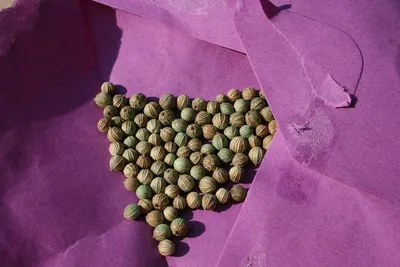
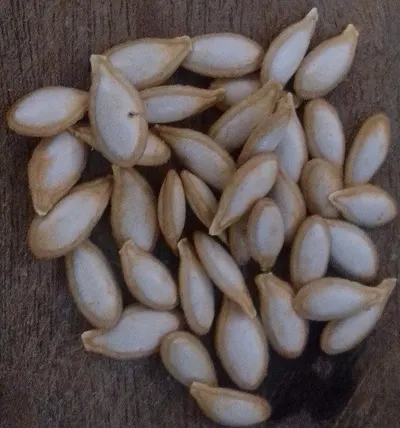
Spain, in the Andalusian province of Sevilla, hosts Esseeds, a seed producer that currently lists seven distinct seed products in its catalogue. The catalogue includes ZAKAT SEEDS (HS code 001), BIOFUMIGATION MIX SEEDS (HS code 005), COVER CROPS SEEDS (HS code 006), HAIRY VETCH SEEDS (HS code 007), HAIRY COMMON SEEDS (HS code 008), SAINFOIN SEEDS (HS code 009) and OAT STRIGOSE SEEDS (HS code 010). All items are classified under the material type SEEDS and are recorded as separate SKUs. The company reports regular operations in more than twelve countries, indicating a multi‑regional distribution network. No additional product categories are listed beyond these seven seed types.
The listed seeds cover a range of forage and cover‑crop species commonly used in temperate and subtropical agriculture. Zakat and Sainfoin are leguminous forage seeds, while Oat Strigose is a cereal grain used for pasture and feed. BIOFUMIGATION MIX and Cover Crops are blended seed mixes intended for soil‑health and pest‑management programmes. Hairy Vetch and Hairy Common are also legume species employed in rotation schemes. Each product is identified by a unique HS code, enabling customs classification and trade reporting.
Product Range and Specialties of Esseeds
Esseeds' catalogue enumerates seven seed SKUs, each recorded with a specific HS code ranging from 001 to 010 and labelled under the material SEEDS. ZAKAT SEEDS, SAINFOIN SEEDS, and the Hairy VETCH and HAIRY COMMON varieties are single‑species forage seeds, while BIOFUMIGATION MIX SEEDS and COVER CROPS SEEDS are composite blends designed for biological pest control and soil cover respectively. OAT STRIGOSE SEEDS represent a cereal grain used for forage or grain production.
In the global seed market, buyers typically require purity levels of 95 % or higher and germination rates above 85 % for forage legumes, with moisture content limited to 10 % to preserve viability. Seed treatments such as fungicide coating or inoculation with rhizobia are common options, and organic‑certified batches follow EU organic standards. Standard packaging for bulk seed export is 25 kg polypropylene bags, and container loading calculations are based on weight and volume limits.
Trade and Export Information - Esseeds
Spain ranks among the EU's major seed exporters, and Spanish seed shipments are classified under HS Chapter 12 (plants and plant products). The HS codes used by Esseeds (001‑010) fall within the sub‑heading for seed varieties, which are subject to phytosanitary inspection and a certificate of origin at the point of export. Typical importing regions include other EU member states, North African countries such as Morocco and Egypt, and Latin American markets where forage and cover‑crop seeds support extensive agricultural rotations.
Buyers normally request a phytosanitary certificate complying with the International Plant Protection Convention (IPPC) and, where applicable, a seed certification document that confirms variety, purity, and germination test results. Export logistics often employ FOB or CIF terms, with 20‑foot containers accommodating roughly 800 × 25 kg bags, while 40‑foot containers can hold up to 1,600 bags. Compliance with EU seed regulations (Regulation (EU) 2018/2002) and any destination‑specific import permits is mandatory.
Sourcing from Esseeds - Buyer Guidance
When sourcing seeds from Esseeds, buyers should obtain a recent germination test report (conducted under ISTA or equivalent protocols) and a seed health test that screens for common pathogens. Requesting a phytosanitary certificate and a seed purity analysis will verify compliance with most import requirements. It is also advisable to confirm whether the seed batch is treated, untreated, or organic, and to receive a material safety data sheet if chemical treatments are applied.
Typical minimum order quantities for bulk seed shipments are in the range of 500 kg, which translates to 20‑25 bags of 25 kg each. Lead times reported by Spanish seed exporters are usually four to six weeks from order confirmation, allowing time for seed certification, packaging, and customs clearance. Buyers should verify container loading plans and request loading photographs to ensure the correct number of bags and proper sealing.
Frequently Asked Questions About Esseeds
What seed products are listed in Esseeds' catalogue?
The catalogue includes ZAKAT SEEDS, BIOFUMIGATION MIX SEEDS, COVER CROPS SEEDS, HAIRY VETCH SEEDS, HAIRY COMMON SEEDS, SAINFOIN SEEDS and OAT STRIGOSE SEEDS, each recorded with a distinct HS code.
How are these seeds classified for customs purposes?
Each seed type is assigned an HS code from 001 to 010 under the material category SEEDS, which aligns with HS Chapter 12 for plant and plant products.
What quality parameters are normally examined for these seed types?
Buyers typically check seed purity (≥95 %), germination rate (≥85 % under standard conditions), moisture content (≤10 %) and, for treated seeds, the presence of the specified fungicide or inoculant.
Which certifications or documents should a buyer request?
A phytosanitary certificate, a seed certification sheet stating variety, purity and germination, and any relevant organic or treatment certificates should be requested before shipment.
What packaging and container loading are standard for these seeds?
Seeds are usually packed in 25 kg polypropylene bags. A 20‑foot container can hold approximately 800 such bags, while a 40‑foot container can accommodate around 1,600 bags.
What are the typical lead time and minimum order quantity?
Lead times from Spain are generally four to six weeks, and the common minimum order quantity is about 500 kg, equivalent to twenty‑five 25 kg bags.
Which regions commonly import Spanish seed varieties like those offered by Esseeds?
Key import markets include EU member countries, North African states such as Morocco and Egypt, and several Latin American nations that use forage and cover‑crop seeds for sustainable agriculture.





 , Spain