CG Lighting Co. — Supplier
About CG Lighting Co. - Lighting Fixtures Supplier in South Korea
CG Lighting Co. is a lighting supplier based in South Korea (Republic of Korea) with 6 active product listings on the catalogue. The product range is concentrated in indoor and architectural lighting fixtures, covering T5 light fittings, ceiling lights, pendant lights, a product line labelled M16 CG Lighting, chandeliers, and stand lights (floor-standing luminaires). These categories fall under the international HS code family 9405 (lamps and lighting fittings, not elsewhere specified) and the closely related 9401 / 9403 chapters for seats and other furniture parts, depending on the integrated furniture type. South Korea has a mature lighting manufacturing base anchored around the Seoul National Capital Area and Gyeonggi-do, where a large share of the country's LED driver, PCB, and finished luminaire assembly capacity is located. The catalogue reflects the product mix commonly associated with Korean lighting exporters: linear fluorescent T5 replacements and integrated LED battens for commercial interiors, decorative ceiling and pendant fittings for residential and hospitality projects, ornamental chandeliers for premium interior schemes, and free-standing floor lamps used in both residential and contract settings. Buyers evaluating CG Lighting Co. should note that the listed 6 products span the three main indoor lighting segments (linear/commercial, decorative/ceiling-mounted, and floor-standing), which is a typical breadth for a mid-sized Korean luminaire exporter. The supplier is currently classified in the imported tier, meaning the catalogue is sourced from third-party listing data rather than a directly verified manufacturer profile.
Product Range and Specialties of CG Lighting Co.
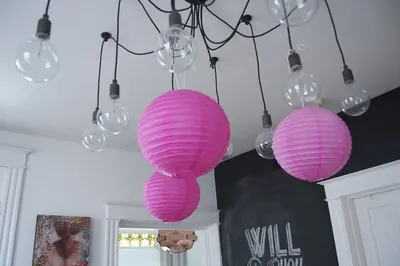
The active catalogue of CG Lighting Co. covers six lighting fixture categories. The T5 light entry points to linear T5-batten luminaires, a format that originated as a fluorescent tube standard (16 mm tube diameter, G5 base) and is now dominated by integrated LED T5 replacements operating on 100-240 V mains or 24 V DC drivers. Ceiling lights and pendant lights cover the broad decorative ceiling-mounted segment, which in Korean export catalogues typically includes surface-mounted downlights, flush-mount LED panels (commonly 300 x 300 mm, 600 x 600 mm and 1200 x 600 mm formats), and suspended pendants with E27 / E26 or GU10 lamp holders. The M16 CG Lighting entry is treated as a branded product line within the catalogue rather than a generic category, and chandeliers point to multi-arm decorative fittings usually shipped in K/D (knock-down) form. Stand lights refer to floor-standing luminaires, typically 1.4-1.8 m in height with metal or wooden stems and fabric or glass shades. Across these categories, buyers should expect industry-standard grade differentiation. LED fixtures in this segment are typically specified by luminous flux (lumens), correlated colour temperature (CCT, commonly 3000 K warm white, 4000 K neutral white, 5000 K or 6500 K cool white), colour rendering index (CRI Ra ≥ 80 for residential, ≥ 90 for hospitality and retail), beam angle, IP rating (IP20 for dry interiors, IP44 for bathrooms), and IK rating for impact resistance. Korean-made luminaires for export commonly carry KC (Korea Certification) marks for the domestic market and are produced to CE, RoHS, and increasingly ERP / Energy-related Products Directive standards for the European Union, with FCC compliance for the United States. Housing materials in this category typically include cold-rolled steel with powder coating, die-cast aluminium heat sinks, and PMMA or polycarbonate diffusers. Driver quality is a key differentiator, with branded drivers from manufacturers such as Meanwell, Tridonic, or Osram commonly specified for commercial-grade export orders.
Trade and Export Information - CG Lighting Co.
Lighting fixtures exported from South Korea are classified under HS code 9405.40 (other electric lamps and lighting fittings - photovoltaic, designed for use solely with LED light sources), 9405.10 (chandeliers and other electric ceiling or wall lighting fittings), and 9405.30 (lighting sets for Christmas trees and other festive lighting), with floor-standing luminaires typically falling under 9405.20. Korean lighting exports primarily serve the construction, hospitality, commercial real estate, and residential fit-out sectors across East Asia, Southeast Asia, the Middle East (notably the UAE and Saudi Arabia), the European Union, and North America. The country's lighting industry benefits from a strong domestic LED component supply chain, with Seoul Semiconductor, LG Innotek, and Samsung LED among the major chip-level suppliers, which supports vertically integrated luminaire production. For international buyers, the typical shipping norm for finished lighting fixtures is 20 ft or 40 ft FCL container loads, with chandeliers and decorative pendants often packed in multi-ply corrugated cartons with EPS foam mould inserts to protect glass and crystal elements. Floor-standing luminaires (stand lights) are usually shipped K/D to reduce carton volume, with assembly instructions included. Common Incoterms used by Korean lighting exporters include FOB Busan or FOB Incheon, CIF to the destination port, and increasingly DAP for European buyers. Korean exporters to the EU must comply with CE marking under the Low Voltage Directive (LVD) 2014/35/EU and the EMC Directive 2014/30/EU, plus RoHS 2 (2011/65/EU) restricting hazardous substances. For the US market, UL or ETL listing is typically required, while Middle East buyers often request SASO (Saudi Arabia) or ESMA (UAE) conformity certificates. KC (Korea Certification) is mandatory for products sold domestically but is not a substitute for destination-market approvals.
Sourcing from CG Lighting Co. - Buyer Guidance
Buyers sourcing from CG Lighting Co. should treat the current imported-tier catalogue status as a signal to request additional verification before placing volume orders. Specifically, buyers should ask for the manufacturer's valid KC certificate or, for export-oriented production, equivalent CE-Declaration of Conformity, RoHS test report, and any UL/ETL or SASO/ESMA approvals relevant to the destination market. Photometric data files (IES files), LM-80 reports for the LED modules, and driver specifications should be requested for any commercial-grade order. For chandeliers and decorative pendants, buyers should confirm K/D packaging dimensions, net/gross weight per carton, and the number of pieces per outer carton to plan container loading. Practical verification steps include requesting a pre-shipment sample with measured CCT, CRI, and luminous flux data, asking for an IP rating test report (e.g., IP20, IP44) if the fixture is specified for damp locations, and confirming the warranty terms on the LED module and driver separately. Lead times for Korean-made lighting fixtures typically run 30-45 days for standard catalogue items and 45-75 days for customised OEM/ODM orders, with MOQ varying from 100-300 pieces for standard fittings to 500+ pieces for custom finishes. Buyers should also confirm the country of origin marking on the product and carton, the HS code declared on the commercial invoice, and whether the supplier can provide the required test reports from accredited Korean laboratories such as KTL (Korea Testing Laboratory) or KOSHA. Payment terms commonly seen with Korean exporters include 30% T/T deposit with 70% balance against B/L copy, or L/C at sight for first-time relationships.
Frequently Asked Questions About CG Lighting Co.
What product categories does CG Lighting Co. supply?
CG Lighting Co. lists 6 active products covering T5 light fittings, ceiling lights, pendant lights, a product line labelled M16 CG Lighting, chandeliers, and stand lights (floor-standing luminaires). All items fall under the indoor lighting fixture segment classified in HS code chapter 94, primarily HS 9405.
Which HS code applies to the lighting fixtures from CG Lighting Co.?
Chandeliers and ceiling/pendant lights typically fall under HS 9405.10, floor-standing luminaires (stand lights) under HS 9405.20, and LED-based linear and decorative fittings under HS 9405.40. Buyers should confirm the exact 6-digit code with the supplier based on the specific product and destination customs tariff.
What certifications should I request before ordering from CG Lighting Co.?
Request the KC (Korea Certification) mark for domestic-grade products, plus destination-market approvals: CE and RoHS for the EU, UL or ETL for the US, and SASO or ESMA for the Middle East. Photometric IES files and LM-80 LED lifetime reports are standard technical documents to request for commercial-grade orders.
What are typical MOQ and lead times for Korean lighting exporters?
Standard catalogue items from Korean lighting suppliers typically carry MOQs of 100-300 pieces, with custom OEM/ODM orders starting at 500+ pieces. Lead times are usually 30-45 days for stock items and 45-75 days for customised production, plus ocean transit of 14-30 days depending on the destination port.
How are lighting fixtures typically packed for export from South Korea?
Korean lighting exporters commonly use multi-ply corrugated cartons with EPS foam mould inserts, with chandeliers and glass-shade pendants individually wrapped. Floor-standing luminaires are typically shipped K/D (knock-down) to reduce volume, and full container loads of 20 ft or 40 ft FCL are standard for volume orders.
Which Incoterms are commonly used by Korean lighting suppliers?
FOB Busan or FOB Incheon is the most common basis for Korean lighting exports, with CIF to the destination port frequently offered for full-container orders. DAP (Delivered at Place) is increasingly used for European buyers who prefer the seller to arrange ocean freight and last-mile delivery.
What quality parameters should I verify on a sample from CG Lighting Co.?
Request measured CCT (typically 3000 K, 4000 K, or 6500 K), CRI (Ra ≥ 80 residential, ≥ 90 hospitality), luminous flux in lumens, beam angle, and IP rating (IP20 dry interiors, IP44 bathrooms). Confirm the LED driver brand and warranty terms, as driver failure is the most common luminaire failure mode in commercial installations.
Which regions typically import lighting fixtures from South Korea?
Korean lighting exports primarily serve East and Southeast Asia, the Middle East (UAE, Saudi Arabia), the European Union, and North America. The main end-use sectors are commercial real estate, hospitality (hotels, restaurants), residential fit-out, and retail lighting, where Korean manufacturers compete on LED component quality and design finish.




 , South Korea (Republic Of Korea)