Abaco Andalusian Art & Handicraft — Supplier
About Abaco Andalusian Art & Handicraft - Handicraft Supplier in Spain
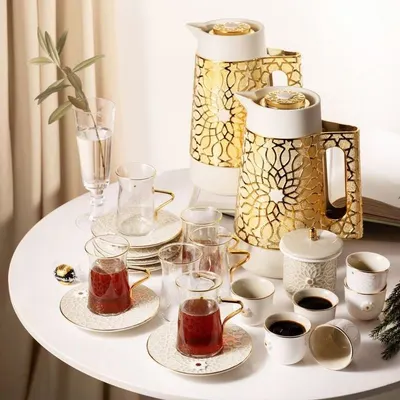
Spain hosts five active product listings from Abaco Andalusian Art & Handicraft, an imported supplier listed under the harbor trust tier. The catalogue includes a traditional Arabian coffee service and four textile items identified as Manila shawls, each described with distinct design titles, together with a decorative hand‑crafted bull‑fighting figurine.
The Arabian coffee service is presented as a complete set for serving coffee in a style associated with Middle‑Eastern hospitality. The Manila shawls - Angustiass Manila Shawl Burgundy, Inmaculadas Manila Shawl, and Carmens Manila Shawl - are listed as hand‑woven fabrics, while the Hand bull fighting item is described as a handcrafted representation of the Spanish bull‑fighting tradition.
Product Range and Specialties of Abaco Andalusian Art & Handicraft
The listed items span two broad handicraft categories. The Arabian coffee service typically consists of a pot, tray and cups made from ceramic, porcelain, brass or copper, materials that are common in traditional coffee sets and are sized to fit standard kitchen cabinets or restaurant service stations. The Manila shawls are textile products, usually woven from silk, cotton, or blended fibers, with typical widths of 140‑180 cm and a weight ranging from 150‑250 g/m²; the Burgundy variant indicates a dyed finish that may require color‑fastness testing. The Hand bull fighting piece is a decorative figurine, commonly produced in wood, resin or metal, sized between 15‑30 cm in height for display purposes.
Trade and Export Information - Abaco Andalusian Art & Handicraft
Spanish handicrafts such as coffee sets, woven shawls and decorative figurines are regularly exported to European Union markets, the United States and the Middle East, where demand for culturally distinct artisan goods remains strong. Products like coffee service sets often fall under HS chapter 69 (ceramic tableware) or 71 (metal tableware), textile shawls under HS chapter 63 (textiles and apparel), and decorative figurines under HS chapter 97 (works of art). Buyers typically request compliance with EU REACH regulations for metal and ceramic items, and Oeko‑Tex Standard 100 or ISO 105‑C06 for textile colourfastness. Standard export packaging includes reinforced cardboard cartons for textiles, padded crates for ceramic sets, and wooden pallets for bulk shipments; 20‑ft or 40‑ft containers are the usual shipping units, with Incoterms such as FOB Barcelona or CIF New York frequently used.
Sourcing from Abaco Andalusian Art & Handicraft - Buyer Guidance
When sourcing the Arabian coffee service, request a material specification sheet indicating the exact alloy or ceramic type, lead‑content test results, and dimensional drawings of each component. For the Manila shawls, ask for fiber composition, GSM (grams per square metre), dye‑batch colour‑fastness reports and any Oeko‑Tex or ISO‑9001 quality certificates the manufacturer can provide. The decorative bull‑fighting figurine should be accompanied by a material safety data sheet, weight per piece and photographs of the finished product. In all cases, obtain a pre‑shipment sample to verify craftsmanship, finish quality and compliance with the requested standards before confirming a full order.
Frequently Asked Questions About Abaco Andalusian Art & Handicraft
What material is the Arabian coffee service made from?
The catalogue does not specify material, so buyers should request a detailed material specification, which for coffee sets is typically ceramic, porcelain, brass or copper.
Are the Manila shawls woven from silk or cotton?
The supplier lists the shawls without material detail; buyers should ask for the exact fiber composition and GSM to confirm whether silk, cotton or a blend is used.
Can I receive a sample of the Hand bull fighting figurine?
Yes, a single unit sample can be requested; confirm the figurine’s material (e.g., wood, resin or metal) and dimensions before placing a larger order.
Which HS codes are relevant for these products?
Typical HS codes are 6912 for ceramic coffee sets, 7113 for metal tableware, 6306 for textile shawls and 9703 for decorative figurines, but buyers should verify the exact code with the supplier.
What certifications should I look for when importing these items?
Commonly required certifications include REACH compliance for metal and ceramic items, Oeko‑Tex Standard 100 for textiles, and any safety data sheets for decorative pieces.
What packaging is used for the shawls during shipment?
Shawls are usually packed in folded form inside reinforced cardboard cartons, often stacked on wooden pallets for container loading.
What are typical lead times for these products?
Lead times vary by item; handcrafted coffee sets and figurines may require 4‑6 weeks, while woven shawls can often be produced and shipped within 2‑3 weeks, subject to material availability.
Which markets does the supplier target?
The facts do not list target markets; however, Spanish handicrafts are commonly exported to EU countries, the United States and the Middle East.




 , Spain